A vast collection of ancient Jain texts acquired by Sir Henry Wellcome during his extensive global collecting efforts is now set to be returned to the Jain community, which had originally sold them under colonial pressures for minimal sums.
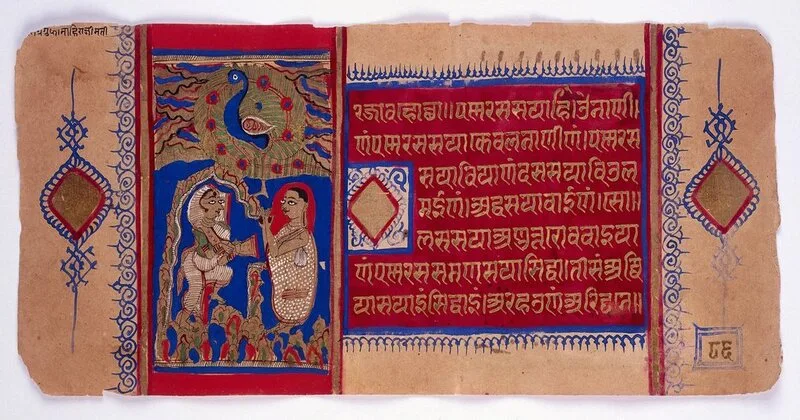
The collection, comprising over 2,000 manuscripts from the 15th to 19th centuries, was part of the million-plus artefacts he left to the Wellcome Trust after his death in 1936. In a landmark decision, the Trust has agreed to repatriate these works, including what may be the earliest surviving Hindi medical text, the 1592 A Celebration of Physicians, and a 19th-century manuscript.
According to the foundation, agents working for Sir Henry Wellcome acquired more than half of the manuscripts nearly a century ago from a single Jain temple in Punjab, now in present-day Pakistan, which has since ceased to exist.
The texts were purchased for nominal sums and, as the foundation acknowledged on Thursday, in circumstances that ran “against the best interests of their original owners.”
Adrian Plau, an archivist at the Wellcome Collection involved in the restitution process, has previously explained how Sir Henry Wellcome leveraged the structures of British colonial power to build much of his vast and unmatched collection.
Adrian Plau has noted that Sir Henry Wellcome’s agents, led by a retired army officer, often exploited colonial hierarchies and power structures to secure acquisitions. In one documented instance from 1934, a seller was compelled to part with artefacts at a reduced price under the pressure of an impending legal decree.
By the time of his death, Wellcome had built a pharmaceutical empire and assembled a vast collection of around one million books, artworks, and objects, intended to narrate the global history of health and medicine.
The Wellcome Collection said this week that the repatriation of the Jain manuscripts reflects its commitment to fostering a more equitable future through the inclusive, collaborative, and ethical stewardship of its collections.
Because the Jain temple in Punjab, source of most of the 2,000-plus manuscripts, no longer exists, the texts will first be transferred to the Dharmanath Network in Jain Studies at the University of Birmingham.
Mehool Sanghrajka of the Institute of Jainology described the Wellcome Collection’s “brave decision” to return the 2,000 “sacred manuscripts” as both pioneering and a model for other faith communities.
Mehool Sanghrajka noted that some of the manuscripts might not have survived the upheavals in India after independence, expressing gratitude to the Wellcome Collection for preserving them with care and respect.
The Wellcome Collection also said it is in talks with other groups regarding the return of additional artefacts. Unlike institutions such as the British Museum and the Victoria and Albert Museum, it is not legally restricted from repatriating items acquired during the colonial period. Although such powers are seldom exercised, notable exceptions include the return of ancestral human remains and the 1942 restitution of King Theodore’s Bible to Haile Selassie.
The Wellcome Collection houses an extensive literary archive, including thousands of handwritten Persian and Arabic works, Buddhist texts from across Asia, block-printed medical books from Japan and Korea, and what it describes as one of the largest collections of South Asian manuscripts in the UK.
Daniel Martin called the agreement on the Jain manuscripts a “landmark restitution,” saying it sets a high standard for a collaborative and compassionate approach that acknowledges the harm caused by unethical acquisition and retention of cultural heritage.
The collection noted that the manuscripts offer a valuable glimpse into the history of health and human experience, particularly through their focus on Jainism. Among the items being returned is an early illustrated 16th-century copy of the revered Jain text, the Kalpasutra.