Strait of Hormuz: The Key to Ending the Iran-US Crisis in West Asia
September 19, 2026
  • Read Ecopy
  • Circulation
  • Advertise
  • Careers
  • About Us
  • Contact Us
Android AppiPhone AppArattai
Organiser
  • ‌
  • Bharat
    • Assam
    • Bihar
    • Chhattisgarh
    • Jharkhand
    • Maharashtra
    • View All States
  • World
    • Asia
    • Europe
    • North America
    • South America
    • Africa
    • Australia
  • Editorial
  • International
  • Opinion
  • RSS @ 100
  • More
    • World Hindu Congress 2026
    • Op Sindoor
    • Analysis
    • Sports
    • Defence
    • Politics
    • Business
    • Economy
    • Culture
    • Special Report
    • Sci & Tech
    • Entertainment
    • G20
    • Azadi Ka Amrit Mahotsav
    • Vocal4Local
    • Web Stories
    • Education
    • Employment
    • Books
    • Interviews
    • Travel
    • Law
    • Health
    • Obituary
  • Subscribe
    • Subscribe Print Edition
    • Subscribe Ecopy
    • Read Ecopy
  • ‌
  • Bharat
    • Assam
    • Bihar
    • Chhattisgarh
    • Jharkhand
    • Maharashtra
    • View All States
  • World
    • Asia
    • Europe
    • North America
    • South America
    • Africa
    • Australia
  • Editorial
  • International
  • Opinion
  • RSS @ 100
  • More
    • World Hindu Congress 2026
    • Op Sindoor
    • Analysis
    • Sports
    • Defence
    • Politics
    • Business
    • Economy
    • Culture
    • Special Report
    • Sci & Tech
    • Entertainment
    • G20
    • Azadi Ka Amrit Mahotsav
    • Vocal4Local
    • Web Stories
    • Education
    • Employment
    • Books
    • Interviews
    • Travel
    • Law
    • Health
    • Obituary
  • Subscribe
    • Subscribe Print Edition
    • Subscribe Ecopy
    • Read Ecopy
Organiser
  • Home
  • Bharat
  • World
  • Operation Sindoor
  • Editorial
  • Analysis
  • Opinion
  • Culture
  • Defence
  • International Edition
  • RSS @ 100
  • Magazine
  • Read Ecopy
Home World North America USA

West Asia Crisis: Why opening the Strait of Hormuz could be the key to lasting peace between Iran & US

As the US-Iran conflict continues to disrupt global energy routes, the Strait of Hormuz has emerged as the centre of a widening geopolitical crisis. The article argues that a UN-backed multinational naval force led by nations like India could help reopen the vital maritime corridor and pave the way for lasting peace in West Asia

Lt Gen M K DasLt Gen M K Das
May 23, 2026, 03:00 pm IST
inUSA, World, West Asia, Asia, International Edition
Follow on Google News
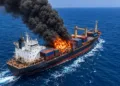
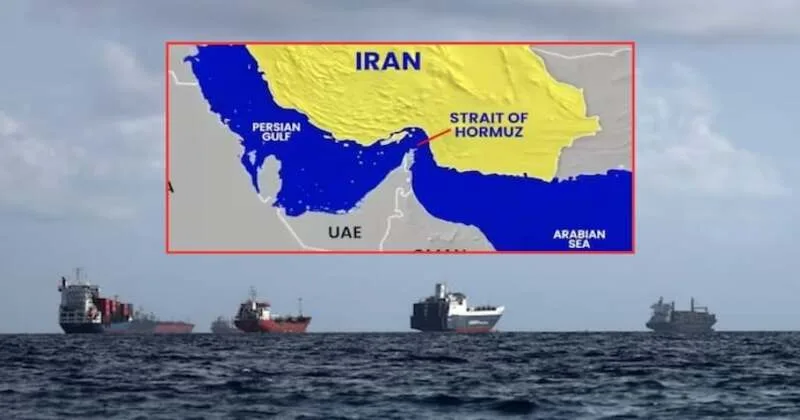
Strait of Hormuz at the centre of global energy crisis as US-Iran tensions reshape West Asia

Strait of Hormuz at the centre of global energy crisis as US-Iran tensions reshape West Asia

Facebook
Twitter
WhatsAppTelegramEmail

The tenuous ceasefire between the US and Iran received another breather with the statement of President Trump that he is postponing a fire assault on Iran based on the request of the Gulf nations. Pakistan-mediated peace talks are being planned again, but these talks suffer from one basic flaw. During the talks, there is no negotiating power available with Pakistan, and it is merely acting as a messenger between the two warring sides. During the recent BRICS foreign ministers meeting in New Delhi, both the Russian and Iranian foreign ministers had urged India to take the lead to diffuse the West Asia crisis.

Two conflicting issues have emerged in the peace negotiations. One is the opening of the Strait of Hormuz to international maritime traffic without any hindrance or toll tax, as before the 28 February offensive. As of now, Iran has full control over the Strait of Hormuz, and it is permitting ships to transit on a selective basis. The US Navy has established a naval blockade around the Persian Gulf and the Gulf of Oman so that Iran is not able to export its oil. But the US blockade has further restricted the movement of ships to the Arabian Sea and beyond. India has suffered the most from the restriction on the cargo ships because our 20 per cent crude oil, 50-60 per cent of LNG and almost 90 per cent LPG import transits through the Strait of Hormuz. Thus, the stakes are very high for an energy-dependent country like India.

The second contentious issue is about Iran’s attempts to acquire nuclear-grade uranium. It is estimated that Iran possesses approximately 440 kg of uranium enriched up to 60 per cent purity. This is a cause of major concern for the international community, particularly for the US and Israel. The nuclear scientists believe that enriching uranium from 60 per cent to 90 per cent weapon-grade threshold can be done rapidly. Iran has hidden its enriched uranium deep inside the mountains, which cannot be penetrated by even the US B-2 bombers. The US has been insisting that Iran should hand over the enriched uranium to it and thereafter present itself for IAEA inspections. Iran obviously has not accepted this demand and wants to negotiate on favourable terms.

Iran’s attempts to acquire 10-12 nuclear weapons from 440 kg of enriched uranium is a cause of concern. But even more grave are the restrictions on the free movement of ships through the Strait of Hormuz, which has already caused an unprecedented global energy crisis. Before the present West Asia crisis, Iran was believed to have accepted the US demand to cease its nuclear ambitions. Therefore, now Iran is using its 440 kg of enriched uranium as leverage to strike a favourable deal in the peace talks. For the international community, Iran’s stated position that it would control the Strait of Hormuz even after the end of the conflict is another cause of concern. Along with its ally, Oman, Iran can easily establish a hold over the navigation rights through the narrow Strait of Hormuz.

The US naval blockade has put tremendous pressure on the oil exports of Iran. It is therefore in the interest of Iran too that the US Navy lifts the blockade. Both the US and Iran are testing each other’s patience, and no side wants to blink first. Under these circumstances, a UN-monitored multinational naval peace keeping force appears to be the best bet for opening the Strait of Hormuz. Since President Trump is always seeking the Nobel Peace Prize, he can take the initiative to open the Strait of Hormuz under the supervision of a multinational force. The nations representing the force can be on the lines of the President Trump-initiated Board of Peace for Gaza. India and the Indian Navy have the best credentials to lead such a multinational force, because it shares good relations with Iran, Gulf nations, Israel and the US.

Also Read: India’s ancient summer science returns in 2026 heatwave advisory

In the interest of the global community, the US naval blockade should be lifted first. Almost simultaneously, Iran should permit the move of ships stuck in the Strait of Hormuz for the last two months. A safe route should be given to the ships because Iran has partially laid naval mines in and around the Strait of Hormuz. In due course, demining and clearance of mines can be undertaken under a multinational force. By opening the Strait of Hormuz without tolls or restrictions, Iran will earn goodwill and support from the global community. It is this goodwill that is going to facilitate the lifting of sanctions from Iran. In the larger interest of the Iranian people, it may also give up its nuclear ambitions. One thing is certain. Post this conflict, Iran has emerged as the most powerful military power in the Gulf region. That itself is a major victory for Iran.

If Iran gives up its nuclear ambitions, then Israel also achieves its political and military objectives. Israel has control over a sizeable territory in Southern Lebanon, and the stronghold of Hezbollah has weakened here. Israel may use this territory to leverage lasting peace with Lebanon and Iran in due course. As of now, the stance of Israel should not deter the peace process between the US and Iran. It is now up to the global community and powerful nations like India, China and Russia to put an end to the West Asia crisis. The opening of the Strait of Hormuz can be the harbinger of lasting peace in the region.



Topics: india energy securityStrait of HormuzIran US ConflictWest Asia CrisisIran nuclear programmeGulf GeopoliticsDonald TrumpMultinational Naval Force
Share
Tweet
SendShareSend
✮ Subscribe Organiser YouTube Channel. ✮
✮ Join Organiser's WhatsApp channel for Nationalist views beyond the news. ✮
Previous News

RSS Telangana’s Sangh Shiksha Varg Sarvajanikotsavam highlights Hindu unity and nation-building

Next News

Pakistani Spy Network Busted: How Bihar ATS nabbed Muzaffarpur’s Mohammad Mustafa for sharing sensitive location data

Related News

US President Donald Trump

‘Infinite Life’ Agreement: Trump claims permanent US security control over Greenland, announces major military build-up

SECL is powering India’s energy security today while advancing responsible mining, greener operations and a sustainable path towards Net Zero

Powering the present, building the future: How SECL is delivering energy security and a net-zero pathway together

AI Generated Representative Image

West Asia Conflict: Iran eyes “exclusion zone” near Hormuz, US strikes oil tankers; War escalates as truce collapses

PM Modi held bilateral discussions with Iran President Masoud Pezeshkian on the sidelines of the SCO Summit

SCO Summit: PM Modi meets Iran President; Reaffirms regional stability & freedom of navigation for global security

Representative Image

Indian Application to US Universities Fall: H-1B hiccup, rising costs, Trump policies hit demand; A risk to US economy?

US President Donald Trump

US President Trump praises India’s election model, cites 646 million voters & mandatory ID in push for SAVE America Act

Load More

Latest News

Nileema Mishra’s grassroots work empowered women and helped transform more than 200 villages across Maharashtra

Nileema Mishra: The woman who transformed more than 200 villages across rural Maharashtra

Shree Stambheshwar Mahadev Mandir in Gujarat

Shiva Mandir that disappears into the sea and returns with the tide: The fascinating story of Stambheshwar Mahadev

Vishwa Hindu Parishad (VHP) spokesperson Surendra Jain (file photo0

VHP condemns Hamid Ansari over remarks citing Nehru on Hindu right-wing communalism

Ganesh murti visarjan incidents raise concerns over radical Islamic intolerance and law and order in Tamil Nadu

ABVP registers 3-0 win in Delhi University Students’ Union elections; wins president, secretary, joint secretary posts

Ganapati murti visarjan procession at T. Narasipura on September 18

Karnataka: Ganapati procession follows approved mosque route in T Narasipura amid allegations of police high-handedness

Meghalaya legislator Paul Lyngdoh has urged measures to address the impact of excessive social media and smartphone use on young minds

From social media to smartphone obsession: Meghalaya MLA Paul Lyngdoh warns of growing digital threat to young minds

'Indian' in Mahmud Ghazni, Accused of Compromising RAW Ops, Hameed Ansari Now Declares Hindu Right-Wing Danger to India

‘Indian’ in Mahmud Ghazni, Accused of Compromising RAW Ops, Hameed Ansari Now Declares Hindu Right-Wing Danger to India

IIT Bombay expresses grief over student’s suicide, says no disciplinary action followed ChatGPT exam incident

India’s diverse dance heritage showcases the rich cultural traditions, stories and celebrations of all 28 states

Dancing Through Bharat: A fascinating journey across the traditional dance forms of all 28 states

Load More
  • Privacy
  • Terms
  • Cookie Policy
  • Refund and Cancellation
  • Delivery and Shipping

© Bharat Prakashan (Delhi) Limited.
Tech-enabled by Ananthapuri Technologies

  • Home
  • Search Organiser
  • Bharat
    • Assam
    • Bihar
    • Chhattisgarh
    • Jharkhand
    • Maharashtra
    • View All States
  • World
    • Asia
    • Africa
    • North America
    • South America
    • Europe
    • Australia
  • Editorial
  • Operation Sindoor
  • Opinion
  • Analysis
  • Defence
  • Culture
  • Sports
  • Business
  • RSS @ 100
  • Entertainment
  • More ..
    • Sci & Tech
    • Vocal4Local
    • Special Report
    • Education
    • Employment
    • Books
    • Interviews
    • Travel
    • Health
    • Politics
    • Law
    • Economy
    • Obituary
  • Subscribe Magazine
  • Read Ecopy
  • Advertise
  • Circulation
  • Careers
  • About Us
  • Contact Us
  • Policies & Terms
    • Privacy Policy
    • Cookie Policy
    • Refund and Cancellation
    • Terms of Use

© Bharat Prakashan (Delhi) Limited.
Tech-enabled by Ananthapuri Technologies