With the swearing-in of the new CM of Keralam on 18 May, all the governments in the four states and one UT that went to polls in April this year have taken charge. These elections were fought under the stewardship of Nitin Nabin, the new BJP Party President. BJP and NDA alliance formed government in Assam & Puducherry, and for the first time in West Bengal. BJP received a massive mandate in Assam and West Bengal. Even in Keralam, the BJP made a historic breakthrough by winning three assembly seats. In Tamil Nadu, the BJP, in alliance with AIADMK, won only one assembly seat, having contested in 27 seats. BJP may have to adopt a new electoral strategy in Tamil Nadu hereafter.
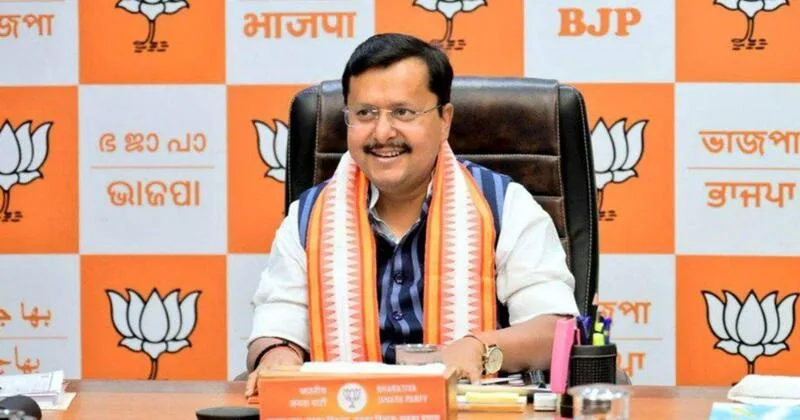
Nitin Nabin became the 16th national president of the BJP in January this year. He is the youngest president of the party, having risen to the post at just 45 years old. The elections in April 2026 were a major test for the organisational skills and leadership of Nabin. The election results have proved that his elevation to the party president was not a flash in the pan. He has proved his credentials in these elections and displayed a political acumen beyond his age and relative inexperience at the national level of politics.
BJP obviously is looking at a major generational shift by appointing Nitin Nabin as the Party President. The change also reflects its ability to identify leadership from the grassroots level that rewards a low-profile person with deep ideological roots. His young age also leverages the youth of the country and their aspirations. It is expected that the BJP organisational structure would also be slowly changed to a younger profile, and some new personalities may emerge at the national and state levels. Similarly, there is a case to reshuffle the PM Modi cabinet and bring in some new faces. The process of regular consultation between the party and the government should also be energised. In short, the BJP should be able to meet the aspirations of the people, particularly to reach out to them during a crisis situation like the ongoing West Asia conflict.
Nitin Nabin seems to have prepared for the Mandate 2026 in a sincere and effective manner. The distribution of tickets in various assembly constituencies was a smooth process, with very few dissenting notes. The election campaign was effectively managed, with proper planning and sound execution. Media and social media platforms were smartly utilised. There were hardly any controversies which sometimes derail an election campaign. Even during the S.I.R. process, the local BJP structure was very proactive, unlike other opposition parties. As Party Prabhari, Nabin had successfully orchestrated the party’s victory in the Chhattisgarh assembly elections in the year 2023 and the Lok Sabha elections in the year 2024. Such experience must have helped Nabin to shape his strategy for the Mandate 2026.
If I have to put a military perspective similar to the reforms in the BJP organisational structure, then the example of reducing the age of Commanding Officers in the Indian Army comes to my mind. The Kargil Review Committee had noticed that the age of commanding officers of battalions/regiments in the Kargil War of 1999 was above 40 years. The commanding officers have to be physically fit to lead the soldiers from the front by setting a personal example. It was decided to reduce the average age of commanding officers to 35 years, and I was fortunate to initiate the process in the year 2009, when I was posted in the Military Secretary Branch, Army Headquarters. As expected, there were numerous challenges in implementing this major human resource reform. I am happy to state that today the Indian Army has a youthful profile of commanding officers, and they can lead their battalion/regiment to victory in every battle.
BJP gained huge traction and large-scale acceptance among the Indians as the ‘party with a difference’. As the largest political party in the world, there is always a challenge to meet the expectations of the people at all times. Besides being the largest party in the NDA government at the Centre, the BJP directly rules in 16 states and 21 states & UTs with the NDA coalition. The electoral juggernaut that is the BJP has to refocus on being the party with a difference. Under the party presidency of Nitin Nabin, the BJP has the best chance to become a youthful, forward-looking and result-oriented party with a pan-India presence.
Nitin Nabin deserves the credit for quickly re-orienting the party to meet the aspirations of the youth, middle class and the working class. BJP has a registered strength of over 14 crore members, which includes approximately 2 crore active members. With such a massive grassroots base, the party now has the immediate challenge to tackle the West Asia crisis, in coordination with the central and state governments. Elections would come again in the year 2027, but the people would give the BJP an even bigger mandate if it were able to reach out to the people during the ongoing crisis and assuage their hardships to the extent possible.