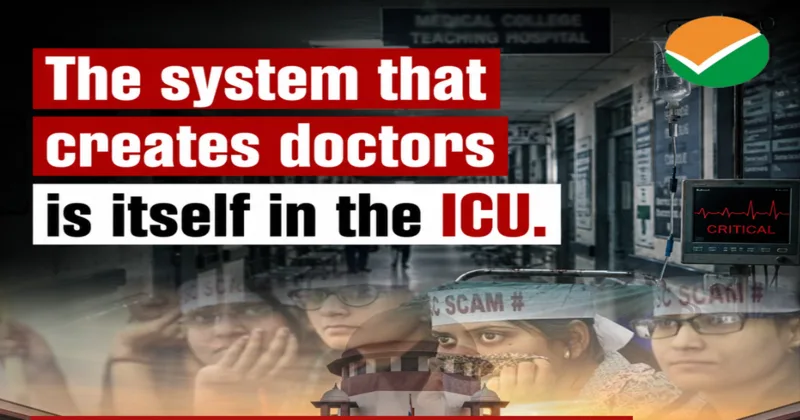
Competitive examinations today are no longer merely a means of securing employment; they have also become the primary gateway to admission into prestigious educational institutions. Success in these examinations has come to determine the dreams, self-respect, social standing, and future direction of young people. Millions of students spend years away from their homes and families, preparing under conditions of intense hard work, financial hardship, and mental pressure. In such circumstances, when a question paper is leaked or an examination is cancelled due to irregularities, its impact extends far beyond an administrative decision. The greatest blow is suffered by the mental and emotional state of the candidates.
Those candidates whose examinations went well and who had strong chances of selection are particularly distressed. Numerous questions begin to arise in their minds: Will the next examination be more difficult? Will they be able to perform again with the same level of competence and confidence? On the other hand, for those whose examinations did not go well, the cancellation may appear as a fresh opportunity. However, after experiencing the temporary mental relief that follows an examination, returning once again to the same rhythm, discipline, and concentration required for preparation becomes a major challenge.
In a densely populated country like India, where limited opportunities coexist with reservation policies and intense competition, the importance of these examinations becomes even greater. Millions of aspirants compete for a single vacancy. Many families take loans to send their children to large cities for coaching. In such situations, the cancellation of an examination is not merely an announcement; it becomes a deep emotional and financial shock.
Whenever an examination is cancelled, candidates experience severe mental stress. Years of preparation suddenly begin to seem meaningless. The uncertainty surrounding a new examination date and the prospect of re-entering the same cycle of pressure and anxiety become extremely painful. Many candidates fall victim to depression, frustration, and anger. This situation is especially distressing for those who are economically disadvantaged or are approaching the upper age limit for eligibility. They feel that the negligence of the system has robbed their hard work of its value.
Another major consequence appears in the form of growing distrust toward the system. Repeated incidents of paper leaks and corruption weaken the confidence of young people in the selection process. When the outcome of honest effort becomes doubtful, the emergence of a moral crisis in society becomes inevitable.
From the perspective of mental health, this problem is becoming increasingly serious. Insomnia, anxiety, and social isolation are common consequences, while rumours spread through social media often intensify stress further. In highly sensitive cases, such despair can even lead to suicidal thoughts, which is deeply alarming for the nation. Alongside this, financial loss is also a significant aspect of the problem. Students are repeatedly forced to spend money on travel, accommodation, and study materials. For families with limited income, this double financial burden destabilizes their future plans.
To address this issue, it is essential to appoint honest officers with clean public images to examination regulatory bodies. In addition, the following measures are necessary:
(a) Swift judicial action and strict punishment against cheating mafias and those responsible for irregularities.
(b) Use of digital surveillance and modern technology to ensure the security of question papers.
(c) Proper monitoring and accountability of examination-conducting agencies and coaching centres.
(d) Establishment of government-
supported helplines and counselling services for candidates.
In my opinion competitive examinations should not be viewed merely as an administrative process, but as a process of preserving the nation’s talent. Only when the youth of the country trust the system will they be able to contribute positively and energetically to nation-building. A transparent, fair, and time-bound examination system is the greatest necessity of our time.