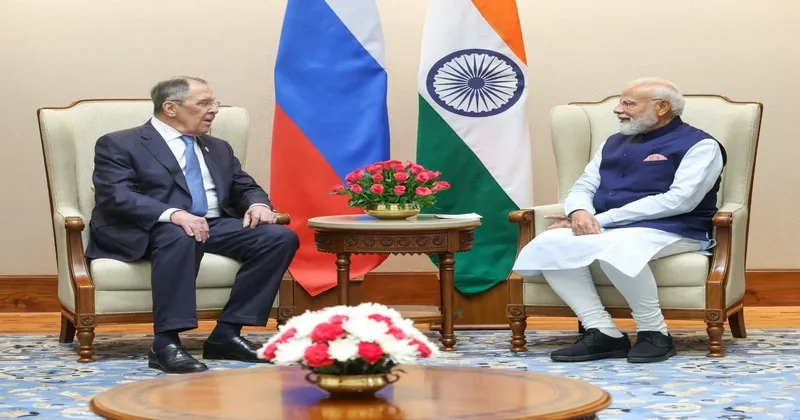
NEW DELHI: Russia on May 15 publicly backed India for a potential long-term diplomatic role in the ongoing US-Iran conflict, with Russian Foreign Minister Sergey Lavrov suggesting that New Delhi could emerge as a key mediator in West Asia because of its diplomatic experience, strategic credibility and direct economic interests in regional stability. Addressing a media briefing after the 2026 BRICS Foreign Ministers’ Meeting at Bharat Mandapam, Lavrov said Pakistan was presently helping facilitate immediate dialogue between Washington and Tehran, but indicated that India would be better positioned for a broader and more sustainable diplomatic role in the region.
“Pakistan is helping establish dialogues between the US and Iran to resolve urgent problems. If they seek a long-term mediator between Iran and its Arab friends, this role could be played by India, considering its vast diplomatic experience,” Lavrov said.
His remarks came amid growing fears of prolonged instability in West Asia following escalating tensions between the United States and Iran, which have intensified concerns over global crude oil prices and disruptions around the Strait of Hormuz, one of the world’s most critical energy shipping routes.
India, which depends heavily on energy imports passing through the Gulf region, has been actively deepening engagement with Gulf nations in recent months. Lavrov underlined that India’s strategic and economic interests gave it a direct stake in preventing further escalation. “India, the BRICS president, is directly interested in receiving oil from this region. Why won’t they offer their services, including as a country that is currently presiding over BRICS, so they could invite Iran, the United Arab Emirates, to start with, to have a conversation with each other to agree on how they can avoid any hostilities between the two countries?” he said.
#WATCH | Delhi: At a media briefing, Russian Foreign Minister Sergey Lavrov speaks on West Asia crisis
Translating his words, a translator says, "The most important thing is to put an end to this… We discussed this during the ministerial Assembly. I don't think BRICS should… https://t.co/jRP3IVcf51 pic.twitter.com/5dxVGueQjg
— ANI (@ANI) May 15, 2026
BRICS should not formally mediate, says Lavrov
The Russian foreign minister clarified that BRICS as an organisation should not formally position itself as a mediator in geopolitical conflicts but maintained that individual member nations could play constructive diplomatic roles depending on their strategic interests and relationships. “The most important thing is to put an end to this. We discussed this during the ministerial Assembly. I don’t think BRICS should be the kind of organisation to mediate, but individual BRICS members, especially those who are interested in ensuring there are no problems with navigation in the Strait of Hormuz,” Lavrov said during the briefing.
Referring again to India’s role, he added that New Delhi could bring regional players together through dialogue initiatives aimed at avoiding military confrontation and protecting maritime stability in the Gulf.
The comments coincided with Prime Minister Narendra Modi’s visit to the United Arab Emirates as part of his ongoing five-nation diplomatic tour focused on strengthening India’s strategic, economic and energy partnerships with Gulf and European nations. India has long been viewed by several countries as a potential bridge between Washington and Tehran because of its balanced diplomatic relations with both sides. Unlike many Western allies of the US, India has maintained communication channels with Iran while simultaneously expanding its strategic partnership with the United States.
Following earlier escalations between the US and Iran, international observers and foreign leaders had also called for India to play a larger diplomatic role. During previous tensions, Finland’s President Alexander Stubb had highlighted India’s capability to bridge differences between Washington and Tehran.
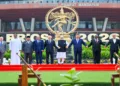
The 2026 BRICS Foreign Ministers’ Meeting was held in New Delhi on May 14 and 15 under India’s chairship. The summit brought together foreign ministers from BRICS member nations to deliberate on major geopolitical and economic challenges, including the ongoing US-Iran conflict, regional instability in West Asia and concerns surrounding navigation and energy supplies through the Strait of Hormuz, which handles a significant share of global crude oil transportation.