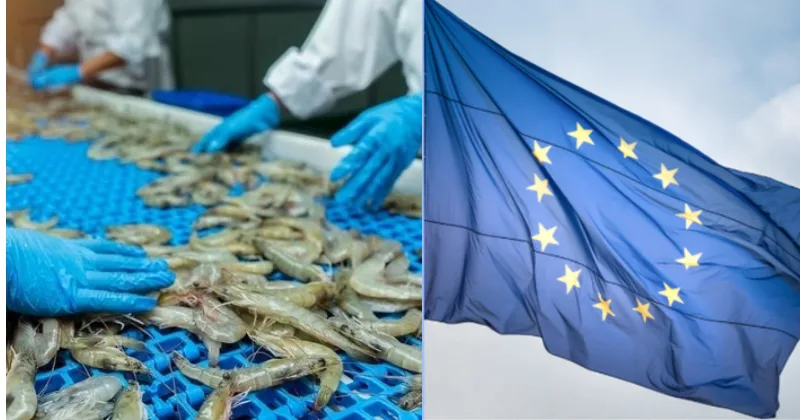
India has been included in the revised draft list published by the European Union on 12 May 2026, allowing the continued export of Indian aquaculture products to the European market beyond September 2026.
The inclusion is being viewed as a major boost for India’s seafood export sector and reflects the EU’s confidence in India’s regulatory systems, residue monitoring mechanisms and food safety standards.
Once formally adopted by the European Commission, the revised regulation is expected to ensure uninterrupted exports of Indian aquaculture products to the EU market.
The move comes after concerns were raised over India’s omission from the earlier Implementing Regulation (EU) 2024/2598 issued on 4 October 2024, which had excluded India from the list of third countries authorised to export animal-origin products for human consumption to the EU.
The revised draft list follows compliance measures undertaken by India in line with the European Commission Delegated Regulation (EU) 2023/905.
The regulation mandates exporting countries to ensure that animals and animal products exported to the EU are free from antimicrobial medicinal products used for growth promotion and antimicrobials reserved for human treatment.
The European Union emerged as India’s third-largest seafood export market during 2025–26, accounting for 18.94 per cent of total seafood export value at US$ 1.593 billion.
Exports to the EU registered significant growth over 2024–25, with export value increasing by 41.45 per cent and export quantity rising by 38.29 per cent. Farmed shrimp continued to dominate exports to the region.
In its press communication dated 12 May 2026, the European Commission stated that the updated list includes countries that have demonstrated compliance with EU restrictions on antimicrobial use in food-producing animals and have provided the required guarantees and assurances under EU regulations.
The development also recognises efforts undertaken by the Department of Commerce through agencies such as the Marine Products Export Development Authority and the Export Inspection Council to strengthen regulatory compliance and promote responsible aquaculture practices.
Government initiatives such as the National Residue Control Programme (NRCP), the Post Harvest Testing Programme, rigorous testing and surveillance systems for banned antibiotics and pharmacologically active substances, along with stakeholder training and awareness programmes, have strengthened India’s food safety and residue monitoring framework.
Officials said India has consistently improved systems related to veterinary medicinal products, antimicrobial residues, traceability and quality assurance in aquaculture production and seafood processing. The proposed inclusion is expected to support seafood export growth, employment generation and foreign exchange earnings.