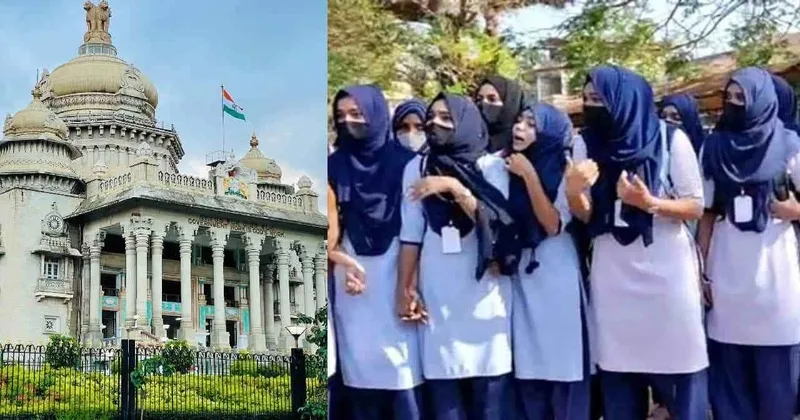
Bengaluru: The Karnataka government’s controversial decision to officially withdraw the 2022 hijab restriction order and permit students to wear hijab along with school uniforms has triggered a fresh political storm across the state, with the BJP accusing the Congress government of indulging in “selective secularism” and “minority appeasement politics” for electoral gains.
The Siddaramaiah-led government on May 13 issued a revised dress code guideline allowing students in schools and colleges to wear traditional and religious symbols such as hijab, turban, janivara, rudraksha and shivadhara along with prescribed uniforms. The new order replaces the controversial February 5, 2022 directive introduced during the BJP government led by former Chief Minister Basavaraj Bommai.
The government defended the move by stating that no student should be denied education because of religious attire or traditional practices. The order emphasised constitutional values, inclusiveness and equal access to education.
ಮುಸ್ಲಿಮರ ಮುನಿಸಿಗೆ "ಹಿಜಾಬ್" ಮುಲಾಮು!?
ದಾವಣಗೆರೆ ಉಪಚುನಾವಣೆ ಸುತ್ತ ನಡೆದ ಘಟನೆಗಳ ನಂತರ ಅಲ್ಪಸಂಖ್ಯಾತರ ಆಕ್ರೋಶಕ್ಕೆ ಬೆದರಿರುವ @INCKarnataka ಸರ್ಕಾರ, ಈಗ ತನ್ನ ಮತಬ್ಯಾಂಕ್ ಉಳಿಸಿಕೊಳ್ಳಲು 'ಹಿಜಾಬ್' ಅಸ್ತ್ರವನ್ನು ಕೈಗೆತ್ತಿಕೊಂಡಿದೆ.
ರಾಜ್ಯದ ನೈಜ ಸಮಸ್ಯೆಗಳಾದ ಬೆಲೆ ಏರಿಕೆ, ಭ್ರಷ್ಟಾಚಾರ, ರೈತರ ಸಂಕಷ್ಟ, ಕಾನೂನು… pic.twitter.com/3EIQQfMuuW
— R. Ashoka (@RAshokaBJP) May 13, 2026
However, the decision immediately sparked sharp reactions from opposition parties and several pro-Hindu organisations, who alleged that the Congress government was reviving a sensitive religious issue purely for political reasons at a time when the state is facing several governance challenges.
Leader of Opposition R. Ashoka launched a scathing attack on the Congress government, accusing it of using the hijab issue to repair what he described as a “bruised minority vote bank” following recent political setbacks.
In a strongly worded statement, Ashoka said the Congress government was “visibly rattled” after recent electoral developments and had resorted to its “old divisive playbook” to regain minority support. He alleged that instead of addressing inflation, corruption, farmer suicides and law-and-order concerns, the government had deliberately revived a controversial religious issue for political survival.
Hijab as a "Healer" for a Bruised Vote Bank? Congress’s Desperate Appeasement Politics Exposed!
The @INCKarnataka government, visibly rattled by the fallout of the Davanagere bypolls and the growing anger within its minority voter base, has once again resorted to its old,… https://t.co/uW7lEBSVOH
— R. Ashoka (@RAshokaBJP) May 13, 2026
Calling the move “a calculated political bribe to appease one specific community,” Ashoka argued that educational institutions should remain spaces of equality and discipline rather than platforms for religious identity politics.
“The concept of uniform exists because all students are equal inside classrooms irrespective of religion, caste or economic status. Once visible religious identity enters campuses, divisions among students become inevitable,” BJP leaders argued.
Ashoka further accused the Congress government of mocking the judiciary by reversing a policy that had earlier received judicial backing. Referring to the 2022 Karnataka High Court judgment on the hijab matter, he claimed the court had upheld the importance of uniform dress codes in maintaining discipline and equality in educational institutions.
“The government is showing contempt toward judicial principles while preaching constitutional morality,” he alleged.
The BJP leader also accused the Congress of hypocrisy, claiming that the government was allowing hijab in the name of freedom while opposing saffron shawls and other Hindu symbols. According to him, the policy reflected “selective secularism” and discriminatory treatment of religious identities.
The hijab controversy first erupted in 2022 at a government PU college in Udupi after Muslim students wearing hijab were denied entry into classrooms. The dispute escalated rapidly when Hindu students began wearing saffron shawls in protest, eventually leading to statewide demonstrations, political mobilisation and legal battles.
Critics of the revised order fear that the latest move could once again deepen communal tensions inside campuses and reopen ideological conflicts among students. Several educationists and social commentators argued that schools and colleges should ideally function as neutral civic spaces where students interact beyond visible religious identities.
Some student organisations aligned with nationalist groups claimed the Congress government was risking social harmony by turning educational institutions into “laboratories of religious division” for short-term political benefit.
The Congress government, however, rejected the allegations and maintained that the revised policy was intended only to safeguard students’ educational rights and cultural freedoms. Chief Minister Siddaramaiah and senior ministers argued that respecting religious practices does not threaten social unity or institutional discipline.
The revised order also states that students wearing permitted traditional symbols should not be denied entry into classrooms or examination halls as long as such attire does not interfere with identification procedures or classroom discipline.
However, political observers noted that the order has not clearly clarified whether saffron shawls, would also be allowed under the revised framework. This lack of clarity is expected to trigger fresh debates and possible disputes at the institutional level.
Meanwhile, BJP leaders compared Karnataka’s political trajectory to West Bengal, alleging that excessive “appeasement politics” could eventually damage public trust and social cohesion. They warned that the people of Karnataka were closely watching what they termed the Congress government’s “vote-bank driven selective secularism.”
With congress state government preparing to intensify their political campaigns around the issue, the hijab controversy has once again returned to the centre of Karnataka’s political discourse, setting the stage for another prolonged ideological battle over religion, education and judiciary.