Every morning across 4,372 urban local bodies in India, roughly 160,000 tonnes of municipal solid waste is generated, the weight of more than 400 fully loaded Boeing 747s produced daily. For decades, this mountain of refuse was viewed purely as a liability and a burden on municipalities. It was a blight on public health and an embarrassment on the global stage. That calculus is beginning to change, and the numbers behind the shift are appreciable. India’s waste sector is now one of the fastest-growing markets in the country. What was long treated as the nation’s most stubborn environmental failure is quietly transforming into one of its most consequential economic frontiers.
• India Waste Management Market is Rs 1.83 Lakh Cr, USD 22.17 billion, projected to reach USD 54.20 billion by 2030 at 12.5 per cent CAGR.
• 1.6 Lakh Tonnes Daily Solid Waste Generated, Urban India alone is set to rise to 165 million tonnes annually by 2030.
• More than 78 per cent Waste Processing Rate FY 2024, 20 per cent more than from FY 2016, a fourfold improvement in eight years.
The Problem
India generates approximately 62 million tonnes of municipal solid waste (MSW) every year, growing at 4 per cent annually, according to the Ministry of Environment, Forest and Climate Change. Per capita urban waste generation is currently at 0.34 kg per person per day, which is projected to double to 0.7 kg by 2025, a four-to-six-fold increase from the 1999 level driven by rising incomes and rapid urbanisation.
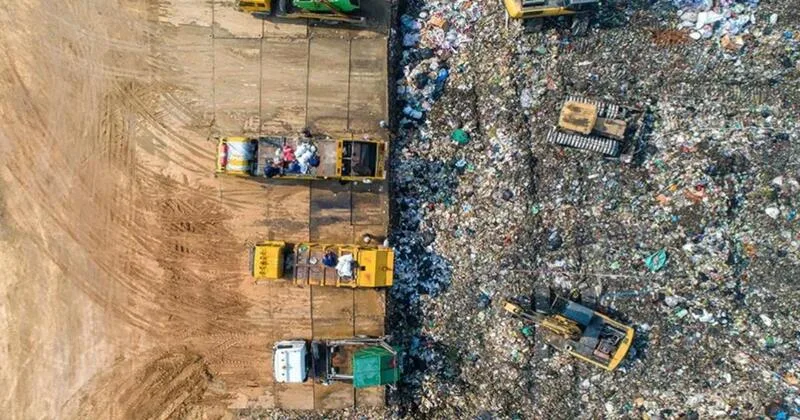
Maharashtra alone generates over 22,500 metric tonnes of MSW per day, more than any other state. Delhi and Mumbai are home to some of the world’s largest landfills. The Centre for Science and Environment (CSE) 2024, State of India Environment report found that only 17% of India’s waste at dumpsites has been remediated, with no action taken on 56% of waste. More than 30,000 tonnes, i.e. 21 per cent of total MSW, goes unprocessed every day, ending up in overburdened landfills.
According to the Global E-Waste Monitor 2024, India generated approximately 1.8 million metric tonnes of electronic waste in 2023-24, with only 40-45 per cent formally collected and recycled. More than 70 per cent of the remainder is handled by the informal sector under unsafe conditions. India’s hazardous waste generation surged more than 30% year-on-year in FY 2022 alone.
India produces nearly 3.5 million metric tonnes of plastic waste annually. Only 20% is recycled in the formal system, though the Central Pollution Control Board estimates that India recycles approximately 60 per cent of plastic waste when the informal sector is included, as a testament to the unsung but critical role of the nation’s 1.5 million waste pickers.
The Policy, Mission and Markets
The transformation did not happen in one day. It was seeded by a decade of policy reform, anchored by the Swachh Bharat Mission (SBM), launched in 2014 by Prime Minister Narendra Modi. The mission’s first phase was focused on open defecation, achieving the elimination of the practice for some 500 million people. Its second phase, SBM 2.0, launched in 2021, set an ambitious target of making all cities ‘Garbage Free’ by 2026, mandating the remediation of legacy dumpsites.
The policy architecture extended further. The Solid Waste Management Rules 2016, Plastic Waste Management Rules and E-Waste Management Rules laid a regulatory foundation. New Solid Waste Management Rules proposed in 2024, set to take effect from October 2025, mandated segregation at source, imposed fines for non-compliance and empowered sanitation workers with enforcement authority. Extended Producer Responsibility (EPR) frameworks were introduced for plastics, e-waste and packaging, shifting accountability to manufacturers.
In July 2024, the Asian Development Bank signed a USD 200 million loan agreement with the Government of India to enhance solid waste management and sanitation in 100 cities under SBM 2.0. Kerala’s government launched a Rs 2,400 crore solid waste management initiative in collaboration with the World Bank and the Asian Infrastructure Investment Bank. Gujarat’s largest waste-to-energy plant, inaugurated in Ahmedabad in 2024, processes 1,000 metric tonnes of waste daily and generates 15 megawatts of electricity per hour.
The cumulative effect is reflected in the data. India processed over 78 per cent of the total waste generated in FY 2024 compared to less than 20 per cent in FY 2016. Urban areas now report 100% municipal solid waste collection, according to official data, though segregation and processing rates vary significantly across states and city sizes.
The Circular Economy Dividend
A 2021 Ministry of Housing and Urban Affairs report estimated that recyclable garbage from municipal solid waste alone could generate Rs 30,000 crore (approximately USD 3.6 billion) per year. A KPMG study places potential savings from a circular economy in India at USD 624 billion by 2050.
Circular economy startups in India have attracted over USD 638 million in funding over the last decade, with 2024 alone recording more than USD 203 million, the highest single-year figure. As of early 2026, India has approximately 930 active circular economy companies, of which 221 have secured funding. Nearly 400 startups were already active in the circular economy space as of 2024, according to industry surveys.
Loopworm converts food waste into high-value proteins and organic fertilisers. Phool.co upcycles temple flowers into a distinctly Indian waste stream into eco-friendly incense and packaging materials. Banyan Nation has built a technology platform to recycle plastic waste into high-quality recycled polymers, collaborating with large corporations, municipalities and informal waste pickers. Hyderabad-based Recykal has digitised the waste management ecosystem, creating a managed marketplace that connects buyers and sellers of recyclables and enables EPR compliance. Attero Recycling, recognised by NASA as a technology innovator, operates India’s only end-to-end e-waste recycling and metal extraction facility. Recyclekaro is a Palghar facility that plans to process 50,000 metric tonnes of batteries by 2025 with over 90 per cent efficiency. CEF Group derives Bio-CNG from agricultural waste for the transport and power sectors.
India’s textile waste footprint has 7,800 kilotonnes per year, or 8.5 per cent of global textile waste is also being targeted. By 2030, India is projected to host over 180,000 startups, with circular economy activity spanning textiles, battery recycling, construction demolition waste, agricultural residue and biomedical waste.
Waste Management Market
The market opportunity is significant, and the projections, though varying across research firms, consistently point upward. The Indian Waste Management Market was valued at USD 22.17 billion in 2023 and is predicted to reach USD 54.20 billion by 2030 at a CAGR of 12.5 per cent, according to NextMSC research. The solid waste management sub-market reached USD 12.21 billion in 2024 and is expected to reach USD 21.86 billion by 2033. Even conservative estimates place the sector growth CAGR in the 6-7 per cent range through the next decade.
Investment in waste management infrastructure is estimated to reach USD 10 billion by 2025, driven by public and private funding. The Environment (Construction & Demolition) Waste Management Rules 2025 now mandate near 100% recycling and reuse of C&D waste by 2028-29, creating a new market for specialised processing facilities. E-waste is projected to grow sharply; the solar photovoltaic module waste alone is expected to surge from 100 kilotonnes in FY23 to 340 kilotonnes by 2030, while 500 kilotonnes of EV batteries are expected to require recycling by the same year.
Smart waste management technologies are gaining traction, alongside capital, including smart bins, GPS-tracked collection fleets and AI-powered sorting systems, which are being deployed by operators seeking efficiency and regulatory compliance.
Challenges That Cannot Be Papered Over
The number of dumpsites with legacy waste surged in at least 16 states and Union Territories between 2023 and 2024. Several states, including West Bengal, Mizoram and Ladakh, process less than half of the MSW they generate. Only about a quarter of India’s over 4,000 waste processing plants operate at full capacity, according to CPCB data. Recycling rates for different waste types rarely exceed 30%.
A 2022 CPCB report found urban India generating 63.17 million tonnes of MSW annually, treating 33.40 million tonnes. Government figures cite 57.89 million tonnes generated with 44.94 million tonnes treated. This discrepancy complicates both policy planning and private investment decisions. As analyst commentary published in Down to Earth notes, most cities lack granular data on waste quantity and quality variations across seasons and demographics.
The informal sector, while indispensable, remains vulnerable. India has 1.5 million waste pickers who handle a significant share of recycling but work without social protection or formal recognition in most states. In March 2025, Pune became the first city to implement the central government NAMASTE scheme, which officially recognises waste pickers as workers, extends social security benefits and integrates them into the formal solid waste management system.
Viksit Bharat and the Waste Economy
India’s ambition to become a developed nation by 2047, Viksit Bharat, rests in part on resolving this paradox, where a country that cannot manage its waste cannot credibly claim to manage its growth. The waste sector sits at the intersection of public health, urban infrastructure, climate commitments and industrial competitiveness. India has committed to reducing emissions intensity by 45% from the 2005 level by 2030; managing organic and inorganic waste sustainably is inseparable from that commitment.
The government Waste to Wealth Mission, operating under the PM-STIAC framework, is explicit in framing waste not as a burden but as a resource. It aims to deploy technologies for energy generation, material recycling and value extraction from waste streams, building circular economic models that are financially viable, not merely aspirational green.
A NITI Aayog representative, speaking at the Indian Circular Economy Forum 2024, stated that India’s transition to a circular economy requires robust partnerships between government, the private sector and citizens. Five years ago, the data says that rising processing rates, surging investment, 930 active circular economy companies and a regulatory architecture that is imperfectly implemented are being progressively strengthened.
Waste Is the New Resource
India’s waste problem is large, measurable and far from solved. Processing rates have quadrupled in eight years. A USD 22 billion market is expanding at double-digit growth. Over 900 companies are building businesses from materials that were once simply discarded. Temple flowers are becoming incense. E-waste is yielding precious metals. Agricultural residue is generating clean fuel. Dumped plastic is entering premium supply chains. But the direction of travel is unmistakable. India’s waste problem is measurable and turning into a national opportunity.