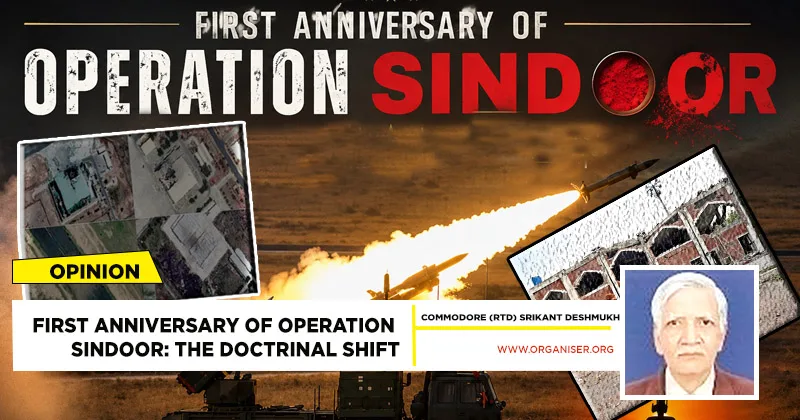
May 7 marks the first anniversary of Operation Sindoor in which Bharat showed its remarkable prowess to the world. Salute to the Indian Armed Forces bravehearts. The world saw Operation Sindoor as a well-orchestrated, focused, thoughtfully target oriented, non-escalatory military action by India, on May 07-08, 2025, against terrorist training camps in Pakistan and Pakistan-Occupied Kashmir (PoK). It was launched in response to the April 22, 2025, dastardly Pahalgam attack, where Pakistan-based terrorists killed 26 innocent tourists.
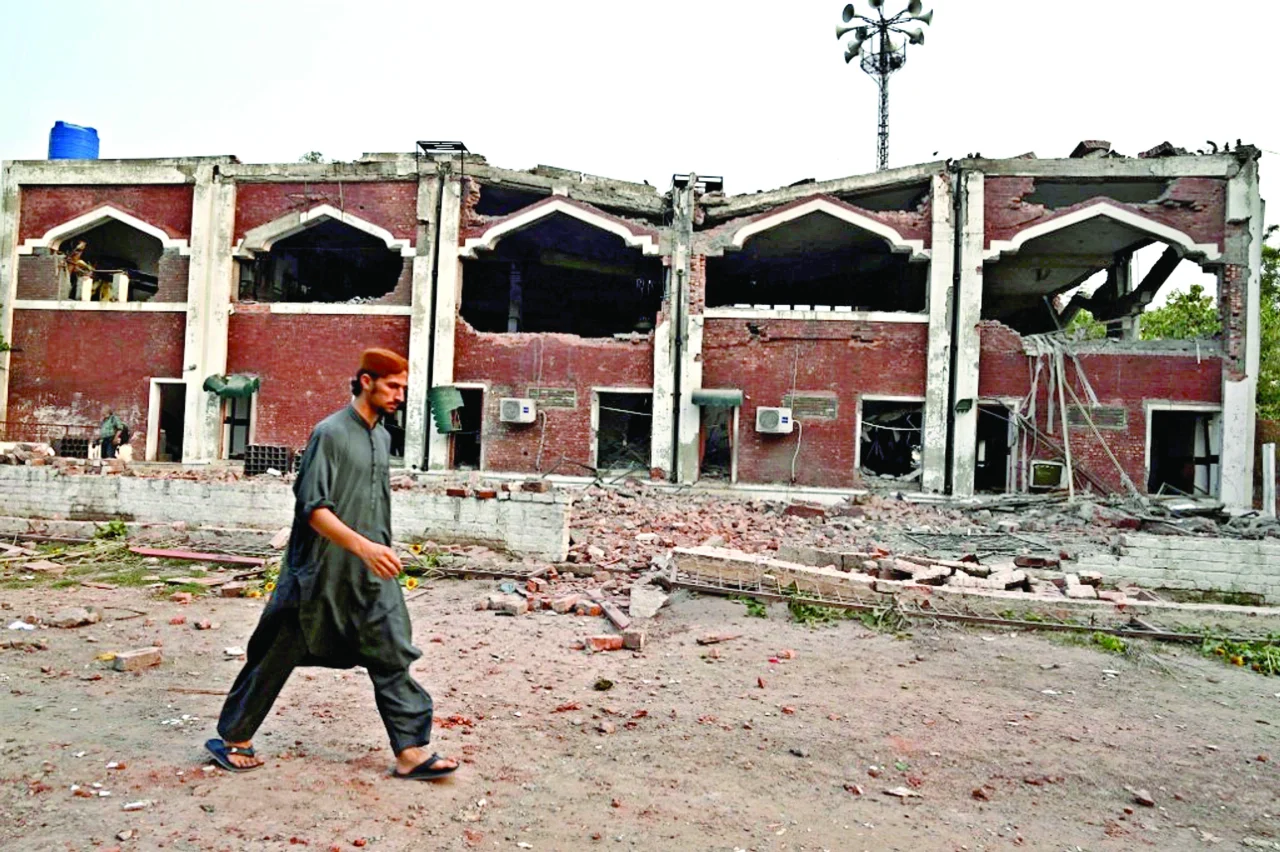
The ferocity of attack and behavioural pattern of the terrorists shook the consciousness of the nation. On the first anniversary of the Operation Sindoor, it would be appropriate to examine its backdrop, essentiality, and necessity for its continuation by delving into the history.
Pre-Independence Scenario
To recall, the pre-Independence times in India were marked by a self-sufficient economy, before British rule. India was prospering with its strong agro/cottage industry-based economy, steered effectively by a regional barter system. But the British colonial power converted India into a feeder economy for an industrialist own industrial base. This led to a drastic shift in the status of India as a net supplier of raw materials to a net consumer of finished industrial products, resulting in stress and dissatisfaction for common man. This simmering discontent led to the eventual independence movement.
The political environment in India then had a complex interplay of socio-political movements, political parties, and economic policies. Key socio-political developments then included formation of India’s first political party Indian National Congress, in 1836, and emergence of Hindu/Sikh/Muslim reform movements, which aimed at ushering in various social and religious reforms. These movements played a crucial role in formation of various political organisations, as well as shaping India’s path to Independence.
Post Independence Scenario
The year 1947 marked both the dawn of Independence and the darkest chapter of trauma and displacement. India gained freedom from colonial rule, accompanied by the painful Partition. The road ahead was filled with massive challenges for independent India, including communal tensions, administrative chaos, and developmental needs. Despite this, India’s leaders were committed to building a unified, democratic, and progressive nation.
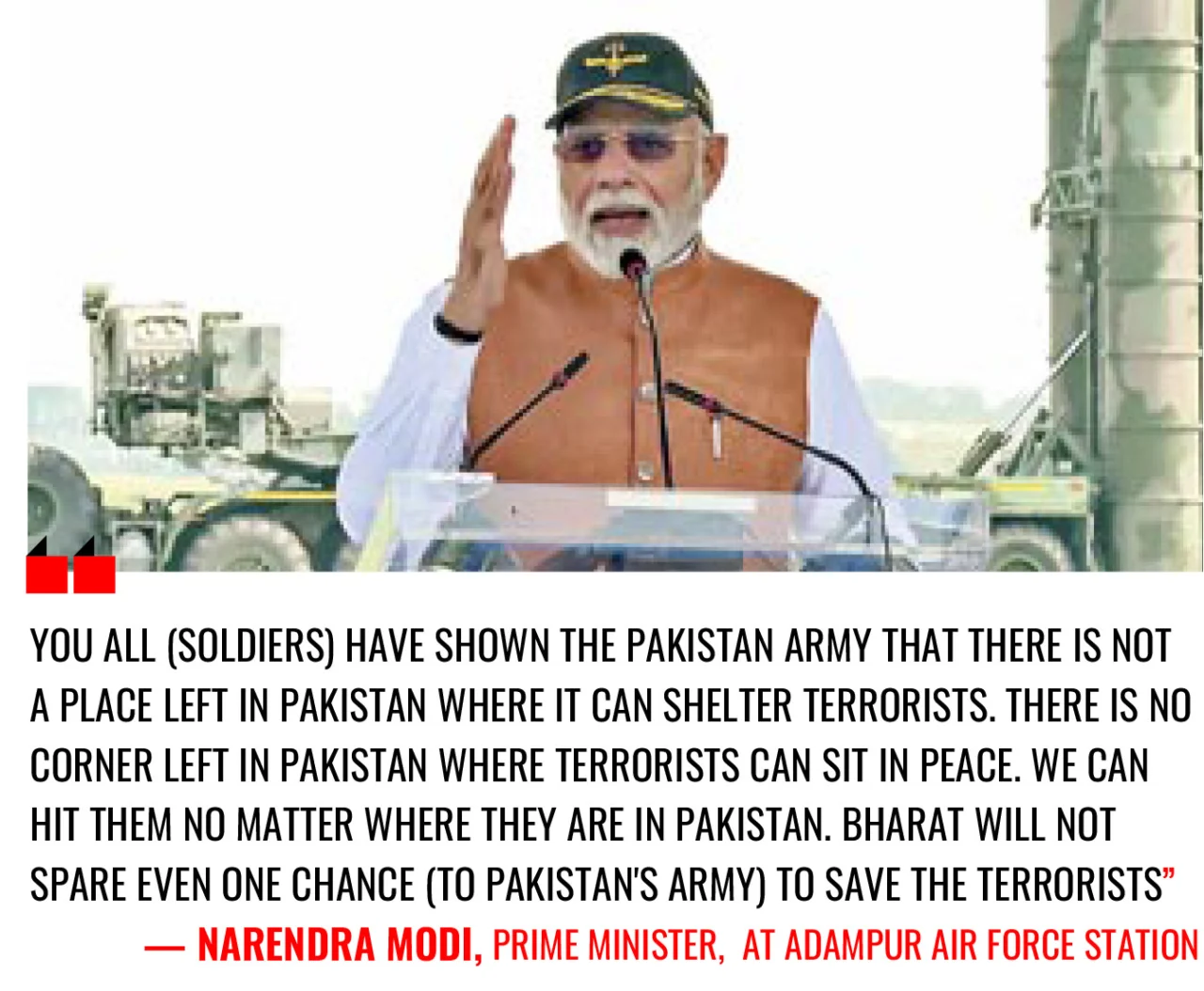
Same was the state of newly born Pakistan. But instead of focusing on internal stabilisation, it chose to initiate cross border actions for annexing the princely state of Jammu and Kashmir. Pakistan launched a series of military operations through tribal lashkar (militias) from Waziristan, to capture Kashmir and preempt the possibility of its ruler joining India. This was the first use of proxies by Pakistan, a policy with which it continues even to date. Pakistan’s aggressive stance was to take advantage of the rising demand for a separate state by India’s Muslims in Kashmir, riding on the chaos created by the united India’s Partition by the British. The conflict escalated into first war between India and Pakistan, first Indian action against militia using significant military engagements, which finally ended with illegal occupation of Kashmir by Pakistan (POK), and its supplanting seeds for perpetual Indo-Pak problems and Pakistan sponsored terrorism, instead of harmony and good neighborliness.
Pak Supported Terrorism in India
For decades, terrorism has been one of the most long standing and complex issues in India-Pakistan relationship. Also a central point of tension between the two nations. Pakistan-based terror groups have been carrying out high-profile terror attacks on Indian soil. To cite some examples from the 2001 attack on the Indian Parliament to the 2008 Mumbai attacks, to 2025 Pahalgam attack, and many in between, Pakistan supported terrorism has been an albatross around India’s neck.
Pakistan’s security establishment has been accused, for more than seven decades, by various governments, think tanks, and even international research bodies, of supporting nonstate terror actors. It is clear that Pakistan has supported cross-border terrorism in pursuance of its policy of bleeding India by thousand cuts, and also as an instrument of its twisted foreign policy. Notably, Pakistan was put in the Grey list of ‘Financial Action Task Force’ (FATF) also, for funding the terrorist organisations. Thus, terrorism has been the ‘core’ issue in Indo-Pak relations, shaping India’s foreign policy, as well as actions for addressing this challenge.
Unfortunately, India’s response to many pre-2008 terrorist attacks, and especially to the 2008 Mumbai terror attack itself, was far from satisfactory. India forgot that lodging strong diplomatic protests (note Verbale). Pakistan had expected similar lukewarm responses to its Balakot, Pahalgam et al, terror attacks. But India’s firm and calculated responses to terror attacks under the new regime and especially its response to 25 Pahalgam terror attacks (Operation Sindoor) wrote a new leaf in India’s history, highlighting the face of a new, firm and confident India. This happens only when leadership is strong and spirited, having an unambiguous understanding of geological dynamics, for ensuring the nation’s progress and its strategic autonomy.
Trigger for Retaliation
As mentioned above, Operation Sindoor was launched in response to the April 22, 2025 Pahalgam attack. On that day, the Union Territory of Jammu and Kashmir witnessed the most dastardly act of terrorism where 26 innocent tourists, mostly Hindu tourists and a foreign national, were executed in cold blooded manner, after being segregated. Undoubtedly, this Pahalgam attack was not an isolated eruption of violence- but part of a longstanding pattern of cross-border militancy. Evidence gathered by Indian authorities, as well as subsequent developments, including killing of some perpetrates, have clearly pointed towards involvement of the Pakistan backed groups, particularly The Resistance Front (TRF), an offshoot of Lashkare Taiba (LeT) and a US designated Foreign Terrorist Organisation (FTO). Reports surfaced that post the attack, TRF claimed the responsibility for it not once but twice within a few hours. The heart wrenching dimensions of this attack necessitated an appropriate response from India.
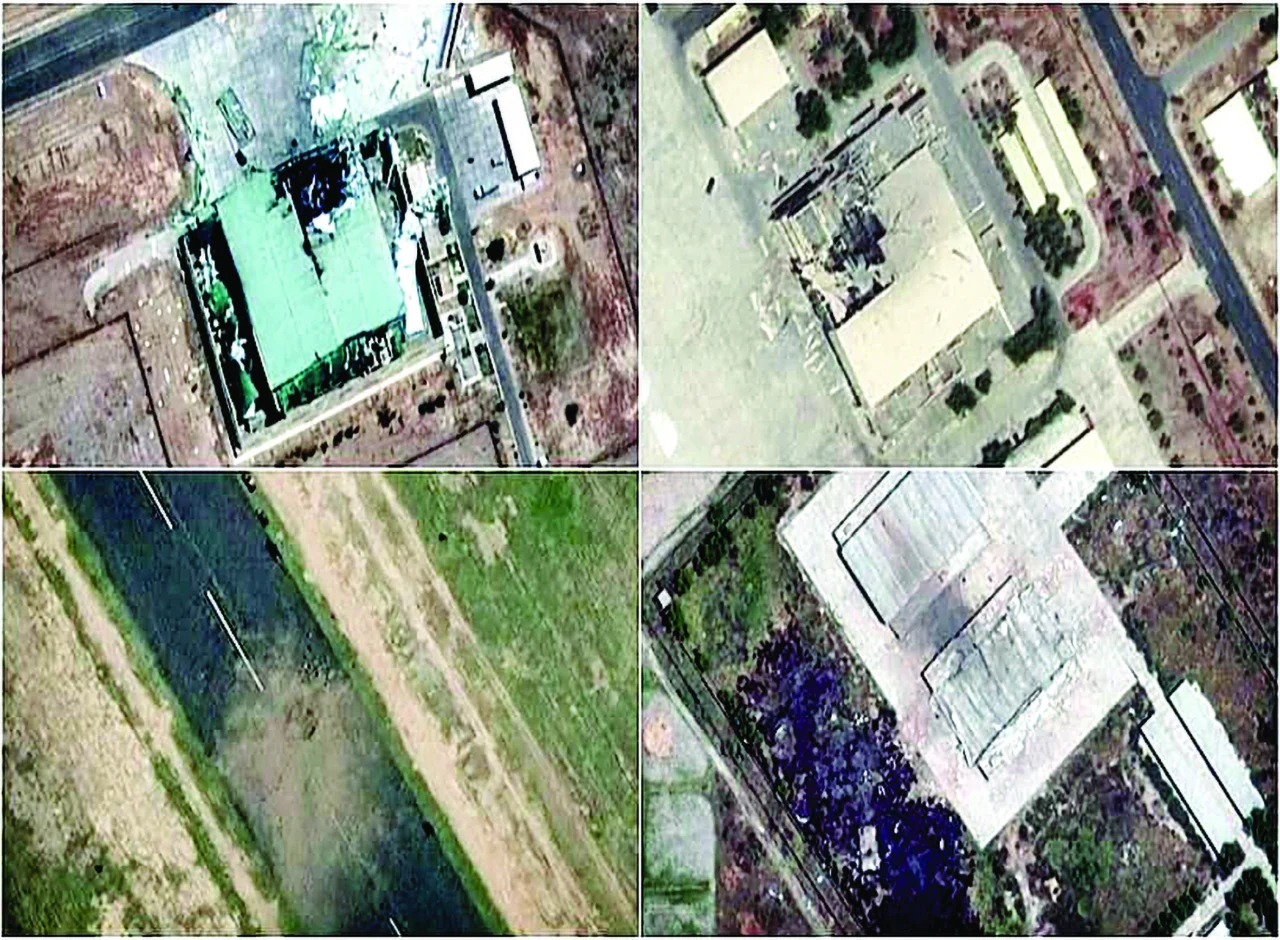
India’s precision attacks on Pakistan’s military establishments, air bases- especially the attack on Kinara Hills base- near Sargodha (presumed to be housing nuclear weapons) rattled Pakistan Government. The Pakistan Director General Military Operations (DGMO) called his Indian counterpart on May 10, 2025, requesting for ceasefire effective 5 PM that day, to which India agreed, as its stated objectives were achieved by then
The preparations for Operation Sindoor involved a comprehensive approach for ensuring the success of the military operation. The tactical aspects involved Precision Strikes, Technology Integration, Inter-Services Collaboration, Logistics and Cyber Surveillance, and Readiness for Future Operations. These preparations reflected India’s commitment to maintaining a strong defense posture and its ability to respond effectively to regional security challenges.
Pakistan’s continuous and audacious refusal to acknowledge or curb the Pakistan based terrorist networks or their terrorist activities, forced India to take a responsible but resolute action. On the night of May 07–08, 2025, Indian Armed forces launched Operation Sindoor,. India’s response was non escalatory, precise and targeted terrorist training camps at nine different locations- within Pakistan and Pakistan Occupied Kashmir. No military targets were engaged.
But in response to measured and non-escalatory operations from the Indian side, Pakistan, in the early hours of 08 May, escalated the situation by launching coordinated drone and missile attacks, targeting many Indian military establishments- across the Northern and Western theatres. Those included installations like Srinagar, Jammu, Pathankot, Amritsar, Ludhiana, Bathinda and Bhuj.
Timeline : Targeting with precision
- April 22: In Pahalgam, terrorists killed Hindu civilians asking their faith
- April 23: PM Modi cuts short visit to Saudi Arabia, reaches Delhi; PM-led Cabinet Committee on Security firms up first wave of punitive measures against Pakistan; Punitive measures include downgrading diplomatic ties; Expulsion of Pakistani military attaches; Suspension of the over six decades old Indus Water Treaty; Immediate shutting down of the Attari land-transit post; India withdraws its defence, navy and air advisors from High Commission in Islamabad.
- April 24: In Bihar’s Madhubani, PM Modi says those responsible for Pahalgam attack and their conspirators will be punished “beyond their imagination”
- May 7: Indian armed forces carry out Operation Sindoor from 01:05AM to 01:30AM; strikes nine terror targets in Pakistan and Pakistan-Occupied Kashmir.
- Main camps targeted: Markaz Subhan, Bahawalpur that was headquarters of JeM
- Markaz Taiba, Muridke, was headquarters of Lashka-e-Taiba led by Hafiz Syed; terrorists trained here have also been associated with many terrorist attacks including Mumbai attacks in 2008. Sarjal Camp, Sialkot — a major terror camp.
- Mehmoona Joya Camp, Sialkot: was a key training facility of Hizbul Mujahideen. It was used as the control center in revival of terrorism in Kathua and Jammu region.
- Syedna Belal Camp, Muzaffarabad — a camp of Jaish-e-Mohammad terrorist organisation; was being used as a staging area.
- Gulpur Camp, Kotli: was the base for LeT terrorists operating in Rajouri- Poonch.
- Abbas Camp, Kotli — was known as the nerve centre for training of suicide bombers of LeT
- Barnala Camp, Bhimber — was used for providing training to terrorists in weapon handling, IED making and jungle survival techniques.
- Sawai Nala Camp: was a key LeT training facility.
- India achieves the military objective of Operation Sindoor; Immediately after the strikes, India’s Director General of Military Operations (DGMO) informed his Pakistani counterpart that the attacks were directed only at terror groups
- May 7 night: Pakistan launches first wave of drones at Indian targets in night; mostly for surveillance. All attempts foiled. Pakistan military resorts to small arms firings along LoC in Jammu and Kashmir.
- May 8 night: Pakistan unleashes 300-400 drones across 36 locations from Leh to Sir Creek attempting to target military infrastructure, civilian areas.
- Attempts foiled. Indian military launches counter measures targeting Pakistani installations; Pakistan military ramps up firings across Line of Control, international border.
- May 9 night: Pakistan launches a fresh wave of drone attacks targeting 26 locations — from Jammu and Kashmir to Gujarat attempting to hit vital installations, including airports and air bases. Locations include Baramulla, Srinagar, Avantipora, Nagrota, Jammu, Ferozpur, Pathankot, Fazilka, Lalgarh Jatta, Jaisalmer, Barmer, Bhuj, Kuarbet and Lakhi Nala.
- May 10 early morning: Bharat launches precision strikes using an array of weapon systems and missiles on eight key installations ranging from air defence systems to radar sites and command centres of the Pakistani military; Pakistan Director General of Military Operations calls Indian counterpart on hotline at 1535 hours IST
- Foreign Secretary Vikram Misri announces India-Pak understanding on stop of hostilities at 6 PM
- May 12: PM Modi in address to the nation says Operation Sindoor is the new policy against terror, India will not succumb to nuclear blackmail
India’s high-tech Integrated Counter-drone Grid and layered Air Defence systems intercepted those attacks, neutralising them, and also conclusively established Pakistan’s culpability by recovering debris of Pakistani origin drones & missiles.
Pakistani unwarranted military provocations left India with no choice- but to retaliate by precision strikes against Air Defence systems at various locations in Pakistan. These strikes were deliberately confined to the neutralisation of systems that had assisted in the earlier Pakistani assaults. The retaliatory strikes were executed under the guiding principle of ‘equal intensity in the same domain’, by targeting installations directly involved in Pakistani misadventure. India commendably balanced the need for creating a credible deterrence with its overarching commitment to de-escalation.
In addition to the drone/missile attacks, Pakistan later resorted to unprovoked mortar and heavy-calibre artillery fire also, along the Line of Control in Jammu & Kashmir, that too into civilian areas. That resulted in the loss of sixteen innocent lives, including three women and five children. India was once again compelled to respond in equal proportion, with mortar and artillery fire, despite being committed to non-escalation. India’s precision attacks on Pakistan’s military establishments, air bases- especially the attack on Kinara Hills base- near Sargodha (presumed to be housing nuclear weapons) rattled Pakistan Government. The Pakistan Director General Military Operations (DGMO) called his Indian counterpart on May 10, 2025, requesting for ceasefire effective 5 PM that day, to which India agreed, as its stated objectives were achieved by then.
India’s strategic calculus in Operation Sindoor was evident by its unwavering commitment to protecting civilian lives, without precipitating a broader military conflagration, and upholding national sovereignty. It did it by its non-escalatory posture and respect for established international norms. Operation Sindoor ‘s principle-driven military response underpinned its strategic restraint, and its actions as responsible, measured, and non-escalatory in nature, earned India global appreciation.
Weapons Used by bharat
Impactful weapons and systems which helped India in executing precision strikes and neutralise Pakistani military, weaponry, and drones’ threats involved:
HAMMER (Highly Agile and Maneuverable Munition Extended Range): It’s a French-origin air-to-ground smart weapon system integrated with Rafale aircraft. It has range up to 70 km and is capable of being fitted on various guided platforms. It is also an all-weather precision attack weapon, with autonomous jamming resistant guidance system, and is effective at low altitudes and on rough terrains.
SCALP (Système de Croisière Autonome à Longue Portée): It’s an air-launched stealth cruise missile, also called Storm Shadow. It has range up to 450 km, with terrain-hugging flight for stealth and precision. It is equipped with INS, GPS, and terrain referencing systems for bunker-busting accuracy. METEOR (Beyond Visual Range Air-to-Air Missile – BVRAAM): It is a next-generation air-to-air missile built by MBDA France, and is effective in electronic warfare environments. It uses a solid-fuel ramjet engine, giving it an extended No-Escape Zone, enabling target destruction at maximum range.
BRAHMOS Supersonic Cruise Missile: Jointly developed by DRDO (India) and NPOM (Russia) under BrahMos Aerospace. It has speeds varies from Mach 2.8–3.0, and range between 290 km to 450km. It operates on Fire-and-Forget Principle, and is adaptable for land, sea, and air platforms, and has terminal altitude as low as 10 meters.
Loitering Munitions (Kamikaze Drones): These are capable of hovering over target areas, perform surveillance, and strike with high precision when a target is identified. They have autonomous or semi-autonomous capabilities and can be used for striking mobile or time-sensitive targets. They have been inducted across the Army, Navy, and Air Force.
Other Systems: Russian origin legacy platforms like the Pechora and OSA-AK were also deployed effectively, as a part of a layered defence grid.
Atmanirbhar Bharat
Operation Sindoor offered India an important and tactical opportunity to showcase its Indigenous Defence Capabilities. The indigenous systems which were deployed during Op Sindoor covered:
Indigenous Systems in Combat: The deployment of DRDO’s SWATHI Radar, BEL’s secure communications, and Bharat Dynamics’ ATGMS underscored India’s self-reliant combat readiness.
Crisis Mobilisation with Indian Platforms: Rapid deployment of Tata Kestrel vehicles, Pinaka rocket launchers, and Aakash missiles ensured readiness without foreign dependency, gave India an edge.
Real-Time Intel via Indian Drones: iDEX-supported SWITCH UAVs by ideaForge provided real-time surveillance. Interestingly, ideaForge holds 90 per cent share of India’s defence mini-UAV market.
Full-Spectrum Domestic Logistics: Operation Sindoor was sustained by Indian supply chains such as OFB ammunition, GSAT-7 satellite communications, and BEML transport systems.
Start-Up Tech Validated in Battle: iDEX-funded firms like Tonbo Imaging and NewSpace deployed thermal sights and drone swarms, proving the combat utility of start-up innovation.
Operation Sindoor helped in achieving technological objectives: Realising Technological Sovereignty: Operation Sindoor used many indigenous systems reducing reliance on foreign defence imports. E.g., SWATHI radar facilitated precise artillery tracking without foreign technology.
Enhancing Strategic Deterrence: India’s domestic weapons deployment in Kashmir reinforced credible deterrence without escalating conflict. E.g., Pinaka rocket systems & Akash missiles systems demonstrated good calibrated firepower.
Achieving Civil-Military-Industrial Convergence: Operations showed strong collaboration between DRDO, ISRO, armed forces, and iDEX-supported start-ups. E.g., GSAT-7 satellite ensured real-time communication among the troops.
Enabling Shift to Tech-Driven Precision Warfare: AI-enabled drones and ISR systems minimised troop use and enhanced precision strikes. E.g., ideaForge’s SWITCH UAVs provided live battlefield surveillance.
Greater Civilian Infrastructure Protection: Real-time intelligence enabled targeted operations with minimal civilian disruption. E.g., Drone surveillance reduced collateral damage in populated zones.
Inter Services Cooperation
In an age of multi-domain warfare, India’s national security architecture demonstrated its joint strength and strategic foresight through Operation Sindoor, which was conceived as a punitive and targeted campaign- to dismantle the terror infrastructure across the Line of Control and deeper inside Pakistan. This operation showcased a calibrated, tri-services response, embodying precision, professionalism, and purpose.
During Operation Sindoor, Pakistan had initiated many retaliatory drone and UCAV attacks targeting key Indian bases and logistics infrastructure. These attempts were effectively neutralised by India with the potent Integrated Command and Control Strategy (ICCS), which facilitated real-time threat identification, assessment, and interception across multiple domains. In every single domain of Operation Sindoor, there was operational synergy between the forces, fully supported by the Government, its agencies and departments.
The Indian Army demonstrated its preparedness and effectiveness in both defensive and offensive roles. The Army’s air defence units worked in a perfect tango with the Air Force, deploying a wide array of systems ranging from shoulder-fired MANPADS and low-level air defence (LLAD) guns, to long-range SAMs. These units were instrumental in countering waves of drones and loitering munitions launched by Pakistan, ensuring the security of both military and civilian infrastructure.
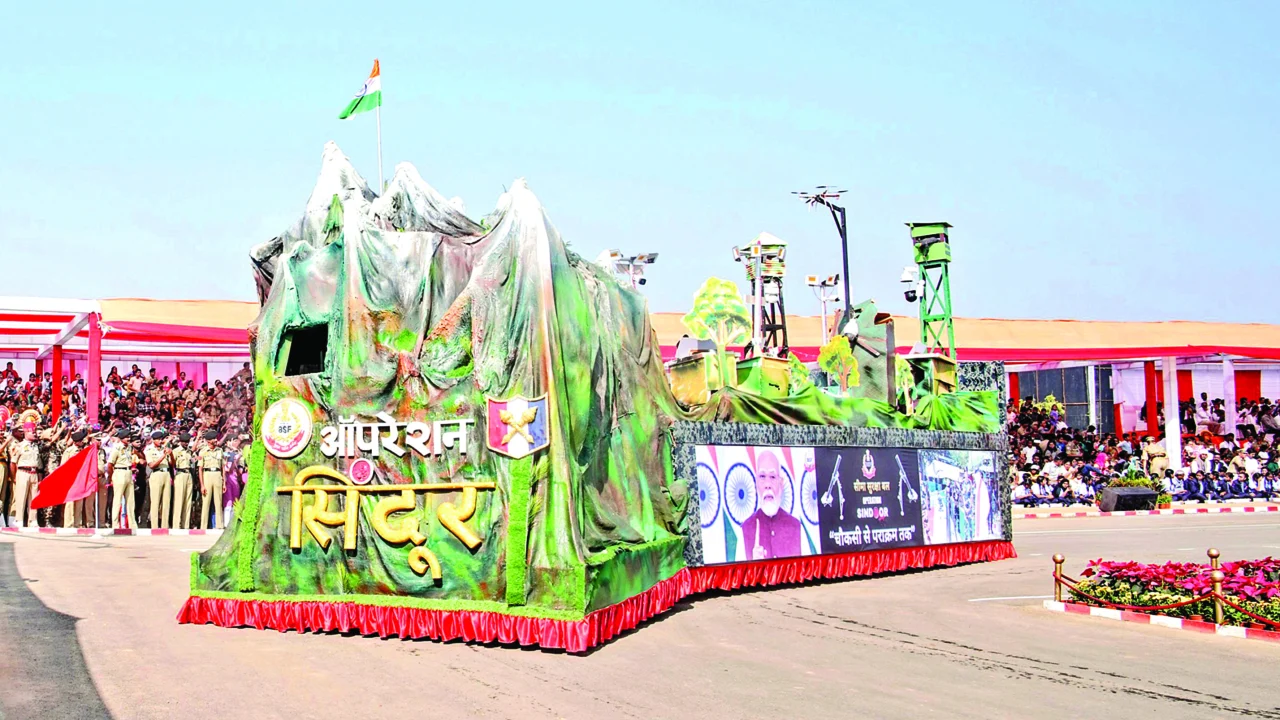
The Indian Navy played a stellar role in asserting maritime dominance during Operation Sindoor. It operated as a composite networked force, deploying its Carrier Battle Group (CBG), operating its MiG-29K fighter jets and airborne early warning helicopters round the clock. This ensured persistent surveillance and real-time identification of threats across the maritime domain.
Changes in Armed Forces Strategy
In post Operation Sindoor era India’s armed forces have been undergoing a significant transformation characterised by a new military doctrine, rapid technological upgrades, expanded defence capabilities, and matching security strategy. The government’s updated doctrine makes it clear that dialogue and terrorism cannot and will not coexist, signaling a firm commitment to decisive retaliation against any act of terror. This approach has translated into aggressive procurement, enhanced operational readiness, and a strong push toward self-reliance in defence technology.
Lessons learnt
Chief of Defence Staff General Anil Chauhan has specified that various important aspects have been learnt from Operation Sindoor. He emphasised that the Indian Armed Forces have drawn many lessons from this operation, which will be incorporated into the evolving model for theatre commands.
The CDS stated that India’s future Theaterisation model would synthesise insights gained from key operations during Uri, Balakot, Doklam, Galwan crises and now Sindoor, as well as from non-combat contingencies like the Covid-19 pandemic. Operation Sindoor was not just a single operation but a series of military actions that India had taken in response to the Pahalgam terror attack. It was part of a broader strategy to dismantle terror networks and protect national security. Government has declared continuum of the Op Sindoor as readiness for precision military strikes that will target terrorist infrastructure across the border, for giving a befitting reply to Pakistan, as India, henceforth, will treat any terrorist attack from Pakistan soil as state sponsored terrorism, and act of war. This continuum gives a clear message to Pakistan “Justice will be served every time, and India won’t forget any time.”
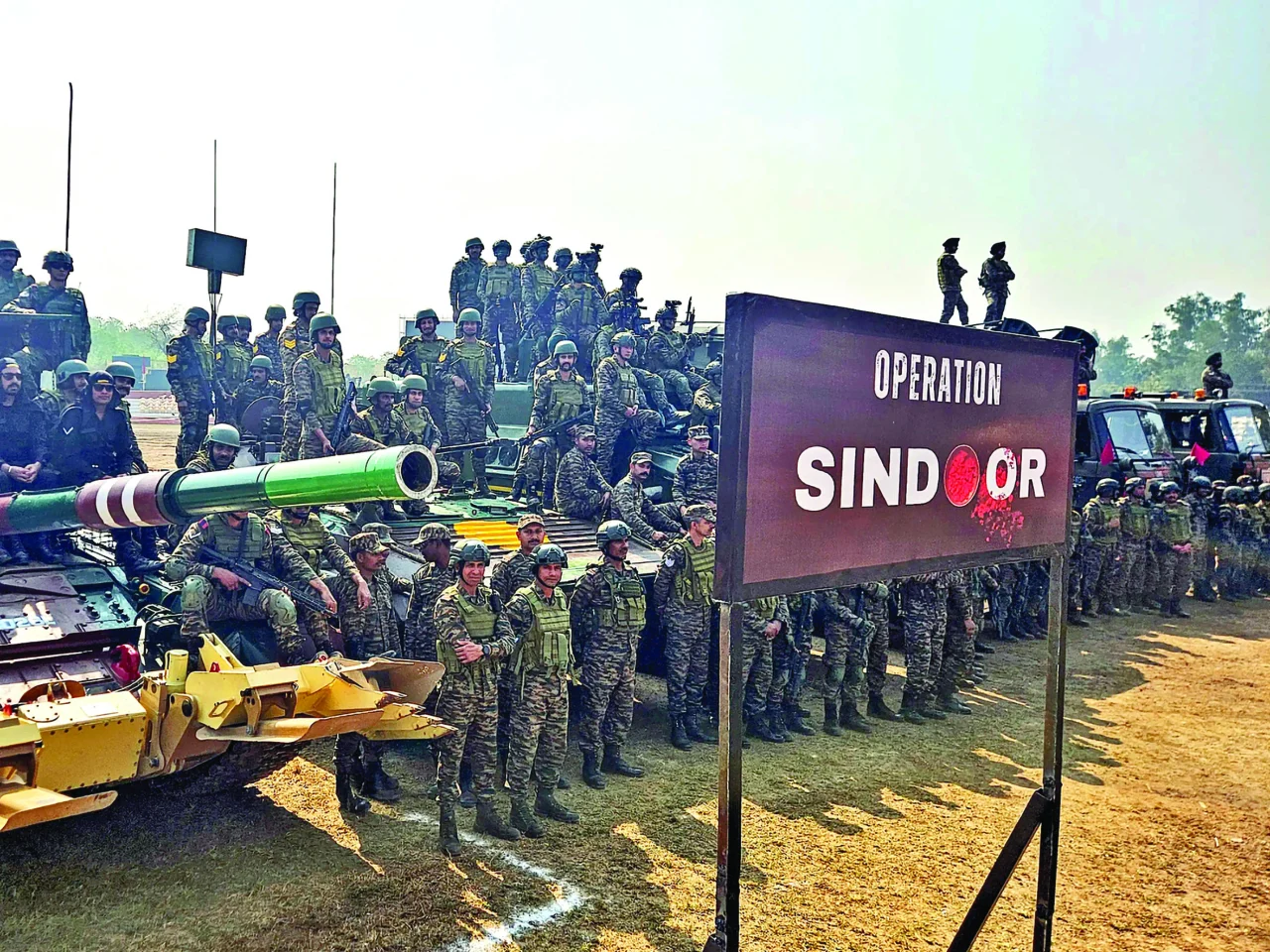
Capability Demonstration
Operation Sindoor was a well-orchestrated, focused, thoughtfully targeted, non-escalatory military operation by India, against terrorist training camps in Pakistan and Pakistan-Occupied Kashmir (PoK). It was launched in response to the April 22, 2025, dastardly Pahalgam attack, where Pakistan-based terrorists killed 26 innocent tourists. India’s problems with Pakistan have been existing since 1947, when Pakistan initiated actions in India for annexing the princely state of Jammu and Kashmir. The conflict escalated into the first Indo-Pak war, leading to significant military engagements and the eventual illegal occupation of Kashmir by Pakistan (POK), the root of the Indo-Pakistan problems, and Pakistan origin terrorism. Terrorism has, therefore, become the ‘core’ issue in Indo-Pak relations, shaping India’s foreign policy, and actions for tackling this menace.
Operation Sindoor was initiated in response to the Pahalgam attack. The preparations for Operation Sindoor involved a comprehensive approach for ensuring the success of the military operation, involving many aspects like Precision Strikes, Technology Integration, Inter-Services Collaboration, Logistics and Cyber Surveillance, and Readiness for Future Operations.
The resounding success of Operation Sindoor can be attributed to the use of many indigenous weapons and systems, which gave India much needed operational autonomy. This operation also highlighted to world India’s Inter Services (Military & Para-Military) cooperation capabilities. Indian government and India’s armed forces have learnt many valuable lessons from Operation Sindoor, and both are acting on implementing appropriate tactical and strategic changes in India’s standard operating procedures, under the new normal. Finally, Operation Sindoor was not just a single operation but is part of a broader strategy to dismantle terror networks and protect national security. India has declared continuum of the Operation Sindoor- for giving a befitting reply to Pakistan, as India will, henceforth, treat any terrorist attack from Pakistan soil as an act of war. This continuum gives a clear message to Pakistan “Justice will be served every time, and India won’t forget any time.”