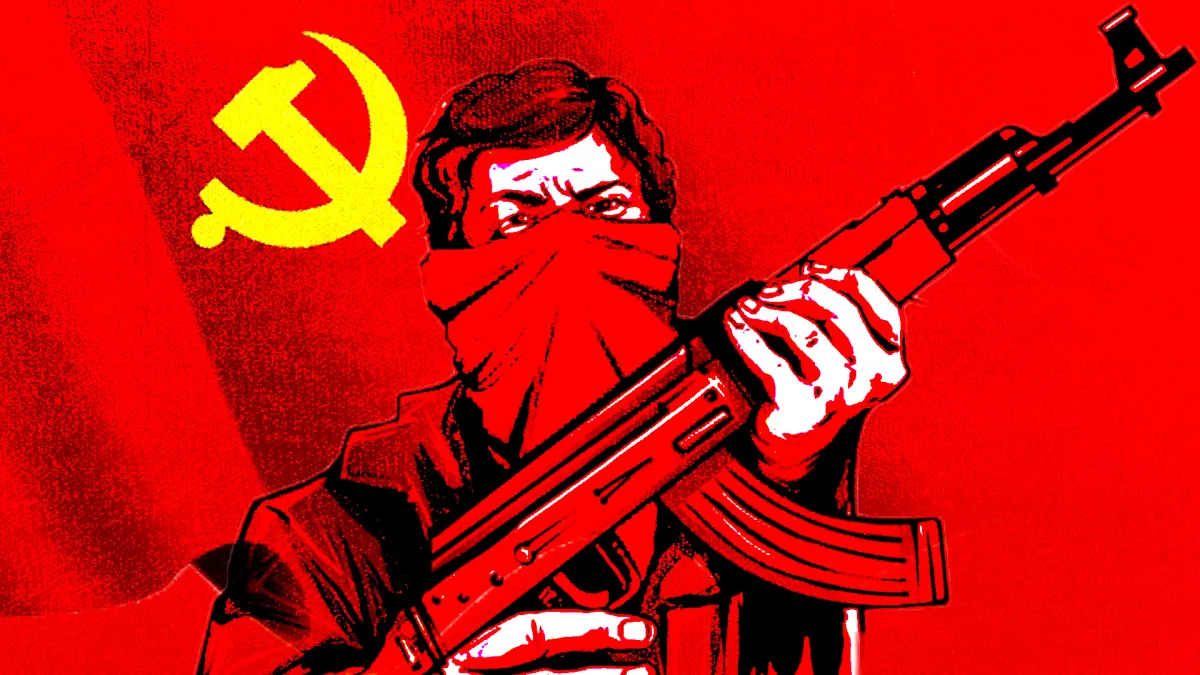
The year 2026 may well be remembered as one of the most decisive inflection points in India’s post-independence political journey. Two parallel arcs that shaped the country’s ideological battles for decades have now converged toward a singular conclusion: the decline of the Left, both in democratic politics and armed insurgency.
On one side stands the electoral erosion of the Communist Party of India (Marxist) (CPI(M)), particularly in its last stronghold, Kerala. On the other lies the systematic dismantling of Maoist violence, often referred to as Left Wing Extremism, across India’s hinterland.
Together, these developments make it not just political defeat but a broader ideological retreat.
Kerala Verdict: The last bastion cracks
For decades, Kerala remained the final citadel of parliamentary communism in India. While Left governments lost ground across states like West Bengal and Tripura, Kerala continued to offer a recurring lifeline, reinforcing the belief that Left ideology could still adapt to modern governance.
However, the 2026 Assembly election results have dramatically altered that perception.
The Congress-led United Democratic Front (UDF), backed strongly by the Indian Union Muslim League (IUML), surged ahead, leading in a majority of seats. In contrast, the CPI(M)-led Left Democratic Front (LDF) saw its numbers shrink significantly, marking not just a loss but a structural collapse.
This is not merely a cyclical anti-incumbency trend, which Kerala is known for. The scale and nature of the defeat suggest a deeper ideological displacement. The narrative that the Left could reinvent itself, especially after the re-election of Pinarayi Vijayan in 2021, now stands fundamentally challenged.
From national influence to regional marginality
To understand the magnitude of this moment, one must revisit the historical prominence of the Left in India.
In 1996, Jyoti Basu was poised to become Prime Minister, a moment that symbolised the peak of Left influence in national politics. However, the CPI(M)’s internal decision to decline participation in government, later termed a “historic blunder” by Basu himself, marked a turning point.
By 2008, Left parties held significant sway, even withdrawing support from the UPA government over the Indo-US nuclear deal, influencing national policy directions.
But the decline that followed was rapid and relentless.
The fall of Left rule in West Bengal in 2011 to Mamata Banerjee marked the beginning of the end. Tripura followed in 2018, where even leaders like Manik Sarkar could not withstand the shifting political tide.
Kerala remained the last outpost until 2026.
The parallel collapse of Maoist insurgency
While electoral communism was losing ground, a more violent manifestation of Left ideology, Maoism, was also witnessing a steady decline.
The origins of Naxalism trace back to the Naxalbari uprising, led by Charu Majumdar. What began as a peasant revolt soon transformed into a prolonged insurgency, spreading across central and eastern India.
At its peak, the so-called “Red Corridor” spanned multiple states, with Maoists establishing parallel administrations in remote regions like Dandakaranya. The insurgency claimed over 12,000 lives since 2000, affecting civilians, security forces, and tribal communities alike.
For years, the response to this challenge remained inconsistent.
Shift in Strategy: Security and development combined
A major shift occurred after 2014, when the government led by Narendra Modi redefined Maoism as a national security threat rather than merely a socio-economic issue.
Under the leadership of Amit Shah, a comprehensive strategy was implemented. This included intelligence-led operations, infrastructure development, financial disruption of insurgent networks, and rehabilitation policies for surrendered cadres.
The results have been significant.
Between 2015 and 2025, the number of Naxal-affected districts reduced sharply from over 100 to less than 20. High-profile Maoist leaders, including Nambala Keshav Rao alias Basavaraju, were neutralised. Surrenders increased, and the organisational capacity of Maoist groups weakened considerably.
Operations such as “Kagar” and “Black Forest” targeted core strongholds, dismantling infrastructure and seizing large caches of arms and explosives.
By March 31, 2026, the government declared that Maoism as an organised insurgent threat had been effectively neutralised.
Abujhmadh: Symbol of transformation
Few regions illustrate this transformation as starkly as Abujhmadh in Chhattisgarh.
Once considered an inaccessible Maoist stronghold, this dense forest region lacked basic infrastructure and governance. Maoists controlled the area through parallel administrative systems, often referred to as “Janatana Sarkar.”
Today, the situation is changing.
Security forces have established a presence, roads are being constructed, and mobile connectivity is expanding. The state is gradually reclaiming territory that was once beyond its reach.
Ballots and Bullets: A shared ideological arc
While parliamentary communism and Maoist insurgency operate through different means, both originate from a shared ideological framework rooted in Marxist thought.
The developments of 2026 show that this broader ideological ecosystem is facing simultaneous rejection.
At the ballot box, voters have moved away from Left parties. On the battlefield, the state has dismantled insurgent networks.
This dual rejection suggests a shift in public priorities, from ideological transformation to economic growth and governance.
Decline of the urban support ecosystem
Another important aspect of this transition has been the weakening of what has often been described as the “urban Naxal” ecosystem.
For years, sections of academia, activism, and commentary provided intellectual and legal support to Maoist narratives, framing them as resistance movements.
However, as insurgent violence declined and governance expanded into previously affected regions, these narratives lost resonance. The state’s focus on tangible outcomes rather than ideological debates further marginalised such voices.
The simultaneous decline of electoral Left parties and Maoist insurgency reflects a broader transformation in India’s socio-political landscape.
The Indian voter today is increasingly aspirational, focused on development, infrastructure, and economic mobility rather than ideological upheaval. Similarly, the state has demonstrated a firmer stance against armed challenges to its authority.
This shift marks a transition from politics driven by class struggle narratives and exploitation to governance, welfare, and delivery.
An idea runs out of ground
The events of 2026 are unlikely to be seen as isolated incidents. Instead, they represent the culmination of a long-term decline.
For the CPI(M), the loss in Kerala raises existential questions about relevance in a rapidly changing political environment. For Maoist groups, the reality is more stark, with their organisational and territorial presence drastically diminished.
As India moves forward, 2026 stands out as the year when the country decisively turned a page.
From Kerala’s electoral verdict to the shrinking footprint of Maoist insurgency, the message is clear. The ideological framework that once shaped large parts of India’s political and security discourse has lost both electoral support and operational ground.
The “Red Terror,” in both its parliamentary and insurgent forms, appears to be drawing to a close.