When the Unified Payments Interface was launched on April 11, 2016, few could have predicted the scale at which it would transform India’s financial ecosystem. Developed by the National Payments Corporation of India under the regulatory oversight of the Reserve Bank of India, UPI began as an ambitious attempt to simplify digital payments.
Ten years later, it has evolved into the world’s largest real-time payments platform, powering nearly half of global instant payment transactions. What started as a modest digital infrastructure project has now become the backbone of India’s economy, influencing everything from daily purchases to large financial transfers.
The rise of UPI is not merely a technological success story. It reflects a structural shift in how a country of over a billion people interacts with money.
From 373 transactions to billions
The numbers behind UPI’s growth are staggering and reflect one of the fastest adoption curves seen in any financial technology globally.
In its first month of operation in 2016, UPI recorded just 373 transactions. By the financial year 2025-26, that number had skyrocketed to approximately 24,162 crore transactions. This represents an astonishing 12,000-fold increase in volume over a decade.
The growth in transaction value is equally remarkable. From a modest ₹0.07 lakh crore in FY 2016-17, UPI transactions surged to nearly ₹314 lakh crore in FY 2025-26. This is more than a 4,000-fold increase, underscoring how deeply embedded the platform has become in India’s financial system.
On a daily basis, UPI now processes around 66 crore transactions, with a total value of approximately ₹0.86 lakh crore every single day. Monthly volumes have also reached historic highs, crossing 2,000 crore transactions for the first time in August 2025 and peaking at 2,264 crore transactions in March 2026.
These figures are not just statistics. They represent millions of everyday interactions, from buying groceries to paying school fees, all powered by a seamless digital infrastructure.
Backbone of India’s digital payments revolution
Today, UPI accounts for nearly 85 percent of India’s digital payment volume. This dominance reflects its deep integration into everyday life across urban and rural India.
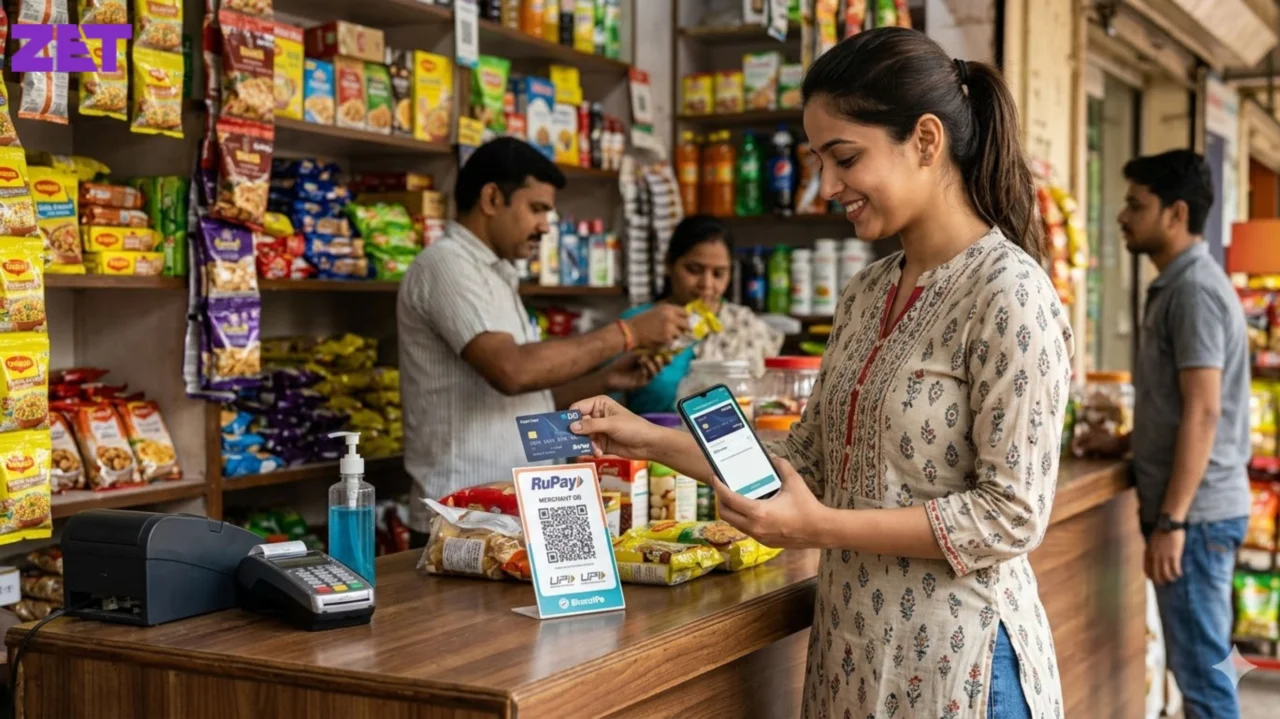
From roadside vendors and small kirana stores to large corporations and government services, UPI has become the default mode of payment. Its simplicity is one of the key reasons for this widespread adoption. Users only need a mobile phone and a bank account to transact instantly.
Another major factor behind its success is interoperability. Unlike earlier systems that operated in silos, UPI connects multiple banks on a single platform. From just 21 banks at launch, the network has expanded to include over 703 banks today. This includes public sector banks, private institutions, cooperative banks, and payment banks, ensuring accessibility across diverse regions and demographics.
The platform’s design allows users to send and receive money seamlessly, regardless of the banks involved. This has eliminated many of the friction points that earlier hindered digital payments.
Understanding how India uses UPI
UPI’s success can also be understood by examining how people use it. The platform caters to both small daily transactions and larger financial transfers, reflecting its versatility.
Person-to-Merchant transactions account for about 63 percent of total volume. These are typically small-value payments made at shops, restaurants, and service providers. In fact, 86 percent of merchant transactions are below Rs 500, highlighting how UPI has digitised everyday commerce.
At the same time, Person-to-Person transactions dominate in terms of value, accounting for 71 percent. This indicates a high level of trust in the system for transferring larger sums of money between individuals.
This dual nature of usage makes UPI unique. It is equally effective for buying a cup of tea and transferring significant amounts, all within seconds.
Global recognition and India’s leadership
UPI’s scale has not gone unnoticed globally. Institutions such as the International Monetary Fund have recognised it as the world’s largest real-time payment system by transaction volume.
India now accounts for nearly 49 percent of global real-time payments. This is a remarkable achievement for a country that, until recently, was still transitioning from cash-based transactions.
UPI has become a model for digital public infrastructure worldwide. Several countries are now studying India’s approach to replicate similar systems in their own financial ecosystems.
UPI goes global
What began as a domestic innovation is now expanding internationally. UPI is currently operational in several countries, including the United Arab Emirates, Singapore, France, Bhutan, Nepal, Sri Lanka, Mauritius, and Qatar.
In Singapore, UPI has been linked with PayNow, enabling seamless cross-border transactions between the two countries. This integration allows users to send money internationally with the same ease as domestic transfers.
The global expansion of UPI is particularly beneficial for Indian travellers, expatriates, and businesses. It simplifies remittances and reduces dependency on traditional, often expensive, international payment systems.
UPI’s success has created a vibrant ecosystem of innovation. Fintech companies, digital payment apps, and merchant solutions have flourished around this infrastructure.
Popular mobile applications have leveraged UPI to offer user-friendly payment experiences, driving further adoption. At the same time, businesses have integrated UPI into their operations, enabling faster and more efficient transactions.
The National Payments Corporation of India has played a crucial role in maintaining system stability. Its monitoring framework ensures high performance, strong security, and minimal downtime, even as transaction volumes continue to grow.
Continuous technological upgrades have enabled UPI to handle billions of transactions without significant disruptions. This reliability has been key to building user trust.
Driving financial inclusion across India
One of the most significant impacts of UPI has been its role in advancing financial inclusion. By eliminating the need for physical infrastructure such as point-of-sale machines, it has made digital payments accessible to millions.
In rural areas, where banking services were previously limited, UPI has enabled users to participate in the formal financial system. Small businesses and street vendors have been able to accept digital payments without incurring high costs.
This has not only improved convenience but also increased transparency and accountability in financial transactions. Government initiatives and welfare schemes have also benefited from this digital infrastructure.
UPI has effectively bridged the gap between urban and rural economies, bringing more people into the fold of digital finance.
Scaling new frontiers
As UPI enters its second decade, the focus is on expanding its capabilities and reach. Efforts are underway to onboard more users and merchants, particularly in underserved regions.
There is also a growing emphasis on integrating additional financial services such as credit, insurance, and investment products into the UPI ecosystem. This could transform it from a payment platform into a comprehensive financial services hub.
Cross-border payments are another area of focus. Expanding UPI’s global footprint will further strengthen India’s position as a leader in digital financial innovation.
Policy support and technological advancements are expected to play a crucial role in this next phase of growth.
The journey of UPI from a fledgling platform to a global leader in real-time payments is a testament to what can be achieved through innovation, collaboration, and vision.
In just ten years, it has transformed how India pays, saves, and transacts. From a handful of transactions in 2016 to trillions of rupees moving daily, UPI has redefined the financial landscape of the country.
More importantly, it has shown the world how digital public infrastructure can drive inclusion, efficiency, and economic growth at scale.
As India continues to build on this foundation, UPI stands not just as a technological achievement but as a symbol of a nation embracing the future of finance with confidence and ambition.