Operation Sindoor has been going on for a year now, and it shows how powerful information can be. The media plays an important role in shaping what people think and believe. Today, wars are not only fought on battlefields, but also through information, where even ordinary people are involved. At times information is weaponised. This makes it very important for the media to report carefully and responsibly, understanding the impact it has during such times.
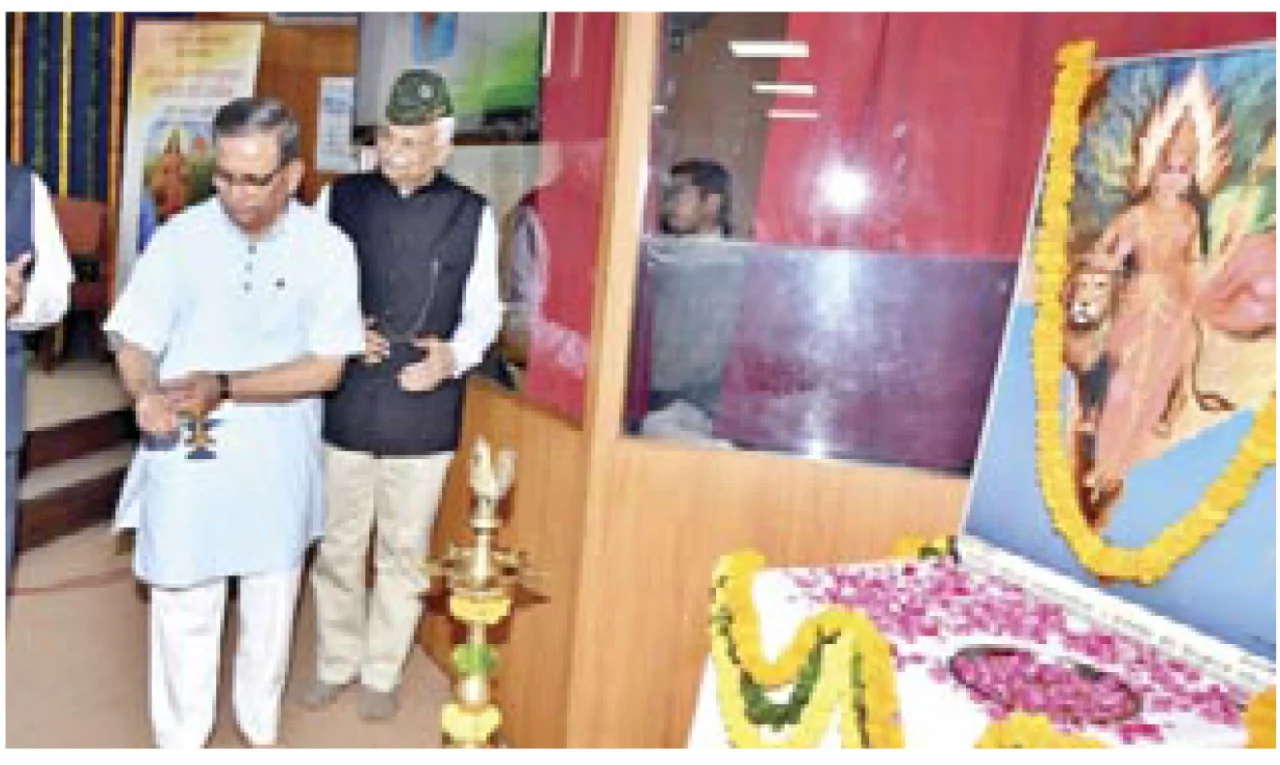
In the contemporary strategic environment, the role of media in national security has acquired unprecedented importance. Media today is not merely a channel of information and dissemination but a powerful instrument that shapes public perception, narrative building that influences national morale, and contributes significantly to the overall security architecture of the nation. Recognising this critical and evolving relationship, the Akhil Bhartiya Poorva Sainik Seva Parishad (ABPSSP) organised a one day seminar on ‘Media and National Security: Challenges and Responsibilities’ at Bharatiya Vidya Bhavan, New Delhi, on April 25, 2026.
The seminar was conceived as a platform to bring together key partners including senior Armed Forces veteran officers, media professionals (electronic, digital and print), strategic experts, and academia, to deliberate upon the multifaceted challenges and responsibilities associated with the media in the domain of national security. It was a first-of-its-kind initiative where the partners and the public interacted with each other through presentations, discussions, analysis and Q&A sessions, thereby enriching the overall discourse.
It was clearly spelt out that the media plays a very critical role in national security by shaping public perception and international narrative providing accurate and timely information during crises, and acting as a watchdog against any undesirable excesses. Its responsibilities extend far beyond reporting; they include ensuring national solidarity, avoiding panic-inducing or sensational coverage, and safeguarding sensitive information that could compromise the ongoing operations or national interests. Thus, the media must constantly balance the Fundamental Right to Freedom of Expression with the equally important imperative of national interests, security, stability, and unity.
Decoding Media-Military Relation
The media-military relationship is inherently complex and demands an open-minded, mature and in-depth understanding. At times, this relationship may appear baffling due to differing priorities — operational secrecy on one hand and the public’s right to know on the other. However, when aligned effectively, the media has the capacity to project the valour, sacrifice, national security imperative and professionalism of the armed forces in the right perspective, thereby acting as a force multiplier. It also serves as a crucial instrument for crafting narratives that can support strategic objectives and strengthen national resolve.
A significant theme that emerged strongly during the seminar was the importance of perception management as a key pillar of national security. In today’s interconnected and information-driven world, perception often shapes reality. Perception management involves the deliberate and strategic use of media to influence how domestic as well as international audiences view a nation’s stability, cohesiveness in society, military strength, and policy legitimacy. In this sense, the media acts as an “autonomous tool of statecraft,” influencing attitudes, behaviours, and opinions in ways that support national strategic goals. It was felt that in case of military operations, humanitarian relief operations by Armed Forces, diplomacy, the briefings etc must be led by the military. Also, it was strongly felt that there is an absolute necessity of a coordinated perception management authority or institution (may be given any suitable name like ‘Manthan‘, ‘Chintan’ etc) which must have the Government authority.
Deciphering Media shortcomings
At the same time, the seminar candidly acknowledged certain shortcomings in Bharat’s reporting and communication related to military and security operations. These include delayed and reactive dissemination of information, excessive secrecy that sometimes creates information vacuums, politicisation of operational successes, and limited transparency regarding casualties or tactical outcomes. There are challenges in managing both national and international perception while maintaining accuracy and credibility.
Such gaps have been observed in certain defence operations, including ‘Operation Sindoor’, underscoring the need for more structured and proactive communication strategies.
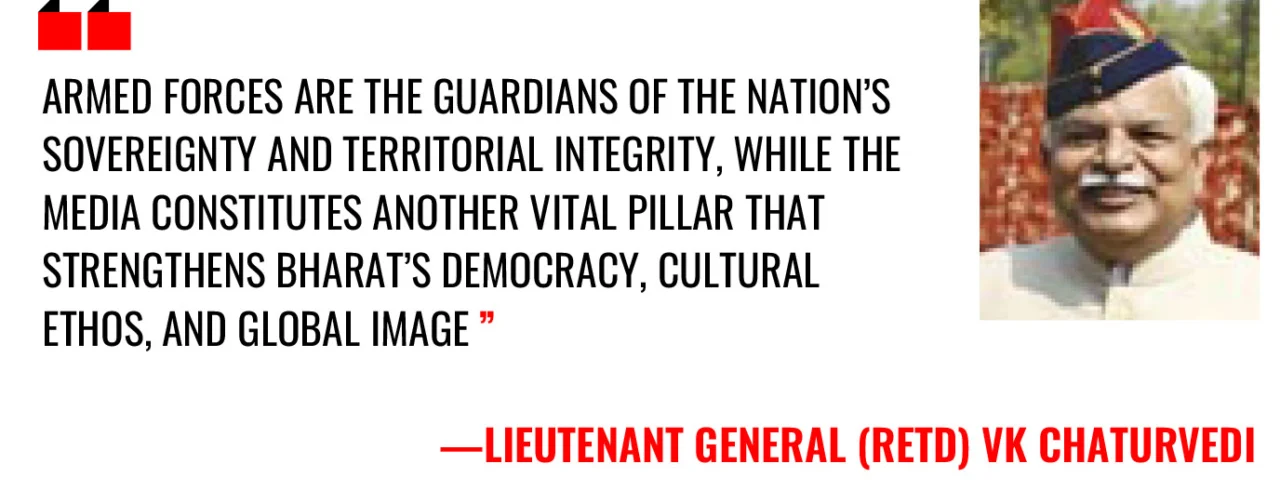
The seminar commenced with a welcome address by Lieutenant General VK Chaturvedi, National President ABPSSP, who emphasised that while the Armed Forces remain the guardians of the nation’s sovereignty and territorial integrity, the media constitutes another vital pillar that strengthens Bharat’s democracy, cultural ethos, and global image. He highlighted that effective coordination and mutual understanding between these two pillars are not only important but absolutely essential in the current security environment.
The inaugural address by Dr K Siva Prasad, Director, Bharatiya Vidya Bhavan, further reinforced this perspective. He stressed the importance of continuous engagement between the media and the security establishment.
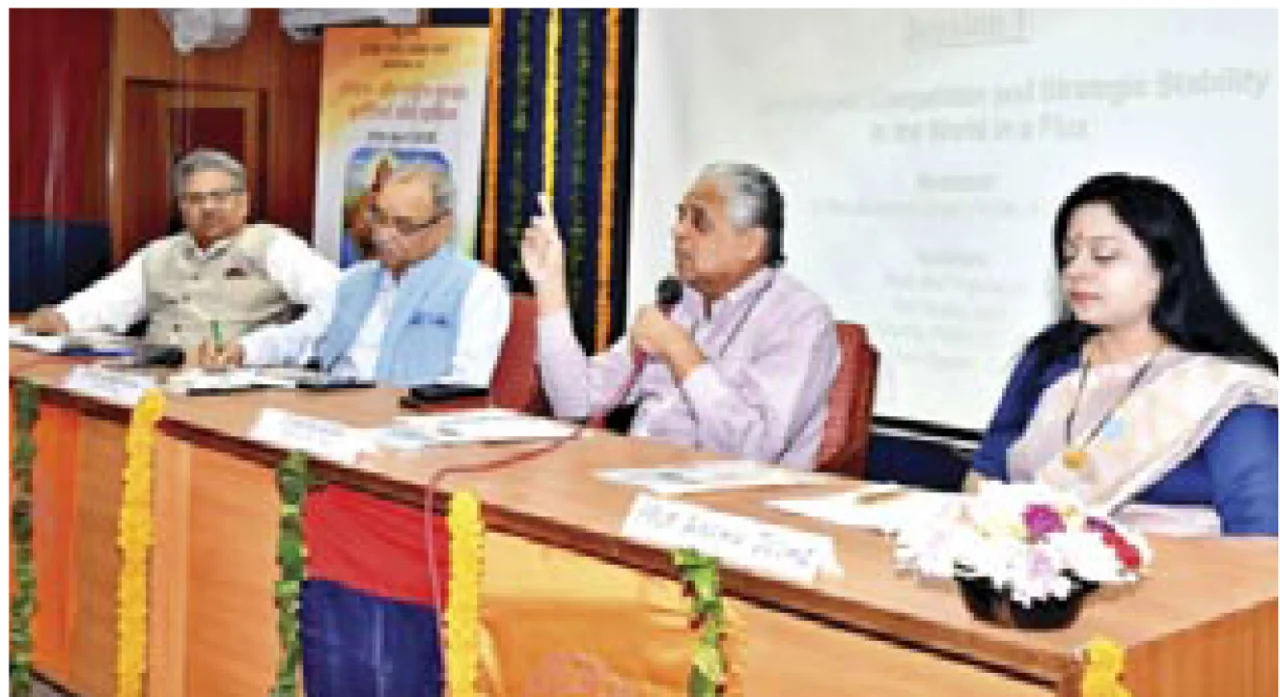
The first session was moderated by Lieutenant General Dushyant Singh, a veteran who provided a comprehensive overview of Great Power Competition and Strategic Stability in a rapidly changing global order. He highlighted the intense rivalry among major powers — particularly the United States, China, and Russia — as they navigate the erosion of the post-‘Cold War’ order.
Lieutenant General Raj Shukla, Member UPSC elaborated on how adversarial rivalries among these powers have intensified competition for global influence, control over trade routes, technological dominance, and military superiority. He provided detailed insights into ongoing geopolitical developments, including the situation in Iran and the evolving US-Israel strategy in West Asia, highlighting their broader implications for regional and global security.
Former Ambassador Anil Trigunayat and Prof Anshu Joshi, Professor JNU, further enriched the discussion by analysing the emerging global landscape, including the rise of middle powers such as Bharat and Japan, as well as the growing significance of the Global South. They examined the potential role of Bharat as a stabilising force and a key player in shaping the emerging world order.
The second session, moderated by Major General RPS Bhadauria focused extensively on perception management. He reviewed the shortcomings observed in current systems and emphasised the need for a structured, proactive, and coordinated approach to managing perceptions — not only within Bharat but also in neighbouring countries and across the global stage.The third session, moderated by Prof (Dr) KG Suresh, former Director General, IIMC, centred on the growing impact of social media on national security. He highlighted that social media has emerged as a powerful conduit for disinformation, radicalisation, cyber espionage, and psychological operations. Hostile actors increasingly exploit these platforms to spread propaganda, manipulate public opinion, and extract valuable intelligence.
The seminar clearly emphasised the relationship between media and national security as complementary, not adversarial. Both institutions play vital roles in serving the nation, and their synergy is essential for effectively addressing contemporary security challenges in particular the narrative building and perception management. In an age where information itself has become a domain of warfare, credible communication, responsible journalism, and strategic narrative-building are indispensable.
The initiative by Akhil Bhartiya Poorva Sainik Sewa Parishad marks an important step towards fostering meaningful dialogue and collaboration between the media and the security establishment. Such engagements will be crucial in ensuring that Bharat remains not only secure on the battlefield but also resilient and influential in the domain of information and perception — an arena that is increasingly becoming decisive in shaping global outcomes.