The civilizational journey of Bharat has always been one of profound resilience and an inherent quest for self-reliance. As we navigate through the era of Amrit Kaal, the visionary leadership of Prime Minister Narendra Modi has ignited a transformation that transcends mere economic metrics. This is a resurgence of the Bharatiya spirit, a systematic dismantling of the colonial shadows that long obscured our potential and a bold leap toward a future where our nation stands as a Vishwaguru in science and energy. The recent milestones achieved in the nuclear sector, particularly the strides made at the Kalpakkam nuclear complex, represent more than just technical success; they symbolise the arrival of a self-assured Bharat that no longer seeks permission to lead the world.
For decades, the discourse surrounding Bharat’s development was tethered to a defensive posture, one that relied heavily on imported technologies and foreign validation. However, the pro-Bharat push championed by the current administration has fundamentally altered this narrative. By prioritising indigenous innovation and strategic autonomy, the government has placed the nation on a trajectory toward absolute energy security. This shift is particularly significant for the southern regions of Bharat, where the synergy between the technological prowess of Tamil Nadu and the natural resource wealth of Kerala is poised to create an industrial and economic renaissance unlike any seen in the post-independence era.
The Kalpakkam milestone and the architecture of autonomy
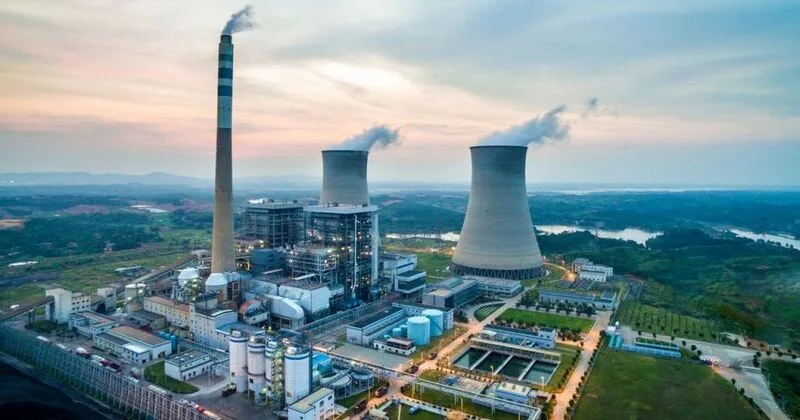
At the heart of this energy revolution lies the Prototype Fast Breeder Reactor at Kalpakkam. This facility is a testament to the brilliance of Bharatiya scientists and the unwavering political will that refuses to let vital projects languish in the corridors of bureaucracy. The achievement of criticality at this reactor marks the successful navigation of the second stage of Bharat’s three-stage nuclear power programme. It is a moment of profound pride because it signals that we have mastered the complex technology of “breeding” fuel, creating more fissile material than the reactor consumes. This is a feat that very few nations in the world have dared to attempt, and even fewer have mastered.
This development is the crucial bridge to the third stage of our energy roadmap, which centres on the utilisation of thorium. While the global energy market has long been dominated by the scarcity of uranium, Bharat sits upon a literal goldmine of thorium. By perfecting the fast breeder cycle, the nation is unlocking the door to a future where we are no longer vulnerable to the fluctuations of global uranium prices or the geopolitical whims of supplier nations. This is the essence of the New Bharat narrative: a nation that identifies its unique strengths and builds its future upon them, rather than following a path dictated by the West.
Legislative will and scientific victory: The resurgence of the Kalpakkam PFBR
The surge in momentum at the Kalpakkam facility post-2014 is a defining chapter in the story of the New Bharat, where long-standing scientific potential was finally met with the decisive political will required for execution. While the initial groundwork for the breeder technology dates back decades, it was the strategic shift under the leadership of Prime Minister Modi that transformed the Prototype Fast Breeder Reactor (PFBR) from a perennial “project in progress” into a functioning pillar of national security. This era replaced the old culture of administrative delays with a mission-mode approach, recognising that energy independence is the primary safeguard of our sovereignty. By providing personal oversight, most notably during the historic core loading in March 2024, the government signalled that the era of indigenous nuclear science was no longer a secondary concern but a central tenet of the nation’s rise as a global power.
The legislative backbone of this acceleration was the landmark Sustainable Harnessing and Advancement of Nuclear Energy for Transforming India (SHANTI) Act of 2025, which effectively dismantled the restrictive legacy of the 1962 Atomic Energy Act. By introducing this modern framework, the government provided statutory recognition to the Atomic Energy Regulatory Board, thereby streamlining the safety and approval processes that had previously stalled progress for years. The SHANTI Act was revolutionary because it opened the door for limited private-sector participation in the supply chain and construction, ensuring that the best of Bharatiya industrial capacity could collaborate with the Department of Atomic Energy. This synergy allowed for a more agile procurement process and introduced a level of accountability and speed that was previously unheard of in the nuclear sector.
This legislative and administrative push culminated in the historic attainment of first criticality at the Kalpakkam plant on April 6, 2026, a milestone that formally ushered Bharat into the second stage of its nuclear programme. The success of the PFBR under the SHANTI Act’s framework is the final proof that the “Modi Era” is characterised by the completion of civilizational projects that others deemed too difficult or time-consuming.
The black sands of Kerala: The fuel of the future
The geographical destiny of Kerala is inextricably linked to this national mission. The coastal stretches of the state, particularly in regions like Chavara and Alappuzha, are home to some of the richest monazite sand deposits on the planet. For too long, these “black sands” were viewed merely as a local geological curiosity or a resource to be exported in its raw form for a pittance. Under the nationalist vision of the current government, these sands are now recognized for what they truly are: the strategic fuel reserves of a superpower.
The monazite found in the pristine shores of Kerala contains a high concentration of thorium, the very element that will power the third stage of our nuclear program. As the technology at Kalpakkam matures and transitions into the widespread use of thorium-based reactors, Kerala will emerge as a vital pillar of Bharat’s energy infrastructure. This transition promises to bring immense prosperity to the state. It offers an opportunity to move beyond a remittance-based economy and toward one rooted in high-technology extraction, processing, and research. The integration of Kerala’s natural wealth into the national energy grid is a perfect example of the “Sabka Saath, Sabka Vikas, Sabka Vishwas, Sabka Prayas” philosophy, ensuring that every corner of Bharat contributes to and benefits from our collective rise.
Dismantling the colonial mindset in policy and language
A key component of the Modi government’s push is the psychological decolonisation of the Bharatiya mind. This is reflected in the deliberate and powerful shift from the use of “India”, a term often associated with the administrative structures left behind by the British, to the civilizational name “Bharat.” This is not a mere change in nomenclature; it is an assertion of identity. When we speak of Bharat, we speak of a continuous civilisation that has contributed to global knowledge for millennia. This shift in language mirrors the shift in our scientific policy. We are no longer content with being “users” of technology; we are becoming the “creators.”
In the context of energy and development, this means rejecting the idea that Bharat must follow the exact carbon-heavy or uranium-dependent path of Western nations. The focus on thorium is a uniquely Bharatiya solution to a global problem. It is clean, it is abundant within our borders, and it is technically demanding. By mastering it, Bharat is telling the world that our traditional knowledge of our land, combined with modern scientific rigour, is the most potent tool for progress. This nationalist line of thinking ensures that our development is sustainable and, more importantly, sovereign.
Energy security as the foundation of sovereignty
No nation can truly be sovereign if its lights are kept on by the grace of foreign powers. Energy security is the bedrock upon which all other forms of prosperity are built. The heavy reliance on imported oil, gas, and uranium has historically been a point of vulnerability for our nation. It has forced Bharat to navigate complex and often unfavourable international alliances to ensure its survival. The push toward thorium-based nuclear power, catalysed by the breakthroughs at Kalpakkam, is the ultimate move toward breaking these chains.
The vision of Prime Minister Modi recognises that energy independence is a prerequisite for a ten-trillion-dollar economy. By leveraging the thorium reserves of the Kerala coast, Bharat is securing a source of power that can last for centuries. This is not just about meeting current demand; it is about providing the cheap, reliable, and carbon-free electricity required for a massive expansion of our manufacturing sector. It is about ensuring that the “Make in Bharat” initiative is powered by “Fuel from Bharat.” This level of energy security will provide our diplomats and leaders with a stronger hand on the global stage, as we will no longer be susceptible to energy-based coercion.
A new economic era for the South
The development in the nuclear corridor of the South is set to trigger a massive multiplier effect for the regional economy. The expansion of the Kalpakkam facilities and the eventual industrial scale-up of thorium extraction in Kerala will require a vast ecosystem of ancillary industries. From specialised engineering firms and chemical processing plants to advanced research institutions, the southern states are poised to become a global hub for nuclear technology.
For the youth of Kerala and Tamil Nadu, this means the creation of high-value jobs within their home regions. The era where our best minds had to migrate to foreign lands to find work that matched their calibre is coming to an end. The New Bharat offers them the chance to build the future of their own nation. Furthermore, the infrastructure development that accompanies such massive projects, roads, ports, and high-speed communications, will uplift local communities and integrate them more deeply into the national economy. This is a model of development that honours the local landscape while serving the national interest.
The leadership of action over inertia
The progress we see today is a direct result of a leadership that prioritises action over endless deliberation. The fast breeder reactor project had faced numerous hurdles in the past, often due to a lack of decisive support and a clear long-term vision. The current administration has changed this culture of inertia. By providing the necessary funding, streamlining regulatory approvals, and fostering a culture of accountability, the government has ensured that projects of national importance reach their conclusion.
This “Modi Model” of governance is characterised by a relentless focus on timelines and a refusal to settle for mediocrity. It is a model that understands that in the global race for technological supremacy, time is the most valuable resource. The successful criticality of the PFBR at Kalpakkam is a victory for this style of governance. It proves that when the state provides the right environment, the genius of our scientists can overcome any challenge. This is the template that is being applied across all sectors, from space exploration to digital infrastructure, creating a synergy that is propelling Bharat forward.
The global impact: Bharat as a green energy leader
As the world grapples with the challenges of climate change, Bharat’s push toward thorium-based nuclear energy offers a beacon of hope. Unlike fossil fuels, nuclear power provides a steady “base-load” of electricity without the emission of greenhouse gases. While wind and solar are vital components of our energy mix, the stability provided by nuclear energy is essential for a modern industrial society. By leading the way in thorium technology, Bharat is positioning itself as a pioneer in the global transition to clean energy.
This is a powerful rebuttal to those who claimed that developing nations must choose between economic growth and environmental protection. Through the visionary integration of Kerala’s resources and Tamil Nadu’s technology, Bharat is showing that it is possible to achieve both. We are not just participating in the global climate conversation; we are leading it with tangible results and indigenous solutions. This is the essence of being a Vishwaguru, providing the world with a path that is both prosperous and sustainable.
Radiant future of a self-reliant nation
The journey from the monazite-rich sands of Kerala to the high-tech cores of the reactors at Kalpakkam is a metaphor for the transformation of Bharat itself. It is a journey from potential to realisation, from dependence to leadership. The pro-Bharat push of the PM Modi government has ensured that we are no longer spectators in our own development. We are the architects of our destiny, fuelled by our own resources and guided by our own civilizational values.
The prosperity that this energy security will bring to Kerala and the entire nation is just the beginning. As we continue to build this “New Bharat,” we do so with the confidence that our path is righteous and our progress is unstoppable. The radiant glow of the reactors at Kalpakkam is a reflection of the rising sun of a new era, an era where Bharat stands tall, self-reliant, and prepared to illuminate the world. This is the promise of the nationalist vision, and it is a promise that is being fulfilled with every milestone we achieve on our sacred soil.