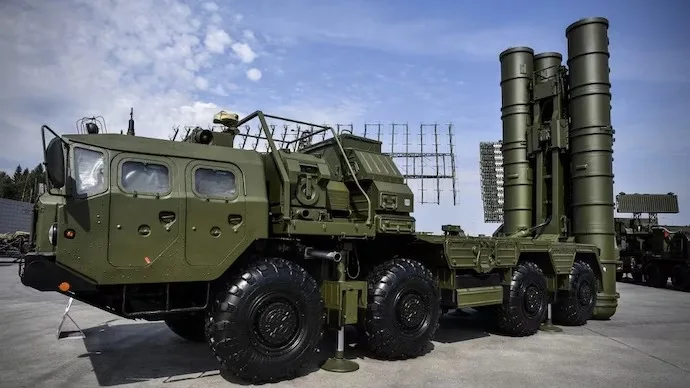
New Delhi: India is preparing to receive the fourth squadron of the S-400 air defence system from Russia, with deliveries already underway and expected to be completed in the coming weeks. According to sources, key components of the advanced air defence system began shipping from Russia last week, and the full squadron is likely to be inducted around May 2026.
The timing of the delivery is significant, as it coincides with the anniversary of Operation Sindoor, during which the S-400 systems were deployed successfully to counter aerial threats. Defence officials view this as a symbolic and strategic reinforcement of India’s growing air defence capabilities.
The fourth squadron is expected to be deployed along India’s western front, further strengthening aerial protection across sensitive sectors bordering Pakistan. The final, fifth squadron under the original deal is anticipated to be delivered later this year, completing the full induction cycle agreed upon between India and Russia.
India had signed a landmark agreement with Russia in 2018 worth approximately Rs 35,000 crore for the procurement of five S-400 squadrons. The system has since emerged as a critical component of India’s multi-layered air defence architecture, capable of safeguarding key strategic and population centres.
At present, India has already deployed three S-400 squadrons across crucial locations. One squadron has been positioned to secure the strategically vital Siliguri Corridor, often referred to as the “Chicken’s Neck,” which connects the northeastern states to the rest of the country. Another has been stationed in the Pathankot region, enhancing protection for Jammu and Kashmir and Punjab against potential aerial threats from both Pakistan and China.
The third squadron has been deployed along India’s western border, covering key areas in Rajasthan and Gujarat. Together, these deployments form a robust defensive shield, capable of responding to multiple aerial threats simultaneously.
During Operation Sindoor, the S-400 systems played a crucial role in intercepting and neutralising incoming threats, including hostile missiles. Their performance, combined with indigenous air defence systems, demonstrated India’s growing capability to counter complex aerial attacks effectively.
In a parallel development, India is also expanding its air defence inventory. On March 27, 2026, the Defence Acquisition Council, chaired by Defence Minister Rajnath Singh, approved the procurement of five additional S-400 systems. This decision forms part of a broader Rs 2.38 lakh crore defence modernisation package aimed at strengthening the country’s military preparedness.
The move comes in the backdrop of evolving security challenges, particularly after heightened tensions along the India-China border since 2020. Defence planners have been focusing on enhancing long-range air defence capabilities to counter emerging threats, including advanced fighter aircraft, drones and missile systems.
The S-400 system is widely regarded as one of the most advanced air defence platforms in the world. Each squadron comprises 16 vehicles, including launchers, radar systems, command and control units, and support vehicles. Its radar can detect aerial targets at distances of up to 600 kilometres, providing early warning and tracking capabilities.
Equipped with four different types of missiles, the system can engage targets at varying ranges, with the longest reaching up to 400 kilometres. This allows it to intercept a wide spectrum of threats, including enemy fighter jets, ballistic missiles, cruise missiles and even smaller unmanned aerial vehicles.
Military experts note that the S-400 significantly enhances India’s deterrence posture by creating a protective umbrella over critical assets. Its ability to simultaneously track and engage multiple targets makes it particularly effective in high-intensity conflict scenarios.
With the induction of the fourth squadron, India’s air defence network is set to become more comprehensive and layered. The eventual deployment of all five systems under the 2018 agreement, along with the newly approved additional units, is expected to further strengthen the country’s strategic defence capabilities in the coming years.