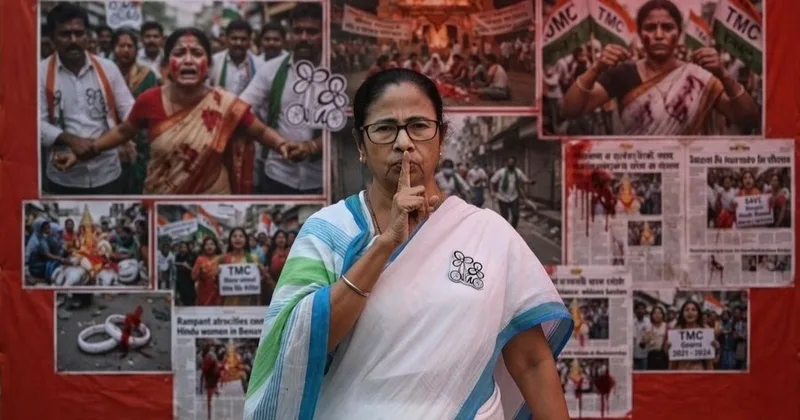
TMC’s Rule: Communal flashpoints & governance questions
June 25, 2026
  • Read Ecopy
  • Circulation
  • Advertise
  • Careers
  • About Us
  • Contact Us
Android AppiPhone AppArattai
Organiser
  • ‌
  • Bharat
    • Assam
    • Bihar
    • Chhattisgarh
    • Jharkhand
    • Maharashtra
    • View All States
  • World
    • Asia
    • Europe
    • North America
    • South America
    • Africa
    • Australia
  • Editorial
  • International
  • Opinion
  • RSS @ 100
  • More
    • Op Sindoor
    • Analysis
    • Sports
    • Defence
    • Politics
    • Business
    • Economy
    • Culture
    • Special Report
    • Sci & Tech
    • Entertainment
    • G20
    • Azadi Ka Amrit Mahotsav
    • Vocal4Local
    • Web Stories
    • Education
    • Employment
    • Books
    • Interviews
    • Travel
    • Law
    • Health
    • Obituary
  • Subscribe
    • Subscribe Print Edition
    • Subscribe Ecopy
    • Read Ecopy
  • ‌
  • Bharat
    • Assam
    • Bihar
    • Chhattisgarh
    • Jharkhand
    • Maharashtra
    • View All States
  • World
    • Asia
    • Europe
    • North America
    • South America
    • Africa
    • Australia
  • Editorial
  • International
  • Opinion
  • RSS @ 100
  • More
    • Op Sindoor
    • Analysis
    • Sports
    • Defence
    • Politics
    • Business
    • Economy
    • Culture
    • Special Report
    • Sci & Tech
    • Entertainment
    • G20
    • Azadi Ka Amrit Mahotsav
    • Vocal4Local
    • Web Stories
    • Education
    • Employment
    • Books
    • Interviews
    • Travel
    • Law
    • Health
    • Obituary
  • Subscribe
    • Subscribe Print Edition
    • Subscribe Ecopy
    • Read Ecopy
Organiser
  • Home
  • Bharat
  • World
  • Operation Sindoor
  • Editorial
  • Analysis
  • Opinion
  • Culture
  • Defence
  • International Edition
  • RSS @ 100
  • Magazine
  • Read Ecopy
Home Bharat

15 Years of TMC Rule Under Mamata Banerjee: A record marked by communal flashpoints & governance questions

Fifteen years of rule under Mamata Banerjee have reshaped West Bengal’s political and administrative landscape, marked by recurring communal tensions and contested governance decisions. This article examines documented incidents, policy patterns, and institutional responses that define the state’s trajectory since 2011

WEBDESKWEBDESK
Apr 28, 2026, 10:00 am IST
in Bharat, West Bengal
Follow on Google News
Fifteen years under Mamata Banerjee have reshaped West Bengal, marked by recurring communal tensions and contested governance decisions

Fifteen years under Mamata Banerjee have reshaped West Bengal, marked by recurring communal tensions and contested governance decisions

FacebookTwitterWhatsAppTelegramEmail

Kolkata: Since assuming office in 2011, Mamata Banerjee has led a governance model that has consistently raised questions about administrative neutrality in a demographically complex state. West Bengal, where Hindus form the majority and Muslims a significant minority as per the Census of India, has seen a decade-long political pattern in which state policy and public messaging have been perceived as disproportionately focused on minority consolidation. Budgetary allocations toward minority affairs, stipends for religious functionaries, and targeted welfare structures indicate a governance framework that differentiates between communities, shaping a political environment where electoral arithmetic appears closely tied to administrative decisions.

🚨 Mamata Banerjee Foundational Betrayal: A Majority Made Into a Minority in Its Own State

A Deep Dive – 15 Years of Documented Failure Based on Court Records, Budget Data, NCRB Figures, and Documented Incidents.

Seventy percent of West Bengal's population is Hindu. Seventy… pic.twitter.com/DTzC1RWtNB

— Deep Dive (@TheDispatch01) April 27, 2026

2017: Baduria–Basirhat Violence

The violence in Baduria and Basirhat in 2017 marked a major communal flashpoint under the TMC government. What began with a controversial social media post escalated into widespread unrest, including arson, destruction of property, and loss of life. Ground reports and subsequent documentation pointed to selective targeting in several affected areas, raising serious concerns about the nature of the violence. The administrative response, focused on internet shutdowns and delayed containment, highlighted gaps in early intervention and preparedness, allowing the situation to spiral before effective control was established.

2018: Asansol–Raniganj Ram Navami Clashes

The 2018 Ram Navami clashes in Asansol and Raniganj exposed deeper structural issues in law-and-order management during religious events. Evidence from the aftermath suggested that the violence involved elements of prior preparation, including the stocking of projectiles and crude weapons in certain locations. This indicated a breakdown in intelligence and preventive policing. Statements from Mamata Banerjee attributing part of the tension to the conduct of processions intensified concerns about administrative positioning, as they appeared to shift focus away from those carrying out the violence and onto those participating in religious observances.

2021: Post-Poll Violence

The post-election period in 2021 remains one of the most controversial phases in West Bengal’s recent history. Following the TMC’s electoral victory, widespread violence was reported across districts, including killings, arson, displacement, and allegations of sexual assault. The scale and seriousness of the incidents led to intervention by the Calcutta High Court, which ordered investigations into multiple cases. The sequence of events raised fundamental concerns about the ability and willingness of the state machinery to ensure impartial protection of citizens in a politically charged environment.

2023: Ram Navami Procession Clashes Across Districts

In 2023, communal clashes during Ram Navami processions across districts such as Howrah, Hooghly, and North Dinajpur reinforced an emerging pattern of tension around religious events. Reports documented stone-pelting, vandalism, and disruptions along procession routes. Statements suggesting that processions passing through certain areas contributed to tensions introduced a contentious dimension to the issue, effectively raising questions about the extent to which religious expression in public spaces was being constrained under administrative reasoning tied to law and order.

2024: Dhuliyan Violence in Murshidabad

The violence in Dhuliyan, Murshidabad, represented a serious breakdown of local governance, with reports of homes being looted, properties destroyed, and lives lost. Eyewitness accounts described widespread fear and displacement, with families fleeing affected areas in search of safety. The subsequent deployment of central forces underscored the severity of the situation and pointed to limitations in the initial response by state authorities. The delay in effective containment allowed the violence to escalate before control measures took full effect.

March 2025: Multiple Incidents in a Single Month

March 2025 saw multiple incidents across districts, including temple vandalism, attacks on homes, and localised communal disturbances. A notable pattern during this period was the rapid dismissal of communal angles in certain cases at very early stages of investigation. Such responses raised concerns about the depth and transparency of inquiry processes, particularly in sensitive situations where public trust depends heavily on thorough and impartial investigation.

Also Read: Beyond Ornamentation: How the bindi and traditional practices reflect the energy systems of the human body

April 2025: Surge in Reported Incidents

April 2025 witnessed a sharp rise in reported incidents across several districts, making it one of the most volatile periods in recent years. The frequency and geographic spread of disturbances suggested a pattern rather than isolated occurrences. The clustering of incidents within a short timeframe intensified concerns regarding preventive policing and long-term administrative strategy, contributing to a broader perception of instability in parts of the state.

Welfare Policies and Political Debate

State welfare policies under Mamata Banerjee have consistently prioritised schemes directed toward minority communities, including significant budgetary allocations and institutional support structures. At the same time, there is no comparable statewide framework for Hindu religious workers, such as pandits and Mandir functionaries. This asymmetry in policy design reflects a governance approach where welfare distribution appears aligned with specific demographic segments, raising persistent questions about balance, equity, and the role of electoral considerations in shaping public expenditure.

Fifteen years of governance under Mamata Banerjee have produced a deeply polarised political and social landscape in West Bengal. Recurrent communal incidents, administrative responses that have often been questioned, and policy decisions that reflect uneven prioritisation have collectively shaped the current discourse. The interplay between governance, law enforcement, and electoral strategy continues to define the state’s trajectory, ensuring that debates around neutrality, fairness, and institutional accountability remain central to any assessment of this period.


 

Topics: West Bengal politicsCommunal Violence IndiaTMC governancePost-poll violence 2021Minority welfare policiesMamata BanerjeeWest Bengalram navami clashes
ShareTweetSendShareSend
✮ Subscribe Organiser YouTube Channel. ✮
✮ Join Organiser's WhatsApp channel for Nationalist views beyond the news. ✮
Previous News

FCRA: Why foreign funding is a catalyst for Maoism and religious conversion!

Next News

MP: Islamist Anwar arrested as raid uncovers 9 drums, 79 containers of suspected fake ghee made from animal fat

Related News

Delhi Chief Minister Rekha Gupta paid tribute to Bharatiya Jana Sangh founder Syama Prasad Mookerjee on his death anniversary

Article 370 abrogation was the greatest tribute to Syama Prasad Mookerjee: Delhi CM Rekha Gupta

(Left) Dr. Shyama Prasad Mookerjee (Right) of Dr Keshav Baliram Hedgewar

Bengal and the Sangh: The historical bond forged by Dr Keshav Baliram Hedgewar and Shyama Prasad Mookerjee

Another Vande Mataram moment for Bengal

“Mamata Banerjee has been in denial mode on crime against women from 2012 itself”: Sukhendu Sekhar Roy, former TMC MP

Post Poll Violence 2021: Bengal’s Daughters Await Justice…

In a major relief for state govt employees and pensioners, the Suvendu govt has announced a 20 per cent hike in DA in its first budget

West Bengal Budget 2026: Suvendu Adhikari govt announces 20 per cent DA hike for state employees in BJP’s first budget

Load More

Latest News

Andhra Pradesh Chief Minister N. Chandrababu Naidu inaugurates the Jonnagiri Gold Mining Project in Kurnool district

Andhra Pradesh: CM Chandrababu Naidu lunches first major gold mining project in Kurnool district

AI-generated image for representation

Tamil Nadu: School teacher faces action over alleged humiliation of menstruating student

Cochin Shipyard (File Photo)

Keralam: ‘I Love Pakistan’ inscription found inside vessel at Cochin Shipyard; Central agencies launch probe

BJP national spokesperson Pradeep Bhandari

Karnataka: BJP accuses Kharge family of illegally acquiring government land worth over Rs 100 crore

Elomi Global Worship Centre in Omalloor, Pathanamthitta district ; Pastor Binu Vazhakkuttom (Left to Right)

Keralam: Child abuse allegations at Pentecostal worship centre in Pathanamthitta; locals demand Pastor Binu’s arrest

Modi Govt’s Tourism Revolution: 183 projects, Rs 9,225 crore investment & rise of India’s cultural & spiritual circuits

Padma Awards 2026: Tamil Nadu’s distinguished achievers receive national honours

India’s history is not merely a tale of foreign domination but also a remarkable story of resilience, resistance & civilisational continuity

Indian History: Not just foreign rule, but a timeless story of resistance, self-respect and civilisational resilience

From $10 Billion to $190 Billion: Indian Bioeconomy Touches New Heights in 12 Years

From $10 Billion to $190 Billion: India’s Bioeconomy leads a 12-Year science revolution

Nagpur | Acceptance of Bharatiya civilisational values is steadily increasing worldwide: Shanta Kumari

Load More
  • Privacy
  • Terms
  • Cookie Policy
  • Refund and Cancellation
  • Delivery and Shipping

© Bharat Prakashan (Delhi) Limited.
Tech-enabled by Ananthapuri Technologies

  • Home
  • Search Organiser
  • Bharat
    • Assam
    • Bihar
    • Chhattisgarh
    • Jharkhand
    • Maharashtra
    • View All States
  • World
    • Asia
    • Africa
    • North America
    • South America
    • Europe
    • Australia
  • Editorial
  • Operation Sindoor
  • Opinion
  • Analysis
  • Defence
  • Culture
  • Sports
  • Business
  • RSS @ 100
  • Entertainment
  • More ..
    • Sci & Tech
    • Vocal4Local
    • Special Report
    • Education
    • Employment
    • Books
    • Interviews
    • Travel
    • Health
    • Politics
    • Law
    • Economy
    • Obituary
  • Subscribe Magazine
  • Read Ecopy
  • Advertise
  • Circulation
  • Careers
  • About Us
  • Contact Us
  • Policies & Terms
    • Privacy Policy
    • Cookie Policy
    • Refund and Cancellation
    • Terms of Use

© Bharat Prakashan (Delhi) Limited.
Tech-enabled by Ananthapuri Technologies