UAE’s $3.45bn loan recall jolts Pakistan
August 31, 2026
  • Read Ecopy
  • Circulation
  • Advertise
  • Careers
  • About Us
  • Contact Us
Android AppiPhone AppArattai
Organiser
  • ‌
  • Bharat
    • Assam
    • Bihar
    • Chhattisgarh
    • Jharkhand
    • Maharashtra
    • View All States
  • World
    • Asia
    • Europe
    • North America
    • South America
    • Africa
    • Australia
  • Editorial
  • International
  • Opinion
  • RSS @ 100
  • More
    • Op Sindoor
    • Analysis
    • Sports
    • Defence
    • Politics
    • Business
    • Economy
    • Culture
    • Special Report
    • Sci & Tech
    • Entertainment
    • G20
    • Azadi Ka Amrit Mahotsav
    • Vocal4Local
    • Web Stories
    • Education
    • Employment
    • Books
    • Interviews
    • Travel
    • Law
    • Health
    • Obituary
  • Subscribe
    • Subscribe Print Edition
    • Subscribe Ecopy
    • Read Ecopy
  • ‌
  • Bharat
    • Assam
    • Bihar
    • Chhattisgarh
    • Jharkhand
    • Maharashtra
    • View All States
  • World
    • Asia
    • Europe
    • North America
    • South America
    • Africa
    • Australia
  • Editorial
  • International
  • Opinion
  • RSS @ 100
  • More
    • Op Sindoor
    • Analysis
    • Sports
    • Defence
    • Politics
    • Business
    • Economy
    • Culture
    • Special Report
    • Sci & Tech
    • Entertainment
    • G20
    • Azadi Ka Amrit Mahotsav
    • Vocal4Local
    • Web Stories
    • Education
    • Employment
    • Books
    • Interviews
    • Travel
    • Law
    • Health
    • Obituary
  • Subscribe
    • Subscribe Print Edition
    • Subscribe Ecopy
    • Read Ecopy
Organiser
  • Home
  • Bharat
  • World
  • Operation Sindoor
  • Editorial
  • Analysis
  • Opinion
  • Culture
  • Defence
  • International Edition
  • RSS @ 100
  • Magazine
  • Read Ecopy
Home World

UAE’s $3.45bn loan recall jolts Pakistan amid Islamabad–Riyadh defence pact, as Abu Dhabi–New Delhi ties deepen

Pakistan’s swift repayment of $3.45 billion to the United Arab Emirates, triggered by an unexpected demand, has exposed emerging cracks in a long-standing strategic partnership. The episode underscores rising geopolitical tensions, as Islamabad’s balancing act between the UAE, Saudi Arabia, and Iran draws increasing scrutiny

Dr Vishnu AravindDr Vishnu Aravind
Apr 27, 2026, 07:30 pm IST
inWorld, West Asia, South Asia, Asia, International Edition
Follow on Google News
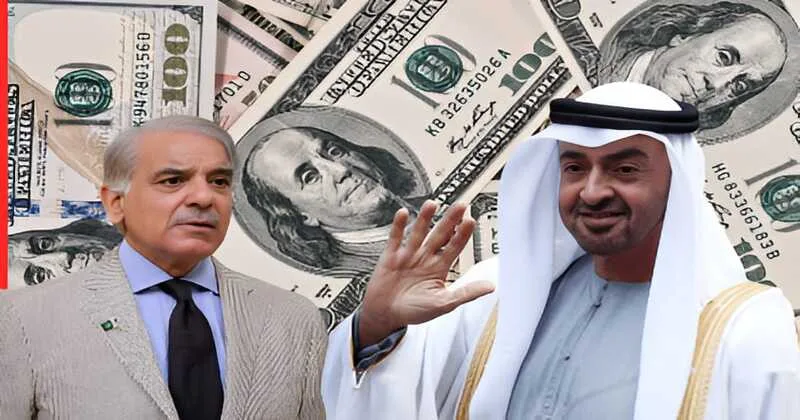
Abu Dhabi’s $3.45bn loan recall triggers diplomatic strain between Pakistan and the UAE

Abu Dhabi’s $3.45bn loan recall triggers diplomatic strain between Pakistan and the UAE

Facebook
Twitter
WhatsAppTelegramEmail

Abu Dhabi/Islamabad : Pakistan’s repayment of a $3.45 billion loan to the United Arab Emirates (UAE) has exposed emerging strains in a relationship long considered stable, with the sudden demand for funds reportedly catching Islamabad off guard and hinting at deeper geopolitical tensions.

Last week, the State Bank of Pakistan confirmed that it had repaid a $1 billion deposit to the Abu Dhabi Fund for Development (ADFD) on April 23. This payment followed the earlier return of $2.45 billion, bringing the total repayment to $3.45 billion.
According to the reports, the UAE’s decision to call back the funds came as a surprise to both Pakistani authorities and the International Monetary Fund (IMF). This was particularly notable because Abu Dhabi had previously assured that it would not seek repayment before the conclusion of Pakistan’s IMF programme in 2027.

While Pakistan’s foreign ministry described the repayment as a “routine financial transaction,” officials in Islamabad privately conveyed frustration over the abrupt nature of the demand. At the same time, some policymakers viewed the episode as an opportunity to reduce dependence on Abu Dhabi, especially given the UAE’s expanding strategic and economic engagement with India.

Geopolitical undercurrents and Gulf rivalries

The reports link the UAE’s move to growing dissatisfaction with Pakistan’s recent foreign policy positioning. Neil Quilliam, an associate fellow at Chatham House, noted that Abu Dhabi has been uneasy about Islamabad’s attempt to maintain a neutral stance amid rising tensions involving Iran. Quilliam observed that Pakistan’s role as a mediator in the United States’ conflict with Iran did not sit well with the UAE, particularly at a time when regional alignments are becoming increasingly polarised. He suggested that Abu Dhabi views the situation in “black and white,” and therefore perceives Pakistan’s “middle ground” approach as lacking neutrality.

The UAE is also believed to be concerned about Pakistan’s deepening ties with Saudi Arabia. Earlier this month, the State Bank of Pakistan received $2 billion from Saudi Arabia’s Ministry of Finance, part of a broader financial assistance package aimed at stabilising Pakistan’s foreign exchange reserves. This support played a crucial role in enabling Islamabad to meet its repayment obligations to the UAE.
Complicating matters further are the growing tensions between the UAE and Saudi Arabia themselves. Differences over the civil war in Yemen, where the two countries support rival factions, have contributed to a widening rift, creating additional pressure points in the region’s diplomatic landscape.

Strategic realignments and future uncertainty

Quilliam also highlighted that the UAE’s increasingly strong ties with India could be influencing its approach towards Pakistan. He noted that Abu Dhabi is “much more invested in India,” and may view the strengthening Saudi Arabia–Pakistan relationship as a potential conflict of interest. Pakistani advisers quoted in the report indicated that the UAE had communicated its expectation for Islamabad to adopt a firmer stance against Iran. This sentiment was echoed by Abdulkhaleq Abdulla, an Emirati academic and commentator, who acknowledged frustration in Abu Dhabi. He pointed out that Pakistan’s attempt to position itself as a mediator “didn’t go down well,” though he cautioned that dissatisfaction alone may not fundamentally alter long-term bilateral ties.

The repayment has increased Pakistan’s reliance on Saudi Arabia, whose financial support now accounts for roughly half of the country’s central bank reserves. Yet, there are signs that Riyadh may not be willing to extend this support beyond immediate financial assistance. Two Pakistani advisers indicated that Saudi Arabia has shown limited enthusiasm for translating a recently discussed defence pact into broader investment commitments. Overall, the episode underscores shifting dynamics in the Gulf region and highlights how Pakistan’s balancing act between competing allies is becoming increasingly complex. While the repayment itself may be framed as routine, the circumstances surrounding it reveal deeper geopolitical frictions that could shape the future of Pakistan’s relations with both the UAE and Saudi Arabia.


Topics: PakistanSaudi ArabiaUAEUnited Arab Emirates
Dr Vishnu Aravind
Dr Vishnu Aravind
Dr Vishnu Aravind is a researcher, political commentator and writer based in New Delhi, with a PhD from Jawaharlal Nehru University (JNU). His areas of interest include international politics, Indian foreign policy, electoral politics, election analysis, political developments, and cultural affairs. [Read more]
Share
Tweet
SendShareSend
✮ Subscribe Organiser YouTube Channel. ✮
✮ Join Organiser's WhatsApp channel for Nationalist views beyond the news. ✮
Previous News

Why exit polls are delayed in 2026 assembly elections and what it means for democracy

Next News

Balbir Punj: The passing of a visionary thinker

Related News

The demolition of Shri Guru Singh Sabha Gurdwara has intensified fears over the disappearance of Pakistan’s Sikh religious heritage

Pakistan demolishes 200-year-old Sikh Gurdwara in Quetta; Historic minority heritage land sold for commercial project!

Leftists Vs Rabindranath & Rakshabandhan: Red sickle strike of fraternity

US religious freedom panel, headed by a Pakistani, peddles lies about RSS ahead of Sarsanghachalak’s US visit

Maulana Abul Ala Maudidi (1903-1979)

85 Years of Jamaat-e-Islami in the Subcontinent: Maududi and His Organization

JeM headquarters rebuilt in Bahawalpur, Pakistan

Pakistan: Destroyed in Operation Sindoor, JeM base rebuilt in 15 months; Exposes Islamabad’s eternal terror nexus

AI Generated Image

West Asia: 20,000+ Pakistanis deported; Gulf countries flag illegal entry, drug trafficking & national security threat

Load More

Latest News

Students at the Gautam Buddha University, Greater Noida

Mann Ki Baat: PM Modi praises GBU’s mission ShakthiSAT, says dreams of daughters are now taking flight to space

Dutch TikTokker Angelo Bryson, known as Superhuman Unchained, at a pro-Palestine protest.

Dutch TikTokker recently converted to Islam livestreams stabbing three in Amsterdam; Watch video

From Kanchipuram to Kalamkari, India’s traditional textiles reflect its rich regional cultures and centuries-old craftsmanship

From Kanchipuram to Kalamkari: Exploring India’s rich traditional textiles and regional clothing heritage

Punjabi Influencer Abducted, Burnt Alive Near Morinda

Punjab Law and order crisis: Influencer Manjeet Kaur abducted, burnt alive after attack near Morinda

‘Dimagi Naxals’ romanticising Mao, Stalin and Pol Pot

The Swadeshi movement turned Indian enterprise into a powerful force for economic self-reliance, national pride and the struggle for Swaraj

Building Economic Swaraj: How Indian enterprises fought foreign rule and reclaimed national pride

Prime Minsiter Narendra Modi and Uzbekistan President Shavkat Mirziyoyev

India-Uzbekistan Herald New Chapter: Uranium deal, 30-day visa-free entry to Indians & $5bn trade propel bilateral ties

The new FCRA rules seek to curb unchecked foreign funding, strengthen financial accountability, and protect Bharat’s national security

Stopping Unchecked Foreign Money: How new FCRA rules protect Bharat’s security and financial sovereignty

Keralam CM VD Satheeshan, DCC member Chembil Anil (Left to Right)

Keralam Congress infighting surfaces in CM VD Satheeshan’s vehicle blockade; DCC member Chembil Anil arrested, remanded

Indian Logistics Data Bank tracks ten crore containers, transforming freight visibility and strengthening the nation’s logistics network

From Lothal Dockyard to Ten Crore Containers: India’s Logistics Data Bank transforms EXIM freight tracking

Load More
  • Privacy
  • Terms
  • Cookie Policy
  • Refund and Cancellation
  • Delivery and Shipping

© Bharat Prakashan (Delhi) Limited.
Tech-enabled by Ananthapuri Technologies

  • Home
  • Search Organiser
  • Bharat
    • Assam
    • Bihar
    • Chhattisgarh
    • Jharkhand
    • Maharashtra
    • View All States
  • World
    • Asia
    • Africa
    • North America
    • South America
    • Europe
    • Australia
  • Editorial
  • Operation Sindoor
  • Opinion
  • Analysis
  • Defence
  • Culture
  • Sports
  • Business
  • RSS @ 100
  • Entertainment
  • More ..
    • Sci & Tech
    • Vocal4Local
    • Special Report
    • Education
    • Employment
    • Books
    • Interviews
    • Travel
    • Health
    • Politics
    • Law
    • Economy
    • Obituary
  • Subscribe Magazine
  • Read Ecopy
  • Advertise
  • Circulation
  • Careers
  • About Us
  • Contact Us
  • Policies & Terms
    • Privacy Policy
    • Cookie Policy
    • Refund and Cancellation
    • Terms of Use

© Bharat Prakashan (Delhi) Limited.
Tech-enabled by Ananthapuri Technologies