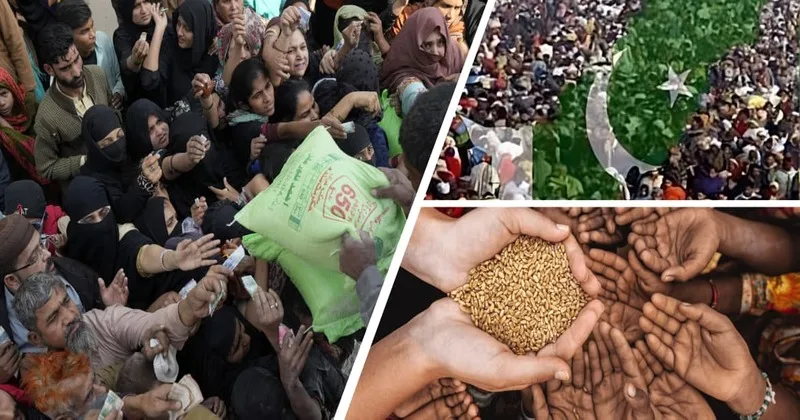
London/Islamabad: The 2026 Global Report on Food Crises (GRFC), released on April 24 by an international alliance of humanitarian and development agencies, has placed Pakistan among the top 10 countries facing acute food insecurity. The assessment, which synthesises a decade of consensus-based data, highlights that intensifying climate extremes and persistent economic pressures are driving these alarming conditions. The report identifies Pakistan alongside Afghanistan, Bangladesh, Democratic Republic of the Congo, Myanmar, Nigeria, South Sudan, Sudan, Syria and Yemen as major centres of acute hunger.
Among these, Nigeria has the highest number of people affected, with 30.6 million individuals facing acute food insecurity, representing 15 percent of its population. South Sudan, however, has the highest proportion, with 57 percent of its population impacted. According to the report, nearly 11 million people in Pakistan experienced high levels of acute food insecurity during 2025. Of this number, 9.3 million were classified under “crisis” conditions (IPC Phase 3), while 1.7 million were placed in the more severe “emergency” phase (IPC Phase 4). These classifications are based on the Integrated Food Security Phase Classification (IPC) system, which identifies situations requiring urgent intervention to protect lives and livelihoods.
Climate and economic pressures intensify crisis
The GRFC underscores that extreme weather continues to be a major driver of food insecurity in Pakistan. Heavy monsoon rains and flash floods throughout 2025 destroyed critical cropland and infrastructure, affecting more than 6 million people across the country. In addition to climate shocks, economic pressures have compounded the crisis. Inflation, projected to rise to around 6 percent, has placed further strain on households and reduced access to affordable food. The report also notes that its analytical coverage expanded significantly, from 43 rural districts in 2024 to 68 districts in 2025, offering a more comprehensive picture of the national situation.
According to the Global Hunger Index (GHI), Pakistan ranks 92nd out of 116 countries, reflecting a “serious” level of hunger. Globally, the GRFC 2026 reports that 266 million people across 47 countries faced high levels of acute food insecurity in 2025, nearly double the number recorded in 2016. For the first time in the report’s ten-year history, famine was confirmed in two separate contexts, in Gaza and parts of Sudan within the same year. The report warns that food insecurity is no longer a series of isolated or temporary shocks but has evolved into a persistent global crisis. Conflict remains the primary driver of hunger worldwide, and conditions for 2026 remain deeply concerning, with international agencies calling for coordinated and sustained geopolitical responses to address the worsening humanitarian situation.
Fuel price surge raises inflation fears amid growing food insecurity crisis
Amid a deepening food insecurity crisis flagged by the Global Report on Food Crises 2026, the Human Rights Council of Pakistan on Saturday strongly condemned the latest hike in petroleum prices, calling it an “economic suicide attack” on the public in Pakistan. The criticism comes at a time when rising inflation and economic stress have already been identified as key drivers of worsening hunger conditions in the country.
The remarks followed the government’s decision to increase the prices of petrol and high-speed diesel (HSD) by Pakistani Rs 26.77 for the coming week. The revised rates came into effect from Saturday, according to a notification issued by the Ministry of Energy (Petroleum Division). Pakistan’s Petroleum Minister Ali Pervaiz Malik stated that the hike was necessitated by a renewed surge in global oil prices amid ongoing regional tensions. He noted that mounting international pressures, along with commitments to global partners, had forced the government to pass on the burden to consumers. His remarks were reported by the Pakistani daily Business Recorder.
Expressing grave concern, the council emphasised that repeated increases in fuel prices are not merely a “numerical change” but a trigger for widespread economic distress. It warned that such hikes would intensify inflationary pressures already highlighted in the GRFC 2026, which pointed to economic constraints limiting access to affordable food for millions. The HRC stated that the surge in fuel prices would lead to higher costs of transport, medicines and essential goods, further burdening households already facing acute food insecurity. It reiterated that the right to live with dignity is a fundamental human right and cautioned that continued price shocks risk pushing poor and middle-class populations further below the poverty line, aggravating an already severe humanitarian crisis.