Kalpakkam: A new chapter in India’s nuclear journey
June 8, 2026
  • Read Ecopy
  • Circulation
  • Advertise
  • Careers
  • About Us
  • Contact Us
Android AppiPhone AppArattai
Organiser
  • ‌
  • Bharat
    • Assam
    • Bihar
    • Chhattisgarh
    • Jharkhand
    • Maharashtra
    • View All States
  • World
    • Asia
    • Europe
    • North America
    • South America
    • Africa
    • Australia
  • Editorial
  • International
  • Opinion
  • RSS @ 100
  • More
    • Op Sindoor
    • Analysis
    • Sports
    • Defence
    • Politics
    • Business
    • Economy
    • Culture
    • Special Report
    • Sci & Tech
    • Entertainment
    • G20
    • Azadi Ka Amrit Mahotsav
    • Vocal4Local
    • Web Stories
    • Education
    • Employment
    • Books
    • Interviews
    • Travel
    • Law
    • Health
    • Obituary
  • Subscribe
    • Subscribe Print Edition
    • Subscribe Ecopy
    • Read Ecopy
  • ‌
  • Bharat
    • Assam
    • Bihar
    • Chhattisgarh
    • Jharkhand
    • Maharashtra
    • View All States
  • World
    • Asia
    • Europe
    • North America
    • South America
    • Africa
    • Australia
  • Editorial
  • International
  • Opinion
  • RSS @ 100
  • More
    • Op Sindoor
    • Analysis
    • Sports
    • Defence
    • Politics
    • Business
    • Economy
    • Culture
    • Special Report
    • Sci & Tech
    • Entertainment
    • G20
    • Azadi Ka Amrit Mahotsav
    • Vocal4Local
    • Web Stories
    • Education
    • Employment
    • Books
    • Interviews
    • Travel
    • Law
    • Health
    • Obituary
  • Subscribe
    • Subscribe Print Edition
    • Subscribe Ecopy
    • Read Ecopy
Organiser
  • Home
  • Bharat
  • World
  • Operation Sindoor
  • Editorial
  • Analysis
  • Opinion
  • Culture
  • Defence
  • International Edition
  • RSS @ 100
  • Magazine
  • Read Ecopy
Home Bharat

Kalpakkam Nuclear Complex: With Prototype Fast Breeder Reactor, India enters a new nuclear chapter!

On an otherwise unremarkable evening at the Kalpakkam Nuclear Complex, history moved forward without spectacle. The Prototype Fast Breeder Reactor (PFBR) achieved first criticality, setting in motion a self-sustaining nuclear chain reaction and marking India’s entry into the second stage of its long-envisioned three-stage nuclear programme

Suresh NelamangalaSuresh Nelamangala
Apr 26, 2026, 07:00 pm IST
in Bharat, Opinion
Follow on Google News
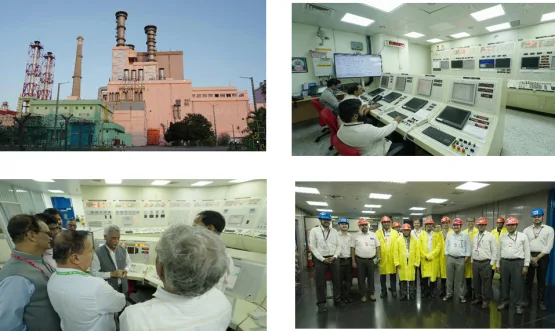
Kalpakkam Nuclear Complex in Tamil Nadu

Kalpakkam Nuclear Complex in Tamil Nadu

FacebookTwitterWhatsAppTelegramEmail

There are moments when a nation quietly changes its own destiny. One such moment arrived on the evening of April 6, 2026, inside the Kalpakkam Nuclear Complex in Tamil Nadu. The Prototype Fast Breeder Reactor (PFBR) – indigenously designed, wholly Indian-built, and carrying on its shoulder’s decades of scientific aspiration – attained first criticality. A sustained nuclear chain reaction began. And with that, India officially entered the second stage of the three-stage nuclear programme that Dr. Homi Jehangir Bhabha had envisioned more than half a century ago.

Let us be clear about what this means. Once fully operational, India will become only the second country in the world – after Russia – to run a commercial fast breeder reactor. That is not a small footnote in history. It is a statement of technological self-respect.

The odds were never small

For decades, the world did not make it easy for India. After the 1974 Pokhran test, nuclear isolation became a reality. Technology denial regimes, sanctions, and diplomatic pressure were the norm, not the exception. For a country with limited uranium reserves but one of the largest thorium reserves on the planet, the path to energy security was never going to be through handouts. It had to be through homegrown science, stubborn engineering, and patient statecraft.

That is precisely what the Modi government inherited, and what it has now advanced with unusual clarity of purpose.

The PFBR is not a conventional thermal reactor. It uses Uranium-Plutonium Mixed Oxide (MOX) fuel recovered from reprocessed spent fuel of Pressurised Heavy Water Reactors. The core is surrounded by a blanket of Uranium-238, where fast neutrons convert fertile material into fissile Plutonium-239. In simple language, this reactor breeds more fuel than it burns. And it is designed, eventually, to turn Thorium-232 into Uranium-233 – the fuel that will power India’s third and most consequential stage of nuclear energy.

That is not incremental progress. That is a leap.

Why this matters for your electricity bill and India’s climate pledge

Today, India’s total nuclear power capacity stands at 8.78 gigawatts, generating about 3.1 percent of the country’s electricity. That share has remained stable for years – not because nuclear lacks potential, but because the pathway was deliberately long and deliberate. The PFBR changes that geometry.

With indigenous 700 MW reactors, 1,000 MW reactors developed through international cooperation, and now the 500 MWe fast breeder reactor entering the picture, India’s installed nuclear capacity is projected to reach nearly 22.38 GW by 2031-32. That is almost a threefold increase in less than a decade.

Also Read: Govt of India approves installation of ten nuclear reactors in five states

But the real story is longer-term and more ambitious. The Nuclear Energy Mission, announced in the Union Budget 2025-26, targets 100 GW of nuclear power by 2047. A dedicated allocation of Rs 20,000 crore has been made for Small Modular Reactors (SMRs). At least five indigenously designed SMRs are to be operational by 2033.

And the newly enacted SHANTI Act, 2025 – the Sustainable Harnessing and Advancement of Nuclear Energy for Transforming India Act – has done something no previous government had the political bandwidth to attempt. It has opened the door for limited private participation in the nuclear sector under strict regulatory oversight. That is a quiet but profound reform.

Against all odds, with full clarity

Let us be honest with the reader. This achievement did not happen despite the Modi government. It happened because the government understood that energy security is not a slogan – it is a strategic asset. International cooperation was expanded, with civil nuclear agreements signed with 18 countries. Domestic research institutions like the Indira Gandhi Centre for Atomic Research (IGCAR) and the Bhabha Atomic Research Centre (BARC) were given sustained backing. The BSMR-200, the SMR-55, and even a high-temperature gas-cooled reactor for hydrogen generation are now in active development.

None of this makes for dramatic television. But it makes for serious governance.

The opposition, predictably, has had little to say. Some have questioned costs. Others have raised safety concerns, as they must in a democracy. But here is the unspoken truth: India cannot achieve net zero by 2070 without nuclear power. It cannot power its manufacturing ambitions without baseload clean energy. And it cannot remain strategically independent while depending on imported fossil fuels indefinitely.

The PFBR is not just a reactor. It is an answer to all three challenges at once.

Also Read: SHANTI Bill reimagining Indian nuclear energy security and climate goals

A turning point, not an endpoint

Kalpakkam is not the final destination. It is the bridge. Stage 2 is now live. Stage 3 – thorium-based reactors at scale – is the real prize. And that prize is now visibly within reach.

What makes this moment particularly Indian is that it did not come from haste or headline-chasing. It came from persistence. From scientists who worked through anonymity. From policymakers who did not waver. And from a political leadership that refused to treat nuclear energy as a toxic subject.

As the PFBR begins commercial operation in the coming months, and as India prepares to expand its nuclear fleet like never before, one thing should be clear to every citizen: this country is no longer waiting for permission to secure its energy future.

The chain reaction has begun. And this time, it is entirely our own.
Topics: SHANTI ActKalpakkam Nuclear Complex2025Indian Nuclear Power projectsCivil Nuclear Energy
ShareTweetSendShareSend
✮ Subscribe Organiser YouTube Channel. ✮
✮ Join Organiser's WhatsApp channel for Nationalist views beyond the news. ✮
Previous News

Assam: 20 intruders push back by security forces; Govt takes a harder line on illegal Bangladeshi infiltrators

Next News

Manusmriti, Arthashastra, Indic values must be taught at NLU; Most disconnected from roots: Justice Dharmadhikari

Related News

Fortress Bharat: PM Modi forges India’s energy shield

PM Modi and PM Mark Carney witness an MoU exchange between EAM S Jaishankar and Canada's Minister of International Trade Maninder Sidhu during a joint press meet, at Hyderabad House in New Delhi, Monday, March 2, 2026

India–Canada seal $2.6 billion uranium deal, boosting civil nuclear energy and strategic ties

Madras HC halts Tamil Nadu Waqf Board functions, flags legal lapses under new Act; delay may cause major setback to DMK

BJP delegation requests Karnataka governor not to pass the Hate Speech Bill

Karnataka: BJP delegation urges governor not to approve hate speech bill

Viksit Bharat Shiksha Adhisthan Bill 2025: Single regulator to replace UGC, AICTE, NCTE

Representative Image

The Waqf Amendment Act, 2025: A reformist milestone for Bharat

Load More

Latest News

Tamil Nadu: CM Joseph clears move to prosecute former minister and DMK leader Senthil Balaji in cash-for-jobs case

Champat Rai hits back at Akhilesh Yadav over allegation on Ram Temple funds

Ayodhya: Champat Rai rejects Akhilesh Yadav’s claims on Ram Temple donations, says trust’s regular audit is underway

Representative Image

Buying a Used Mahindra Thar: What off-road history does to long-term maintenance costs

Protesters in Rawalkot

Bloodshed in POJK: Four policemen killed, protesters dead as JAAC unrest turns violent

Rajeev Chandrasekhar, BJP Keralam State President and MLA.

Keralam needs investment, not unnecessary political conflicts between LDF and UDF that blocked development: BJP

Mount Everest Miracle: Sherpa Survives on Ice and Chocolates for Nearly a Week

Everest Miracle: Sherpa declared dead found alive after 6 days in the death zone; A survival story that defies belief

West Asia Conflict: India issues advisory to citizens in Iran & Israel; Urges to avoid tarvel & exercise utmost caution

Protest in Punjab for dragging Dalit youths to field over theft and parading them semi-naked

Punjab: Dalit men dragged through fields, paraded semi-naked over alleged phone theft in Muktsar Sahib

Tamil Nadu: TVK government registers FIR against former DMK minister KN Nehru in cash-for-jobs case

India-flagged vessel attacked near Strait of Hormuz; Seafarers send distress signal; All crew members rescued safely

Load More
  • Privacy
  • Terms
  • Cookie Policy
  • Refund and Cancellation
  • Delivery and Shipping

© Bharat Prakashan (Delhi) Limited.
Tech-enabled by Ananthapuri Technologies

  • Home
  • Search Organiser
  • Bharat
    • Assam
    • Bihar
    • Chhattisgarh
    • Jharkhand
    • Maharashtra
    • View All States
  • World
    • Asia
    • Africa
    • North America
    • South America
    • Europe
    • Australia
  • Editorial
  • Operation Sindoor
  • Opinion
  • Analysis
  • Defence
  • Culture
  • Sports
  • Business
  • RSS @ 100
  • Entertainment
  • More ..
    • Sci & Tech
    • Vocal4Local
    • Special Report
    • Education
    • Employment
    • Books
    • Interviews
    • Travel
    • Health
    • Politics
    • Law
    • Economy
    • Obituary
  • Subscribe Magazine
  • Read Ecopy
  • Advertise
  • Circulation
  • Careers
  • About Us
  • Contact Us
  • Policies & Terms
    • Privacy Policy
    • Cookie Policy
    • Refund and Cancellation
    • Terms of Use

© Bharat Prakashan (Delhi) Limited.
Tech-enabled by Ananthapuri Technologies