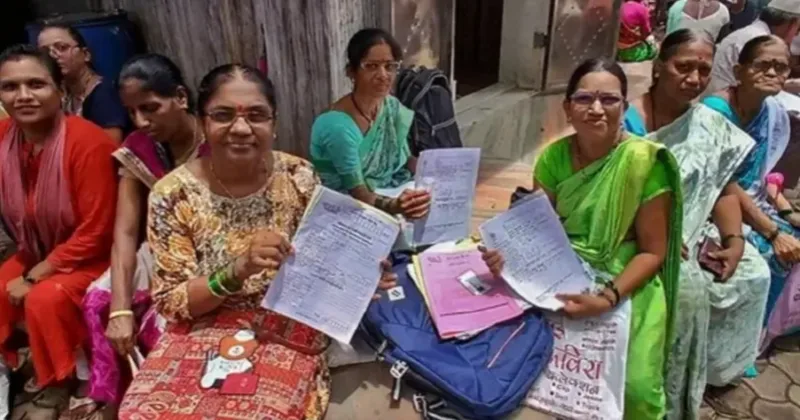
Women across villages in India are opening bank accounts on their phones, receiving government scheme payments through UPI and running small businesses online. The pace at which rural India has taken to digital platforms is appreciable and so is the danger lurking a with it. Fraudsters posing as bank officials, fake KYC callers, phishing links disguised as Aadhaar updates, these threats are no longer urban problems. They have reached the doorstep of first time digital users who have little defence against them.
It is precisely the gap between digital adoption and zero cyber awareness that the e-SafeHER initiative is designed to fill and close. Launched on April 13, 2026, jointly by C-DAC Hyderabad (under the Ministry of Electronics and Information Technology) and Reliance Foundation, e-SafeHER is a Cyber Security Awareness Training programme with a clear goal. To train one million women across rural India to safely and navigate the digital world by 2029.
The Crisis Behind the Idea
Cybersecurity incidents in India has climbed from 10.29 lakh in 2022 to 22.68 lakh in 2024 and in 2025, 3.24 crore complaints were registered on the national helpline number 1930, an average of nearly 89,000 calls every single day. Total financial losses to cyber fraud reached ₹22,495 crore in 2025. Behind every statistic is a person who has lost savings, privacy or dignity.
Women bear a disproportionate share of that burden. According to the Indian Cybercrime Coordination Centre (I4C), women account for nearly 30% of all cyber fraud victims, with targeted phishing on social media being among the most common attack vectors. Rural women face compounded vulnerability because of limited digital literacy, lower awareness of legal recourse and a tendency to stay silent about incidents out of fear or shame. The NHRC estimates that around 40% of identity theft cases go entirely unreported. Smaller towns and villages now rapidly coming online, have become the new hunting grounds for scammers who exploit the very enthusiasm for digital services that the government has worked so hard to build.
What makes this particularly alarming is the nature of new age fraud. Digital arrest scams, where fraudsters impersonate law enforcement officers and coerce victims into transferring money, grew from 39,925 incidents in 2022 to 1,23,672 in 2024, with reported losses jumping from Rs 91 crore to Rs 1,935 crore in just two years. A woman in a village, unfamiliar with the fact, thinks that there is no such thing as a digital arrest in India. It is one of the among the most exposed incident in recent year.
What is e-SafeHER?
e-SafeHER is not just another government awareness campaign. It is a structured, community embedded programme anchored under MeitY Information Security Education and Awareness (ISEA) Project, delivered through a deliberate three-way partnership. C-DAC Hyderabad leads the development and continuous enhancement of cybersecurity training content, including multilingual adaptation to reach women across linguistic boundaries. Reliance Foundation brings its grassroots network particularly its deep connections with women’s Self-Help Groups (SHGs) to carry that content into the last mile.
The women trained through this programme will become ‘Cyber Sakhis’ community-level digital safety champions who carry awareness further into their own networks. This delivery model is central to the initiative design. Rather than relying on external trainers who arrive and depart, the programme builds local ownership. A Cyber Sakhi trained in her village becomes its first line of defence, someone her neighbours trust, speak to in their own language and turn to when something feels wrong online.
The Motto: Safe, Seen and Empowered
MeitY Secretary Shri S. Krishnan captured the spirit of e-SafeHER at its launch he said the goal is to make women from the remotest regions safe, seen and empowered. It identifies three real deficits. ‘Safe’ addresses the immediate cyber threat. ‘Seen’ acknowledges that rural women have long been invisible in conversations about digital security policy. ‘Empowered’ signals the larger ambition not just protection, but confident, autonomous participation in the digital economy.
Isha Ambani, Director of Reliance Foundation, was equally direct about the programme purpose. Rural women in India are coming online at a pace faster than ever before and the Foundation commitment is not merely to accelerate inclusion but to ensure that inclusion is safe. The vision of enabling women to embrace the digital world with confidence speaks to a deeper problem that statistics cannot fully capture the fear and distrust that follow even a single bad digital experience can push a first-time user offline permanently.
How It Works on the Ground
The programme rolls out in phases. Madhya Pradesh and Odisha are the opening states, chosen for their large rural populations and significant SHG presence. From there the initiative scales toward its target of one million trained Cyber Sakhis across India by 2029 through multi stakeholder partnerships.
The training methodology is designed for real world accessibility. Audio-visual modules, blended learning approaches and content in local languages make it genuinely usable for women who may be encountering formal digital safety education for the first time. Cybersecurity awareness is woven into existing women empowerment and digital literacy programmes rather than running as a separate intervention. This avoids the trap of creating parallel infrastructure that withers once a project cycle ends. Sustainability is built into the architecture.
The programme explicitly tracks behavioural outcomes which will improve awareness towards cyber risks, greater confidence in digital transactions and adoption of safer online practices. It is not enough for a Cyber Sakhi to attend a session the measure of success is whether she changes how she and those around her behave online. Insights gathered during implementation will feed directly into evidence-based scale-up and policy integration at the national level.
Model to be Replicated in Rest States
What distinguishes e-SafeHER from earlier awareness efforts is the convergence of institutional credibility, technical depth and community trust. MeitY national cybersecurity framework gives it authority. C-DAC technical expertise gives it rigour. Reliance Foundation community driven delivery model gives it reach and cultural resonance. No single element would be sufficient on its own.
Secretary Krishnan, at the launch spoke of e-SafeHER as a model initiative capable of being replicated and scaled with like-minded partners across the country. That ambition is well-founded. India’s digital expansion will not wait for awareness to catch up organically. With over 86% of households now connected to the internet and cybercrime incidents continuing to rise, the window for proactive intervention is now necessary and in the villages or cities where the most urgent work lies.
When a woman in rural Odisha knows how to verify a caller identity before sharing her OTP or recognises a phishing link for what it is or helps her neighbour avoid a fake scheme message, the digital economy becomes a little safer for everyone. That is what a Cyber Sakhi does. And if a million of them are trained and active by 2029, India will have built something far more durable than any firewall a human network of informed, confident digital citizens at the grassroots.