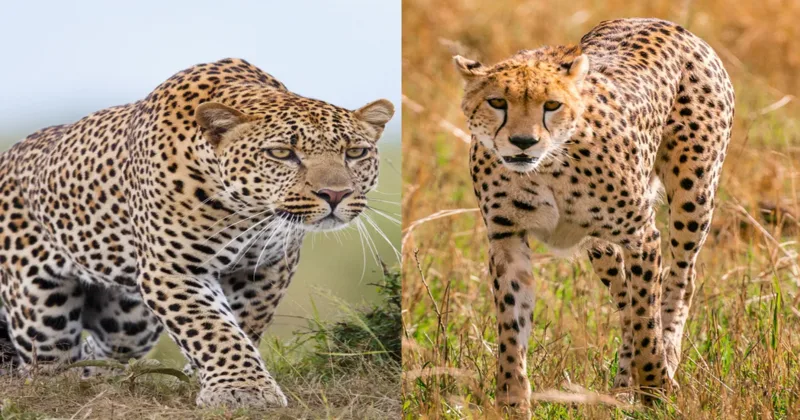
In the history of global conservation history, a revolution has been unfolding across Indian forests, grasslands and snow-capped mountains. While much of the world grapples with an accelerating biodiversity crisis, India stands as the only country on earth that simultaneously hosts and is growing population of five distinct species of big cats such as the Tiger, the Asiatic Lion, the Leopard, the Snow Leopard and the reintroduced Cheetah. This initiative is the product of sustained political will, scientific rigour, community partnerships and a civilisational ethos that has existed for and embraced coexistence with wildlife.
The data from official government sources such as the National Tiger Conservation Authority (NTCA), the Wildlife Institute of India (WII), the Ministry of Environment, Forest and Climate Change (MoEFCC) and the Gujarat Forest Department tell a story of healthy recovery. Under the leadership of successive NDA governments since 2014, this conservation programme is been accelerated, modernised and elevated to the global stage.
The Tiger: A great Indian miracle
No conservation success story in modern India is more celebrated or more statistically than the recovery of the Bengal Tiger. In 2006, when the NTCA commissioned the first-ever scientifically rigorous tiger census using camera traps and GIS methodology, the results was shocking as 1,411 tigers remained in India’s forests. The country had lost over 96 per cent of its tiger population since 1900.
With decade-long effort by the government and frontline forest staff. By 2010, the count had climbed to 1,706. By 2014 the year NDA government came to power it had reached 2,226, a 30.5 per cent rise. The 2018 census recorded 2,967 tigers. In 2022, the All-India Tiger Estimation recognised by the Guinness World Records as the world’s largest wildlife survey confirmed an astounding 3,682 tigers, representing a 160.95 per cent growth since 2006. India now shelters approximately 70–75 per cent of the world’s entire wild tiger population.
Under Prime Minister Narendra Modi, this achievement received the institutional recognition it deserved. On 9 April 2023, during the 50th anniversary celebrations of Project Tiger held in Mysuru, PM Modi announced that India had achieved the global TX2 target of doubling wild tiger numbers from the 2010 base, a full four years ahead of the 2022 deadline set by the St. Petersburg Declaration. The tiger reserve network which began with 9 reserves in 1973 has expanded to 58 reserves across 18 states as of March 2025.
The technological backbone of this success is the M-STrIPES (Monitoring System for Tigers- Intensive Protection and Ecological Status) platform, deployed by the NTCA across all tiger reserves for real-time patrol monitoring, anti-poaching intelligence and ecological surveillance. 32 major tiger corridors have been identified and secured to enable genetic flow between populations. Voluntary relocation programmes have moved communities from critical core zones with full compensation and reducing human-wildlife conflict in the most sensitive habitats.
The Asiatic Lion: Pride of Gujarat
The Asiatic Lion’s conservation is one of the most inspiring comebacks in the world. By 2000, just 327 of these magnificent animals, a subspecies distinct from their African cousins remained, confined entirely to the Gir Forest and surrounding areas of Gujarat. The population faced what biologists call a dangerous genetic bottleneck, with a single disease outbreak potentially capable of wiping out the entire species.
Through the sustained implementation of the ‘Maldhari’ community co-existence model which involves pastoral communities who have lived alongside lions for generations and world-class veterinary care coordinated by the Gujarat Forest Department, the population began growing. By 2005, numbers had risen to 359. By 2010, to 411. The 2015 census recorded 523 and by 2020, the official count stood at 674. Projections based on current growth trends estimate the population at approximately 891 by 2025, making it one of the fastest-growing big cat populations on the planet.
The NDA government has consistently prioritised Project Lion, formally launched in 2020 as a centrally-sponsored scheme to expand and secure the Asiatic Lion habitat beyond Gir, develop disease management infrastructure. It will strengthen the lion landscape-level protection. The project also aims to create a second, insurance population at an alternative site to safeguard against the catastrophic risk of a single-location disease outbreak a crucial ecological precaution.
The Leopard: Silent expansion across India
While the tiger rightly commands global attention, Indian Leopard has quietly staged one of the most remarkable expansions of any large carnivore in the modern era. According to a 2024 report by the NTCA and WII based on the fifth cycle of leopard population estimated conducted in 2022 India’s leopard population stands at 13,874 up from 12,852 in 2018 and a dramatic rise from 7,910 in 2014. This represents a 75 per cent increase in just eight years.
The credit, conservation experts agree, belongs substantially to the ‘umbrella effect’ of India’s expanding tiger reserve network. By rigorously protecting tiger habitats, India has created vast, high-quality spaces in which leopards can thrive. Approximately 70 per cent of surveyed leopard habitats now fall within these secured zones. Madhya Pradesh leads all states with 3,907 leopards, followed by Maharashtra at 1,985 and Karnataka at 1,879.
The government approach to leopard conservation has focused on conflict mitigation, rapid response teams, compensation schemes for livestock loss and community awareness programmes. Thus, allowing supremely adaptable predators to coexist with human settlements in the boundary of protected areas. Unlike tigers, leopards can survive in fragmented habitats and India’s conservation corridors have ensured they continue to do so at scale.
The Snow Leopard: Guardians of the third pole
High in the Himalayas and the trans-Himalayan ranges of Ladakh, Himachal Pradesh, Uttarakhand, Sikkim and Arunachal Pradesh, India’s most elusive big cat has finally been counted. In 2024, the Ministry of Environment, Forest and Climate Change released the findings of the Snow Leopard Population Assessment in India (SPAI) the first-ever comprehensive, scientifically rigorous assessment of snow leopard numbers in the country. The assessment coordinated by the Wildlife Institute of India (WII) with support from the Nature Conservation Foundation (NCF) and WWF India, was conducted between 2019 and 2023.
718 snow leopards census has been confirmed in India’s high-altitude landscapes. India hosts the Himalayan headwaters of several of Asia’s most critical river systems the Third Pole and the snow leopard, as an apex predator of these mountain ecosystems, is a keystone indicator of their health.
Project Snow Leopard, launched in 2009 and invigorated under the NDA government, has taken a distinctly community-centric approach. Working directly with herder communities who live alongside snow leopards and who historically suffered retaliatory killing of the big cats after livestock predation the project has invested in predator-proof livestock corrals, compensation mechanisms and wildlife-based livelihoods including eco-tourism. This has dramatically reduced retaliatory killings, the single biggest human-induced threat to snow leopards in India.
The Cheetah: Conservation of extincted predator
Cheetah declared extinct in India in 1952 due to overhunting and habitat destruction, the Cheetah had been absent from Indian soil for 70 years. On September 17, 2022, Prime Minister Narendra Modi personally released eight Namibian cheetahs at Kuno National Park in Madhya Pradesh, marking the world first inter-continental translocation of a large carnivore species.
The programme has steadily expanded. In 2023, 12 more cheetahs arrived from South Africa, bringing the initial cohort to 20. In February 2026, nine more cheetahs arrived from Botswana, the third partner nation in this diplomatic and conservation initiative. The cheetahs have begun breeding successfully on Indian soil, a critical indicator that the reintroduction is working. As of March 2026, India total cheetah population stands at 53, with 33 Indian-born cubs recorded representing the 10th successful litter born on native soil since the project began. Union Environment Minister Bhupender Yadav has described the growing cohort of Indian born cubs as proof that India’s scientific approach to habitat management and veterinary care is yielding positive outcomes.
The data sourced from the MoEFCC and NSLEP, shows the progression from 8 in 2022, to successful births and new arrivals to 57 by 2026, a figure that includes animals in various stages of acclimatisation and wild living at Kuno and Gandhi Sagar Sanctuary. Nauradehi Wildlife Sanctuary has been identified as a future expansion site to distribute the population and reduce inbreeding risk.
Decade of conservation as governance priority in NDA government
It would be incomplete to discuss India’s big cat revival without acknowledging the specific institutional, technological and diplomatic contributions of the NDA government since 2014. The numbers of tigers growing from 2,226 in 2014 to 3,682 in 2022, a 65 % increase during this period. Leopard numbers more than doubled. The Asiatic Lion population grew by nearly 30 % in the same window. Entirely new conservation ventures Project Cheetah, Project Snow Leopard’s SPAI assessment and the International Big Cat Alliance were conceptualised, funded and executed.
Under Prime Minister Modi personal attention to wildlife diplomacy, the NTCA strengthened transboundary tiger conservation agreements with Nepal, Bhutan and Bangladesh. The M-STrIPES monitoring system was expanded across all tiger reserves, with thermal imaging cameras, wireless field units and drone surveillance complementing traditional forest patrols. State Tiger Protection Forces were constituted in high-risk reserves. The Union Cabinet approved expanded budgetary allocations for Project Tiger, Project Lion and Project Snow Leopard through the Centrally Sponsored Schemes framework.
Perhaps most significantly, the number of tiger reserves expanded from 47 per cent in 2014 to 58 per cent by March 2025, bringing more critical wildlife corridors under formal protection. Voluntary village relocation programmes conducted with full compensation and community consent that reduced human pressure in core zones across multiple reserves. Pilibhit Tiger Reserve in Uttar Pradesh won the global TX2 award for doubling its tiger population in a record timeframe, a model the government has sought to replicate.
India on the World Stage: The International Big Cat Alliance
India’s domestic conservation success has now become the foundation for global leadership. On April 9, 2023, PM Modi announced the TX2 achievement, he also launched the International Big Cat Alliance (IBCA) at Mysuru. Formally established on 12 March 2024 through the NTCA under MoEFCC and headquartered in India, the IBCA is a treaty-based intergovernmental organisation modelled on the successful International Solar Alliance (ISA) framework.
The IBCA covers seven big cat species such as Tiger, Lion, Leopard, Snow Leopard, Cheetah, Jaguar and Puma. Its membership is open to all 97 range countries of these species. As of early 2026, member countries include India, Nicaragua, Eswatini, Somalia and Liberia are the countries that have expressed interest. The Union Cabinet has approved a one-time financial contribution of Rs 150 crore for the IBCA over five years from 2023-24 to 2027-28.
The IBCA represents a genuine exercise in India’s conservation soft power where a recognition by the world that a country which began Project Tiger in 1973 with just 9 reserves and 1,827 tigers. Through half a century of sustained effort, become the global benchmark for large carnivore recovery. India’s methods camera trap censuses, the core-buffer reserve model, community co-existence strategies, voluntary relocation are now being studied and replicated by tiger range countries from Nepal to Thailand.
The simultaneous growth of five big cat species is an achievement unparalleled in conservation history. It emerges from a uniquely Indian confluence where a civilisational tradition reverses nature, a democratic government that has chosen to treat biodiversity as a sovereign responsibility. A community of frontline forest officials, scientists and local people who have, often at great personal risk made these forests safe for big cats.
India is now the only country in the world where Tigers, Lions, Leopards, Snow Leopards and Cheetahs coexist in the wild. The 3,682 tigers represent 70–75 per cent of the world wild tigers. The 718 snow leopards anchor the ecology of Asia greatest river systems. The 891 Asiatic Lions are a species pulled back from the brink. The 13,874 leopards prove that top predator conservation scales across an entire subcontinent. 53 cheetahs are born or settled on Indian soil, breeding and adapting are the most hopeful symbol of all proof that what has been lost and with determination be brought back.
When India decides to protect, nature thrives. The IBCA sets out to make this an article of faith for the entire world, Indian forests and the magnificent animals that fill them with life. It stand as the most powerful argument that conservation and civilisation are not opposites.