As India marked the first anniversary of the April 22 Pahalgam terror attack and the subsequent launch of Operation Sindoor, fresh details have surfaced about a critical air defence operation that averted a potentially catastrophic strike on the national capital.
During the peak of heightened tensions between India and Pakistan in May 2025, a Pakistani ballistic missile, believed to be from the Fateh or Shaheen series, was successfully intercepted mid-air over Haryana before it could reach its suspected target, Delhi. The interception was carried out by an Indian Air Force (IAF) unit based in Sirsa, a strategically significant forward air base near the western border.
The operation unfolded at a time when India’s air defence network was on high alert following the Pahalgam terror attack. Intelligence inputs had indicated the possibility of escalation, prompting the activation of multiple defence layers across northern India.
Sirsa, owing to its proximity to the border and its role as a forward operating base, became a crucial node in this defensive grid. It was from here that the IAF unit detected, tracked, and ultimately neutralised the incoming missile threat.
The interception operation was led by Air Commodore Rohit Kapil, Air Officer Commanding of 45 Wing. His leadership during the high-pressure situation proved decisive in ensuring a timely and effective response.
Kapil, a seasoned Sukhoi Su-30MKI pilot, brought operational experience and tactical clarity to the situation. Under his command, the unit executed both defensive and offensive preparedness measures during the conflict phase.
His role in the successful interception, along with broader operational contributions, later earned him the Yudh Seva Medal in 2025, awarded by Droupadi Murmu.
The missile was neutralised using the Barak-8, a state-of-the-art surface-to-air missile system jointly developed by India and Israel.
The Barak-8 system is designed to intercept a wide range of aerial threats, including aircraft, drones, and ballistic missiles. Its deployment in Sirsa during Operation Sindoor demonstrated its operational readiness and effectiveness in real combat scenarios.
The interception was executed with precision, destroying the incoming missile mid-air and preventing any damage on the ground.
In the days following the interception, debris recovered from areas around Sirsa provided tangible evidence of the scale of the threat. Visuals of the wreckage circulated widely at the time, underscoring how close the missile had come to its intended trajectory.
The recovered fragments confirmed that the missile belonged to a class capable of carrying significant payloads, reinforcing the seriousness of the attempted strike.
Nearly a year later, the Sirsa interception is being viewed as a turning point during Operation Sindoor. It highlighted the risks of rapid escalation in a conflict scenario and the importance of maintaining a robust and responsive air defence network.
Had the missile not been intercepted, the consequences could have been severe, particularly given its suspected trajectory towards Delhi.
The incident has since become a defining example of India’s evolving air defence strategy. Efforts are currently underway to build a nationwide, multi-layered defence shield under the Sudarshan programme.
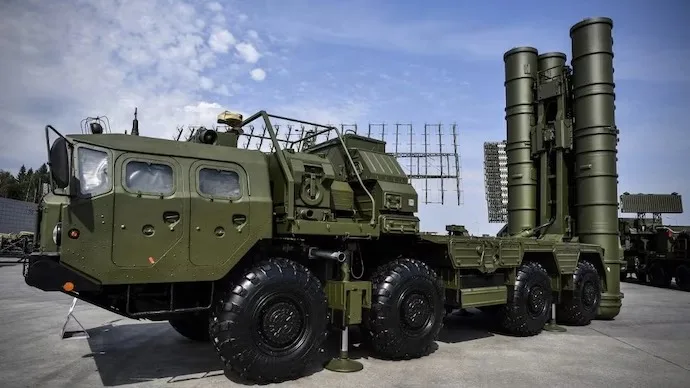
This integrated system aims to combine advanced platforms such as the S-400, Barak-8, and indigenous interceptor technologies to create a comprehensive protective grid.
The goal is to ensure that threats can be detected and neutralised at multiple stages, enhancing overall national security.
The Sirsa interception shows several key aspects of modern warfare, speed of response, technological capability, and coordination across defence units.
It also highlights the shift towards network-centric warfare, where real-time data sharing and integrated systems play a critical role in decision-making.
For the Indian Air Force, the operation served as both a validation of existing capabilities and a learning experience for future enhancements.