Operation Sindoor: How did IAF Intercept Pak Ballistic Missiles?
June 25, 2026
  • Read Ecopy
  • Circulation
  • Advertise
  • Careers
  • About Us
  • Contact Us
Android AppiPhone AppArattai
Organiser
  • ‌
  • Bharat
    • Assam
    • Bihar
    • Chhattisgarh
    • Jharkhand
    • Maharashtra
    • View All States
  • World
    • Asia
    • Europe
    • North America
    • South America
    • Africa
    • Australia
  • Editorial
  • International
  • Opinion
  • RSS @ 100
  • More
    • Op Sindoor
    • Analysis
    • Sports
    • Defence
    • Politics
    • Business
    • Economy
    • Culture
    • Special Report
    • Sci & Tech
    • Entertainment
    • G20
    • Azadi Ka Amrit Mahotsav
    • Vocal4Local
    • Web Stories
    • Education
    • Employment
    • Books
    • Interviews
    • Travel
    • Law
    • Health
    • Obituary
  • Subscribe
    • Subscribe Print Edition
    • Subscribe Ecopy
    • Read Ecopy
  • ‌
  • Bharat
    • Assam
    • Bihar
    • Chhattisgarh
    • Jharkhand
    • Maharashtra
    • View All States
  • World
    • Asia
    • Europe
    • North America
    • South America
    • Africa
    • Australia
  • Editorial
  • International
  • Opinion
  • RSS @ 100
  • More
    • Op Sindoor
    • Analysis
    • Sports
    • Defence
    • Politics
    • Business
    • Economy
    • Culture
    • Special Report
    • Sci & Tech
    • Entertainment
    • G20
    • Azadi Ka Amrit Mahotsav
    • Vocal4Local
    • Web Stories
    • Education
    • Employment
    • Books
    • Interviews
    • Travel
    • Law
    • Health
    • Obituary
  • Subscribe
    • Subscribe Print Edition
    • Subscribe Ecopy
    • Read Ecopy
Organiser
  • Home
  • Bharat
  • World
  • Operation Sindoor
  • Editorial
  • Analysis
  • Opinion
  • Culture
  • Defence
  • International Edition
  • RSS @ 100
  • Magazine
  • Read Ecopy
Home Bharat

Operation Sindoor: How Sirsa-based IAF unit intercepted Pakistani ballistic missile aimed towards Delhi

New details have revealed how an Indian Air Force unit stationed in Sirsa neutralised a Pakistani ballistic missile mid-air during Operation Sindoor in May 2025. The interception, led by Air Commodore Rohit Kapil, prevented a potential strike on Delhi and underscored India’s growing air defence capabilities

WEBDESKWEBDESK
Apr 23, 2026, 12:30 pm IST
in Bharat, Defence
Follow on Google News
The neutralisation was carried out by an IAF unit stationed at Sirsa, led by Air Commodore Rohit Kapil

The neutralisation was carried out by an IAF unit stationed at Sirsa, led by Air Commodore Rohit Kapil

FacebookTwitterWhatsAppTelegramEmail

As India marked the first anniversary of the April 22 Pahalgam terror attack and the subsequent launch of Operation Sindoor, fresh details have surfaced about a critical air defence operation that averted a potentially catastrophic strike on the national capital.

During the peak of heightened tensions between India and Pakistan in May 2025, a Pakistani ballistic missile, believed to be from the Fateh or Shaheen series, was successfully intercepted mid-air over Haryana before it could reach its suspected target, Delhi. The interception was carried out by an Indian Air Force (IAF) unit based in Sirsa, a strategically significant forward air base near the western border.

The operation unfolded at a time when India’s air defence network was on high alert following the Pahalgam terror attack. Intelligence inputs had indicated the possibility of escalation, prompting the activation of multiple defence layers across northern India.

Sirsa, owing to its proximity to the border and its role as a forward operating base, became a crucial node in this defensive grid. It was from here that the IAF unit detected, tracked, and ultimately neutralised the incoming missile threat.

The interception operation was led by Air Commodore Rohit Kapil, Air Officer Commanding of 45 Wing. His leadership during the high-pressure situation proved decisive in ensuring a timely and effective response.

Kapil, a seasoned Sukhoi Su-30MKI pilot, brought operational experience and tactical clarity to the situation. Under his command, the unit executed both defensive and offensive preparedness measures during the conflict phase.

His role in the successful interception, along with broader operational contributions, later earned him the Yudh Seva Medal in 2025, awarded by Droupadi Murmu.

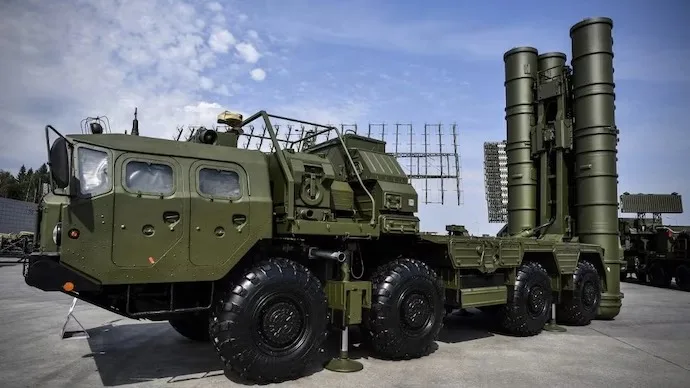
The missile was neutralised using the Barak-8, a state-of-the-art surface-to-air missile system jointly developed by India and Israel.

The Barak-8 system is designed to intercept a wide range of aerial threats, including aircraft, drones, and ballistic missiles. Its deployment in Sirsa during Operation Sindoor demonstrated its operational readiness and effectiveness in real combat scenarios.

The interception was executed with precision, destroying the incoming missile mid-air and preventing any damage on the ground.

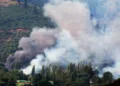
In the days following the interception, debris recovered from areas around Sirsa provided tangible evidence of the scale of the threat. Visuals of the wreckage circulated widely at the time, underscoring how close the missile had come to its intended trajectory.

The recovered fragments confirmed that the missile belonged to a class capable of carrying significant payloads, reinforcing the seriousness of the attempted strike.

Nearly a year later, the Sirsa interception is being viewed as a turning point during Operation Sindoor. It highlighted the risks of rapid escalation in a conflict scenario and the importance of maintaining a robust and responsive air defence network.

Had the missile not been intercepted, the consequences could have been severe, particularly given its suspected trajectory towards Delhi.

The incident has since become a defining example of India’s evolving air defence strategy. Efforts are currently underway to build a nationwide, multi-layered defence shield under the Sudarshan programme.

This integrated system aims to combine advanced platforms such as the S-400, Barak-8, and indigenous interceptor technologies to create a comprehensive protective grid.

The goal is to ensure that threats can be detected and neutralised at multiple stages, enhancing overall national security.

The Sirsa interception shows several key aspects of modern warfare, speed of response, technological capability, and coordination across defence units.

It also highlights the shift towards network-centric warfare, where real-time data sharing and integrated systems play a critical role in decision-making.

For the Indian Air Force, the operation served as both a validation of existing capabilities and a learning experience for future enhancements.

Topics: India air defence shieldOperation SindoorSirsa missile interceptionIAF air defenceBarak-8 systemPakistan missile threat
ShareTweetSendShareSend
✮ Subscribe Organiser YouTube Channel. ✮
✮ Join Organiser's WhatsApp channel for Nationalist views beyond the news. ✮
Previous News

Uttarakhand: Haridwar administration demolishes alleged illegal mazar on govt land, intensifies anti-encroachment drive

Next News

West Bengal Assembly Polls: Phase 1 marred by TMC violence across Siliguri, Malda & Murshidabad

Related News

India's firm national security response after Operation Sindoor reshaped ties with Turkey, forcing Celebi's exit from the country's aviation sector

Operation Sindoor Impact: Turkish firm Celebi Aviation says India exit erased Rs 4,700 crore overnight

Chinese President Xi Jinping, Russian President Vladimir Putin and Prime Minister Narendra Modi

China’s New Tone Towards India: Tactical shift or strategic necessity? What Beijing’s push for RIC ties really signals

Saurav Das, Chief Spokesperson of CJP

Exposing CJP’s Saurav Das: Inside his controversial commentary on Article 370, Umar Khalid & nationalism

As Khalistani networks seek new platforms beyond the West, Azerbaijan has emerged as a key venue for conferences, campaigns and narratives aligned with the Pakistan-Turkey axis against India.

Khalistan’s New Grazing Ground: Azerbaijan emerges as new hub for Turkey-Pakistan backed anti-India networks

Bangladesh’s reported JF-17 push has triggered fresh scrutiny after India’s Ops Sindoor exposed the vulnerabilities of Pakistani-Chinese defence systems and precision strike capabilities

Shadows of Operation Sindoor: Questions loom over Bangladesh’s JF-17 ambitions amid Sino-Pakistani tech vulnerabilities

Rajnath Singh releases book on Operation Sindoor; The publication chronicles unparalleled valour of the Indian soldiers

Load More

Latest News

Andhra Pradesh Chief Minister N. Chandrababu Naidu inaugurates the Jonnagiri Gold Mining Project in Kurnool district

Andhra Pradesh: CM Chandrababu Naidu lunches first major gold mining project in Kurnool district

AI-generated image for representation

Tamil Nadu: School teacher faces action over alleged humiliation of menstruating student

Cochin Shipyard (File Photo)

Keralam: ‘I Love Pakistan’ inscription found inside vessel at Cochin Shipyard; Central agencies launch probe

BJP national spokesperson Pradeep Bhandari

Karnataka: BJP accuses Kharge family of illegally acquiring government land worth over Rs 100 crore

Elomi Global Worship Centre in Omalloor, Pathanamthitta district ; Pastor Binu Vazhakkuttom (Left to Right)

Keralam: Child abuse allegations at Pentecostal worship centre in Pathanamthitta; locals demand Pastor Binu’s arrest

Modi Govt’s Tourism Revolution: 183 projects, Rs 9,225 crore investment & rise of India’s cultural & spiritual circuits

Padma Awards 2026: Tamil Nadu’s distinguished achievers receive national honours

India’s history is not merely a tale of foreign domination but also a remarkable story of resilience, resistance & civilisational continuity

Indian History: Not just foreign rule, but a timeless story of resistance, self-respect and civilisational resilience

From $10 Billion to $190 Billion: Indian Bioeconomy Touches New Heights in 12 Years

From $10 Billion to $190 Billion: India’s Bioeconomy leads a 12-Year science revolution

Nagpur | Acceptance of Bharatiya civilisational values is steadily increasing worldwide: Shanta Kumari

Load More
  • Privacy
  • Terms
  • Cookie Policy
  • Refund and Cancellation
  • Delivery and Shipping

© Bharat Prakashan (Delhi) Limited.
Tech-enabled by Ananthapuri Technologies

  • Home
  • Search Organiser
  • Bharat
    • Assam
    • Bihar
    • Chhattisgarh
    • Jharkhand
    • Maharashtra
    • View All States
  • World
    • Asia
    • Africa
    • North America
    • South America
    • Europe
    • Australia
  • Editorial
  • Operation Sindoor
  • Opinion
  • Analysis
  • Defence
  • Culture
  • Sports
  • Business
  • RSS @ 100
  • Entertainment
  • More ..
    • Sci & Tech
    • Vocal4Local
    • Special Report
    • Education
    • Employment
    • Books
    • Interviews
    • Travel
    • Health
    • Politics
    • Law
    • Economy
    • Obituary
  • Subscribe Magazine
  • Read Ecopy
  • Advertise
  • Circulation
  • Careers
  • About Us
  • Contact Us
  • Policies & Terms
    • Privacy Policy
    • Cookie Policy
    • Refund and Cancellation
    • Terms of Use

© Bharat Prakashan (Delhi) Limited.
Tech-enabled by Ananthapuri Technologies