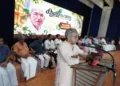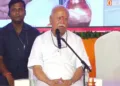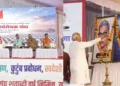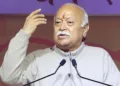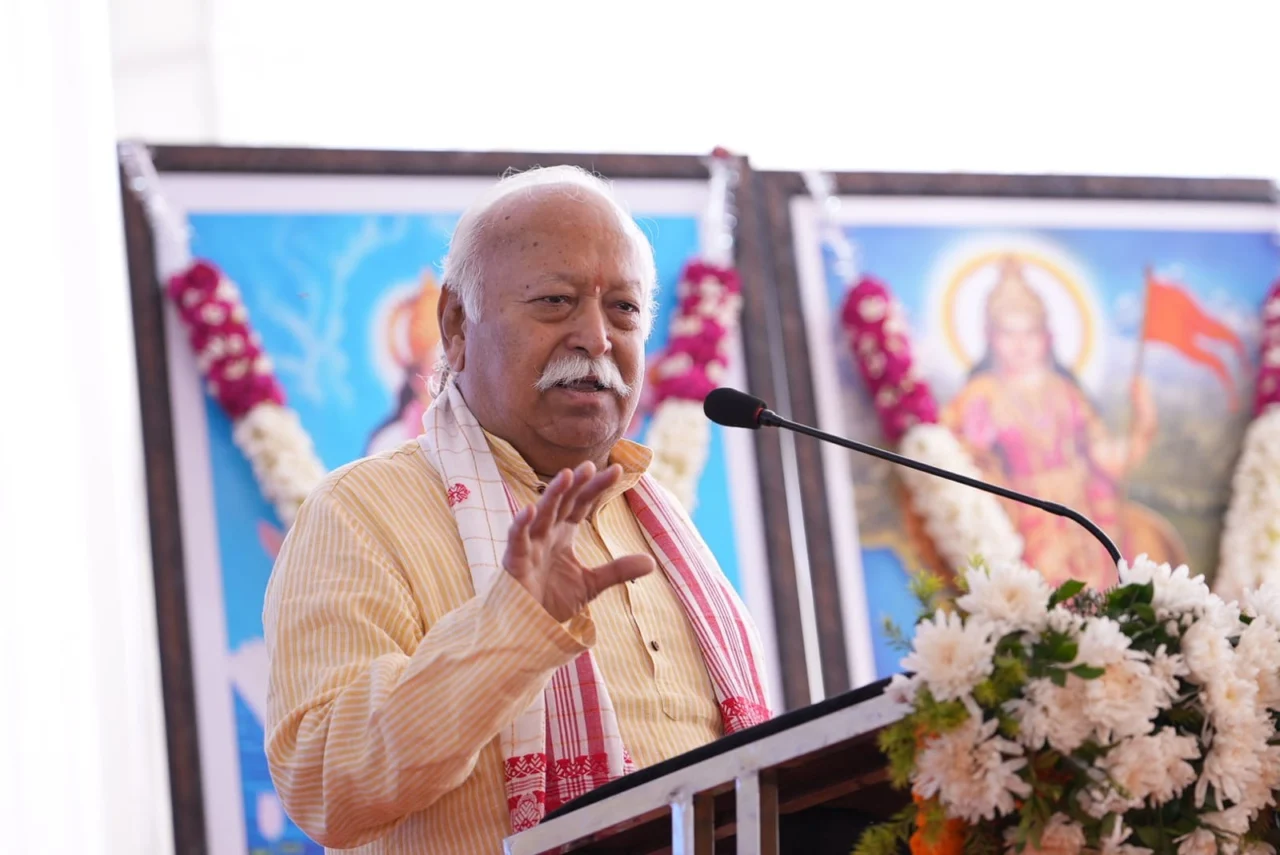
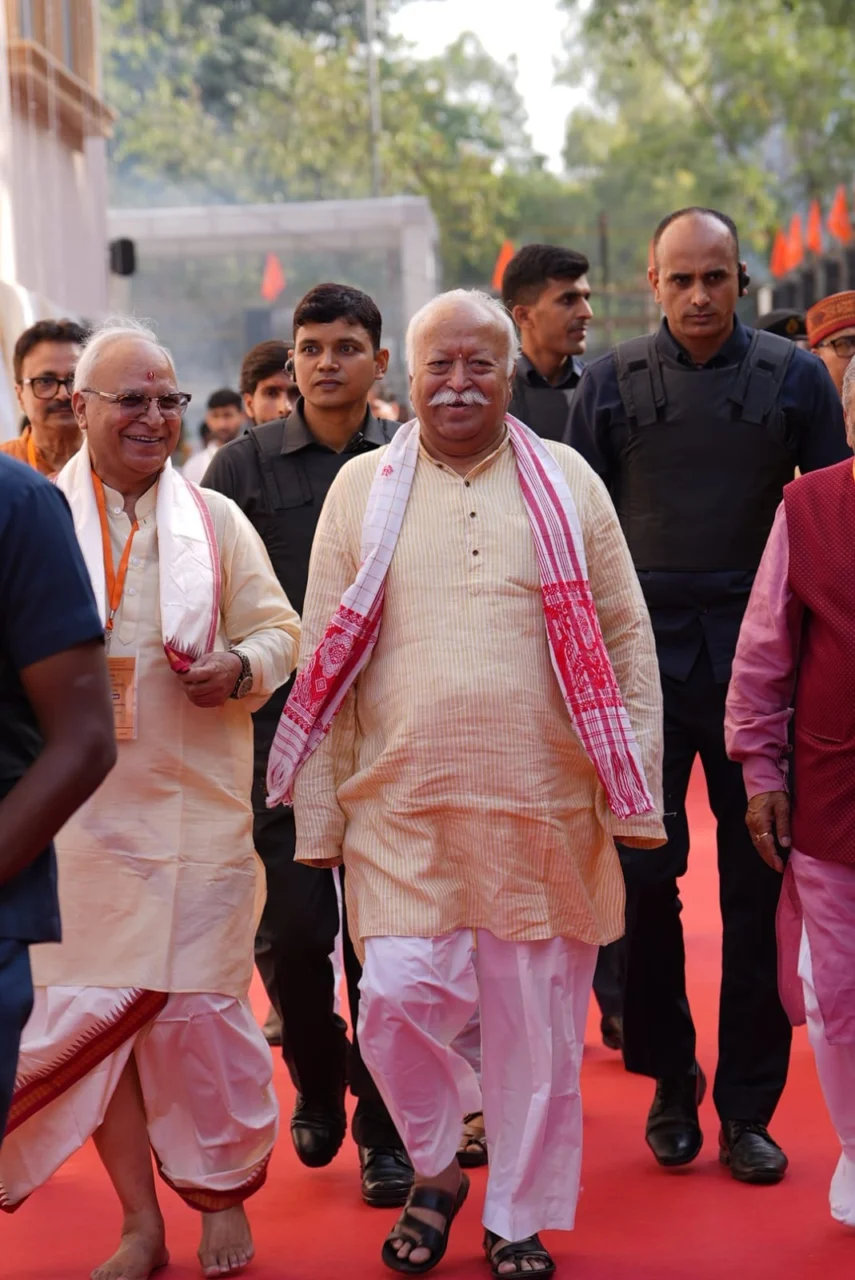
NEW DELHI: Knowing Sanskrit, enables us to understand Bharat, said Rashtriya Swayamsevak Sangh Sarsanghchalak, Dr Mohan Bhagwat at the Inauguration of Samskrita Bharati Karyalaya ‘Pranava’ at DDU Marg, on April 20, 2026.
He said that “This inauguration of new karyalaya is happening under the name ‘Pranava,’ which is considered an auspicious occasion. It is a matter of joy and enthusiasm for all of us. It is believed that on Akshaya Tritiya, any work started remains everlasting and successful”
“Sanskrit is the life force of Bharat because the most ancient living tradition of ideas, life, and culture still exists through it. Bharat’s cultural heritage is seen as a tradition that upholds life, including both living and non-living elements of the universe, to fulfill this duty, one must know Bharat, accept Bharat, and develop oneself as part of Bharat,” he said
Addressing the gathering, Dr Bhagwat said, “Sanskrit is a language. Yet, it is not merely a language. If you know Sanskrit, understanding any Bharatiya Language is possible. In Bharat, Sanskrit constitutes the very soul of the nation because it is the most ancient tradition of thought, life, and culture, one that remains vibrant to this day that resides within Bharat.”
He further elaborated on the philosophical idea of Bharat, “The very existence of Bharat is not merely a geographical fact. It is not merely a political or economic entity. Bharat is a living tradition, the very foundation upon which the continuity of life rests.”
Dr Bhagwat noted that, “During my childhood, when Sanskrit was taught in school, it felt difficult. The curriculum required us to memorise ‘shlokas’, which created the impression that Sanskrit was a difficult language. Yet, when I heard those very same verses naturally spoken at home, they never seemed difficult at all.”
“This very problem persists today; students perceive Sanskrit as a difficult language. But the question remains; why does it seem so difficult? In reality, the simplest and most effective method for learning a language is not through textbooks, but through conversation,” he said.
He stressed that language learning becomes easier through immersion and regular usage.
“Communication is the best way to learn a language, not Grammar and other technicalities. Whenever I travel across Bharat, even if I do not know the specific vocabulary of the various regional languages, I am still able to grasp the underlying sentiment and meaning. Through constant listening and speaking, a language is acquired naturally and effortlessly. Therefore, the best method for learning a language is to immerse oneself among those who speak the language, to listen to them and to speak it continuously,” he said.
He also credited Samskrita Bharati for its role in reviving interest in Sanskrit, saying the organisation has succeeded in fostering a renewed interest in Sanskrit across the country within a relatively short period. Samskrita Bharati has made an important contribution in popularising Sanskrit with communication method.
He added that the transformative shift in societal attitudes towards Sanskrit over the past 15 years is clearly evident.
He observed that changing circumstances are encouraging people to reconnect with their cultural roots, and in such a context, providing opportunities to learn and understand Sanskrit becomes an important mission.
“Sanskrit is the life force of Bharat because the most ancient living tradition of ideas, life, and culture still exists through it. Bharat’s cultural heritage is seen as a tradition that upholds life, including both living and non-living elements of the universe, to fulfill this duty, one must know Bharat, accept Bharat, and develop oneself as part of Bharat,” he said
Addressing the gathering, Dr Bhagwat said, “Sanskrit is a language. Yet, it is not merely a language. If you know Sanskrit, understanding any Bharatiya Language is possible. In Bharat, Sanskrit constitutes the very soul of the nation because it is the most ancient tradition of thought, life, and culture, one that remains vibrant to this day that resides within Bharat.”
He further elaborated on the philosophical idea of Bharat, “The very existence of Bharat is not merely a geographical fact. It is not merely a political or economic entity. Bharat is a living tradition, the very foundation upon which the continuity of life rests.”
Dr Bhagwat noted that, “During my childhood, when Sanskrit was taught in school, it felt difficult. The curriculum required us to memorise ‘shlokas’, which created the impression that Sanskrit was a difficult language. Yet, when I heard those very same verses naturally spoken at home, they never seemed difficult at all.”
“This very problem persists today; students perceive Sanskrit as a difficult language. But the question remains; why does it seem so difficult? In reality, the simplest and most effective method for learning a language is not through textbooks, but through conversation,” he said.
He stressed that language learning becomes easier through immersion and regular usage.
“Communication is the best way to learn a language, not Grammar and other technicalities. Whenever I travel across Bharat, even if I do not know the specific vocabulary of the various regional languages, I am still able to grasp the underlying sentiment and meaning. Through constant listening and speaking, a language is acquired naturally and effortlessly. Therefore, the best method for learning a language is to immerse oneself among those who speak the language, to listen to them and to speak it continuously,” he said.
He also credited Samskrita Bharati for its role in reviving interest in Sanskrit, saying the organisation has succeeded in fostering a renewed interest in Sanskrit across the country within a relatively short period. Samskrita Bharati has made an important contribution in popularising Sanskrit with communication method.
He added that the transformative shift in societal attitudes towards Sanskrit over the past 15 years is clearly evident.
He observed that changing circumstances are encouraging people to reconnect with their cultural roots, and in such a context, providing opportunities to learn and understand Sanskrit becomes an important mission.
“The construction of a new office is, undoubtedly, a source of joy and enthusiasm; however, we must recognise that an office is not the cause of the work itself, but rather the result of the work’s expansion,” Dr Bhagwat said.
Prime Minister Narendra Modi also extended his greetings in the occasion “On the sacred occasion of Akshaya Tritiya, I feel immense joy in learning about the forthcoming inauguration of the new Central Office of Samskrita Bharati, named “Pranava,” in New Delhi, in the esteemed presence of Dr Mohan Bhagwat. This marks an important and inspirational step in the direction of the resurgence of India’s knowledge tradition, culture, and spirituality”.
“The Sanskrit language is the carrier of our ancient and rich heritage. Within it flows an uninterrupted stream of knowledge encompassing science, philosophy, and various disciplines—truly a boon for humanity. The glory of Sanskrit is limitless, and the vast wealth preserved in our scriptures continues to guide us at all times” reads the congratulatory message.
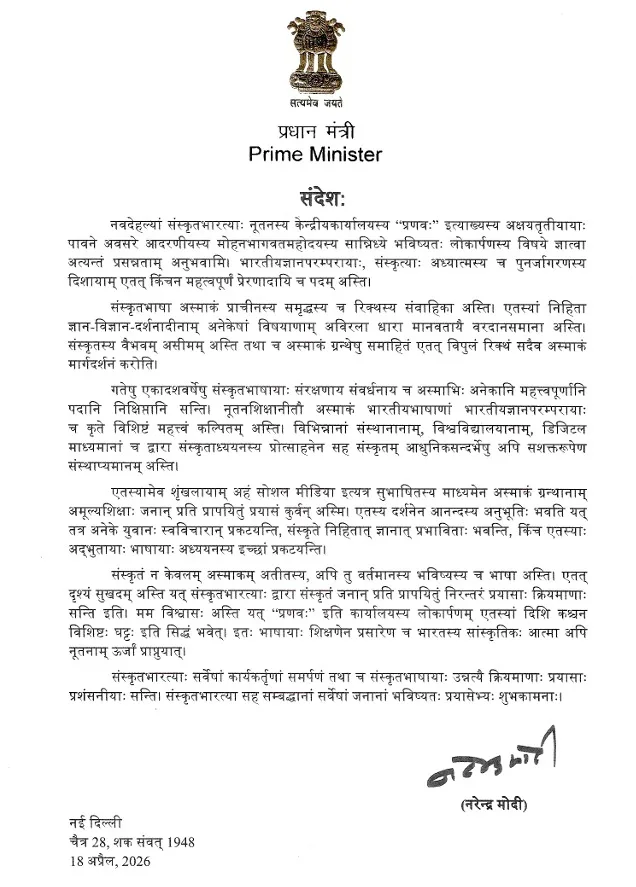
“Over the past eleven years, we have taken several significant steps towards the preservation and promotion of the Sanskrit language. In the New Education Policy, special importance has been accorded to Indian languages and India’s knowledge traditions. Through various institutions, universities, and digital platforms, Sanskrit is being strongly established even in contemporary contexts”, the message further reads.
“In this very spirit, I have been making efforts through social media, sharing subhashitas (wise sayings), to bring the invaluable teachings of our scriptures to the people. It is heartening to see that many young people engage with these, express their thoughts, draw inspiration from the wisdom embedded in Sanskrit, and develop a desire to learn this remarkable language. Sanskrit is not only the language of our past, but also of our present and future. It is gratifying to witness that Samskrita Bharati is continuously striving to take Sanskrit to the masses. I am confident that the inauguration of the “Pranava” office will prove to be a significant milestone in this journey. Through the teaching and dissemination of the language, the cultural soul of India will gain renewed energy. The dedication of all the workers of Samskrita Bharati and their efforts towards the upliftment of the Sanskrit language are commendable. My best wishes to all those associated with Samskrita Bharati for their future endeavours”, reads the message.