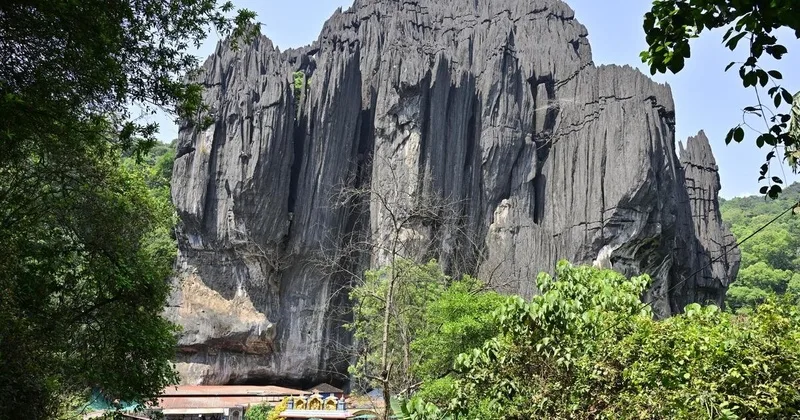
Karwar: In a significant development for geological conservation in Karnataka, the Geological Survey of India has officially declared the iconic Yana Caves near Gokarna as a geo-heritage site of national importance. The announcement, made during the organization’s 176th Foundation Day, has been widely welcomed by the scientific community, conservationists, and environmental experts.
The recognition, communicated through an official letter dated April 13, 2026, underscores the immense scientific, cultural, and ecological value of the Yana formations. The Geological Survey of India, which functions as the country’s nodal agency for geo-conservation, identifies and preserves sites that hold exceptional importance in understanding Earth’s geological history and processes.
Situated within the ecologically sensitive Western Ghats, a UNESCO-recognised biodiversity hotspot, the Yana caves are renowned for their towering black rock formations, believed to have originated nearly 2,700 million years ago during the Precambrian era. These formations are primarily composed of dolomitic limestone and stand as a striking example of landscape evolution shaped by tectonic activity, chemical weathering, and prolonged tropical climatic conditions.
According to GSI findings, the Yana region exhibits a classic karst landscape formed through the dissolution of soluble rocks over millions of years. The area is home to approximately 61 distinct karst features, making it a site of exceptional geological importance. Among these, the towering monoliths of Bhairaveshwara Shikhara and Mohini Shikhara dominate the skyline, drawing attention for their sheer scale and unique formation.
Beyond their geological significance, these formations are deeply embedded in local cultural and religious traditions. The twin peaks are associated with mythological stories and serve as important pilgrimage sites, attracting thousands of visitors annually. This blend of natural heritage and cultural reverence further elevates the importance of preserving the site in a sustainable manner.
Welcoming the move, M D Subhash Chandran, consulting scientist at the Center for Ecological Sciences, Indian Institute of Science, described the declaration as both timely and necessary.
“This is not just a geological monument but also a rich forest ecosystem. The Yana region plays a crucial role in sustaining the hydrology of the Aghanashini river. Due to the lime-rich dolomite formations, water is released gradually, ensuring perennial flow in the region,” he said.
He further stressed that the geo-heritage tag should lead to concrete conservation action. “The declaration must go beyond symbolic recognition. There is a need to establish a scientifically planned buffer zone to protect the fragile karst formations, the drainage basin of the Yana rivulet, and the surrounding biodiversity,” Chandran added.
Environmentalists have also raised concerns about increasing tourist footfall and the lack of strict regulation in the area. Unchecked tourism, littering, and infrastructure pressures could pose serious threats to the delicate ecosystem if not managed effectively. Experts have called for sustainable tourism models, stricter monitoring, and active involvement of local communities in conservation efforts.
The geo-heritage status is expected to bring national and possibly international attention to Yana, boosting eco-tourism and educational interest. However, experts caution that increased visibility must be balanced with responsible management to prevent ecological degradation.
Authorities are now expected to formulate guidelines for site management, visitor regulation, and conservation planning. There is also a growing demand for integrating scientific research, environmental education, and eco-tourism initiatives in the region.