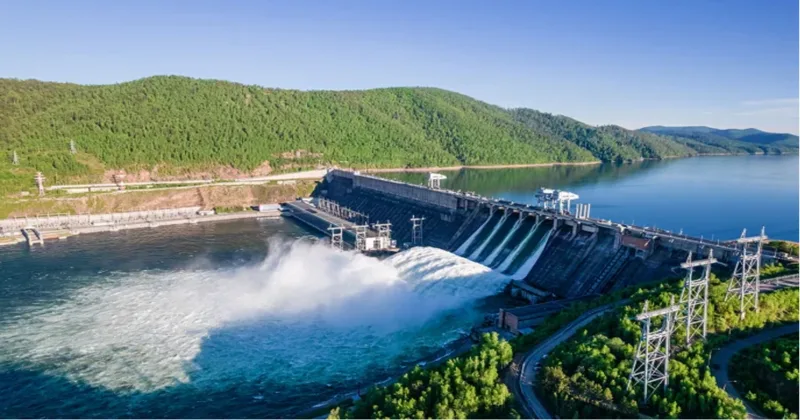
There are places in this country where the electricity has never arrived. Kamle, Kra Daadi and Kurung Kumey, three districts in the remote heartland of Arunachal Pradesh knows the darkness well. Roads that trail off into mud tracks. Schools where teachers and students both struggle against the odds. For the people who call these hills home, development has always felt like something that happens elsewhere.
On April 9, 2026, the Cabinet Committee on Economic Affairs(CCEA), chaired by Prime Minister Narendra Modi, approved an investment of Rs 26,069.50 crore for the construction of the Kamala Hydro Electric Project an undertaking that will harness the waters of the Kamala river to produce 1720 MW of electricity and in doing so, it will bring roads, bridges, schools and hospitals to some of India’s most underserved communities.
Mighty Kamala and what she can offer
The Kamala River, a tributary of the Brahmaputra runs through one of the most geographically and logistically challenging landscapes in India. The same terrain that has kept these districts isolated for decades also happens to hold enormous untapped hydropower potential. The Kamala HEP, with an installed capacity of 1720 MW, eight units of 210 MW and one of 40 MW is expected to generate 6,870 Million Units (MU) of electricity every single year. To put that in perspective, that is enough power to light up millions of homes annually.
The project will be jointly built and operated by NHPC Limited India premier hydropower public sector enterprise and the Government of Arunachal Pradesh, through a dedicated Joint Venture Company. The estimated construction period is 96 months, eight years of work that will transform the landscape of these districts as surely as the dam itself.
Taming the Brahmaputra fury
Citizen of Brahmaputra valley fear most about the monsoon season and the answer is always the same floods. Every year, the rivers swell and spill, swallowing farmland, homes and livelihoods. Assam alone loses thousands of hectares of cropland annually to flooding and the human cost displacement, disease, disruption compounds with every passing year.
By regulating the flow of the Kamala River upstream, the project will provide meaningful flood moderation benefits downstream in the Brahmaputra valley. The Central Government has acknowledged this explicitly Rs 4,743.98 crore of the total investment is earmarked as budgetary support for the flood moderation component. This is where the government putting real money behind a problem that has plagued the Northeast for generations.
What central government is putting on the table
The financial architecture of the Kamala HEP is worth examining closely, because it tells us something important about how seriously the Union Government is treating this project. Of the total Rs 26,069.50 crore sanctioned, the Government of India will contribute Rs 4,743.98 crore towards flood moderation, Rs 1,340 crore for enabling infrastructure roads, bridges and transmission systems, Rs 750 crore as Central Financial Assistance towards Arunachal Pradesh’s equity share in the Joint Venture Company.
It is strategic investment. The Centre is not funding a dam it is paying to open up one of India most remote frontiers. The roads and bridges built to enable the project will outlast the construction phase, serving the people of Kamle, Kra Daadi and Kurung Kumey for decades to come.
What Arunachal Pradesh stands to gain
For the state of Arunachal Pradesh, the gains from this project are layered and lasting. Under India’s standard hydropower policy, the host state receives 12 per cent of generated power free of cost a significant addition to the state electricity supply that will help address long-standing power deficits. An additional 1 per cent of project revenue flows directly into the Local Area Development Fund(LADF) putting money into the hands of communities closest to the project.
But the most immediate and visible benefits may be the infrastructure that the project brings in its wake. 196 kilometres of roads and bridges will be constructed across the three districts it will finally connect remote villages to markets, hospitals and each other. A dedicated project fund of Rs 8 crore will finance the construction of hospitals, schools and marketplaces in the region, addressing the very deficits that have defined life in these districts for so long.
Local residents will also benefit from direct employment during construction and operations, fair compensation for any displacement and CSR activities that the project is mandated to undertake. For many families in Kamle, Kra Daadi and Kurung Kumey, this project will be the first time the central government ambitions have translated into something they can see, touch and benefit from directly.
NHPC and the Northeast: A relationship in development
It is the latest chapter in NHPC Limited deepening relationship with the Northeast and it sits alongside three other major projects that are already transforming Arunachal Pradesh energy landscape. The Subansiri Lower HEP(2,000 MW) is along 750 MW which has already been commissioned and is generating power, with the remaining capacity expected to come online by December 2026. The Dibang Multipurpose Project, a 2,880 MW undertaking is currently under construction. And the Etalin HEP planned at 3,097 MW is in the pipeline for future development. Together with the Kamala HEP these four projects represent a combined hydropower capacity of nearly 10,000 MW a transformation in scale that would have seemed unimaginable just a decade ago.
Arunachal Pradesh is estimated to hold over 50,000 MW of hydropower potential, making it one of the most energy-rich states in the country. Yet for most of its history, that potential has sat untapped locked away by difficult terrain, inadequate infrastructure and the sheer challenge of building in one of the world most geologically active regions. The momentum gathering around these projects suggests that is finally changing.
India’s larger energy vision
The Kamala HEP is also a piece of a much larger national aspect. India has committed to achieving 500 GW of non-fossil fuel-based electricity capacity by 2030. Hydropower reliable, dispatchable and free of carbon emissions is central to that ambition. Unlike solar panels that go dark at night or wind turbines that stop when the air is still, hydropower can be turned up or down on demand. It is the backbone that allows India to bring more variable renewables into the grid without sacrificing reliability.
Bhupender Gupta Chairman and Managing Director of NHPC Limited, called the CCEA approval a matter of great significance for the hydropower sector. He expressed that this decision reflects India sustained focus on clean and sustainable energy development and few would disagree. In a single cabinet sitting on April 9, the CCEA also cleared the Kalai-II HEP(1,200 MW) on the Lohit River in Anjaw district, with an approved investment of Rs 14,105.83 crore. The Union Government committed over Rs 40,000 crore to hydropower in Arunachal Pradesh alone a figure that shows how seriously this government views the Northeast’s energy potential.
There is a tendency when discussing infrastructure projects of this scale, to get lost in the numbers megawatts, crores, kilometres of road. But behind every figure in this approval is a human story waiting to be written. Prime Minister Modi has often spoken of Viksit Bharat a developed India as a goal that must reach every corner of the country, every last village, every overlooked district. The Kamala Hydro Electric Project is what that vision looks like when it is translated from speech into stone, steel and flowing water.
The approval has been given. The investment is committed. Now comes the harder part the eight years of building, the community engagement, the environmental safeguards, the honouring of every social commitment made. India has no shortage of grand plans. The people of Kamle, Kra Daadi, and Kurung Kumey deserves the development in execution phase.