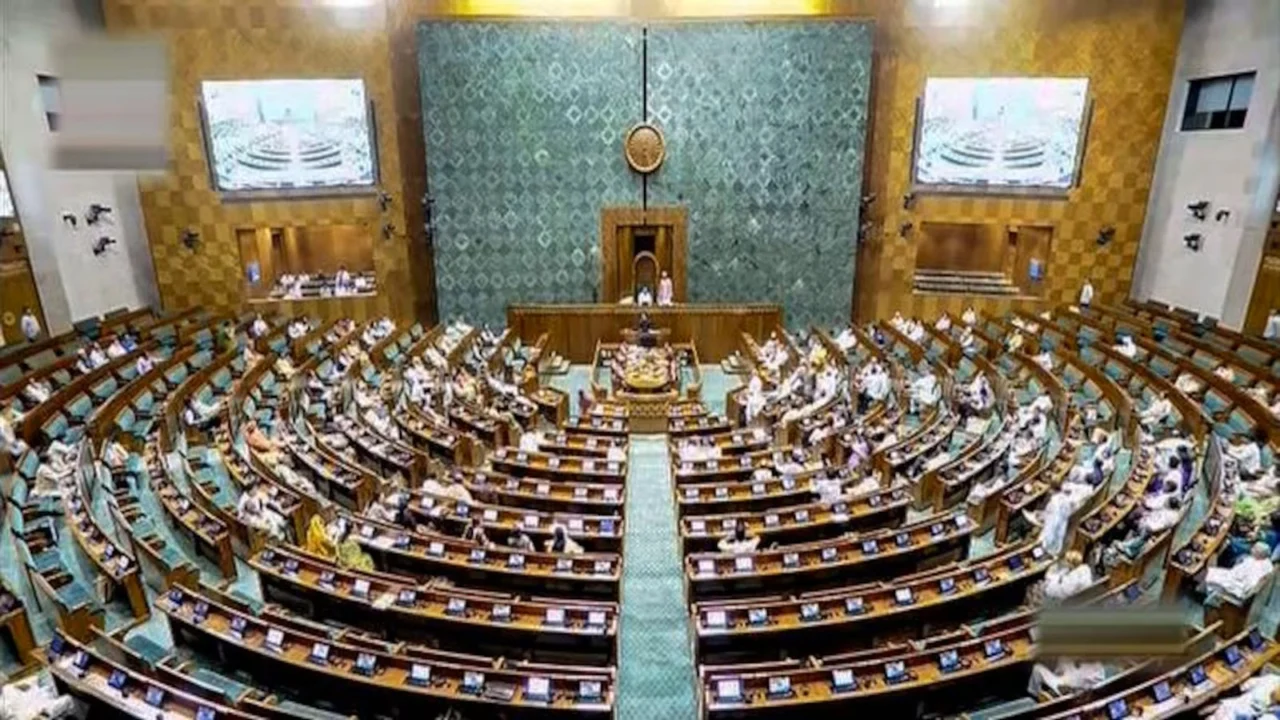
At the heart of the upcoming parliamentary session lies the Women’s Reservation Bill, a proposal aimed at reserving one-third of seats in the Lok Sabha and state assemblies for women. The Bharatiya Janata Party (BJP) has issued a strict three-line whip to all its Members of Parliament in both the Lok Sabha and Rajya SabIndian ha, mandating their presence from April 16 to 18. This shows that the government is planning to move ahead strongly with the Women’s Reservation Bill, one of the most discussed reforms, at a time when the country is also getting ready for a major electoral change through delimitation.
The increase in Lok Sabha seats from 543 to around 816, along with efforts to give more seats to women, is being seen as a major change in India’s democracy. The Indian government says this step will help fix the gender imbalance and ensure better representation on the basis of population, however, political opinions on this matter are still divided.
The BJP has framed the bill as a cornerstone of its “Nari Shakti” agenda, an effort to bring women from the corners of political participation to the center of decision-making.
India has long struggled with under representation of women in legislatures. Despite making nearly half the population, women currently account for only around 14 per cent of Lok Sabha members. The proposed reservation aims to address this imbalance structurally, rather than leaving it to a party-level candidate selection.
🚨 Just IN: BJP issues a three-line whip to Lok Sabha & Rajya Sabha MPs to be present from April 16–18.
Women’s Reservation Bill will be taken up.
Lok Sabha seats will increase from 543 to 816 as part of delimitation.
— Megh Updates 🚨™ (@MeghUpdates) April 12, 2026
Government sources suggest that the whip has been issued to ensure maximum attendance and avoid any disruptions during what is expected to be a high-stakes debate. With opposition parties likely to raise procedural and political objections, the ruling party appears keen to demonstrate numerical strength and unity.
Supporters of the bill argue that it is not merely about increasing numbers but about transforming governance priorities. Greater female representation could lead to stronger focus on health, education, sanitation, and social welfare areas where women legislators have been showing impactful policy changes globally.
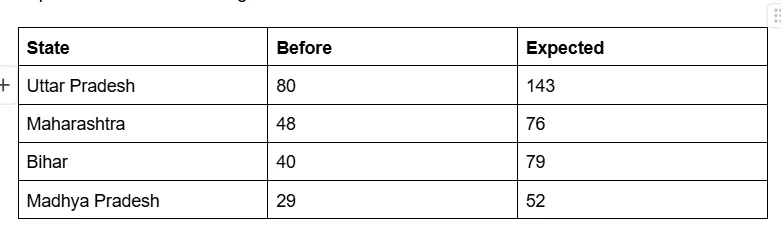
Parallel to the gender debate is the equally consequential issue of delimitation, the redrawing of parliamentary constituencies based on population changes. According to projections, the number of Lok Sabha seats could rise dramatically from 543 to 816 after 2026. Large and populous states such as Uttar Pradesh, Bihar, and Maharashtra are projected to see substantial increases in their seat share.
Expected rise of seats for Big States:
If we look from the government’s point of view, delimitation is a constitutional necessity that has been delayed for decades.
If one-third reservation is implemented in an 816 member house, over 270 seats could be reserved for women. This would not merely be an increase in numbers but it would represent a structural correction of decades of gender imbalance, potentially tripling the current presence of women lawmakers. Leaders from the Bharatiya Janata Party have framed this moment as a “double reform for Nari Shakti” where electoral expansion and gender justice are likely to go hand in hand. The message is clear: as Bharat grows under PM Modi’s rule, its democracy must also become more inclusive for women.
This shift will fundamentally change how the parties will approach elections. No longer will women candidates be seen just as a symbolic or occasional inclusion. Instead, the parties will be compelled to identify, nurture, as well as promote the women leaders at the grassroots level from village councils to Parliament.
As India looks ahead to the 2029 general elections, the conversation is no longer just about which party gains how many seats, it is increasingly about how many of those seats will be held by women.
The projected redistribution of seats across populous states such as Uttar Pradesh, Bihar, Maharashtra, Madhya Pradesh, and Gujarat will create a vast new political canvas. Within this, women candidates are expected to play a pivotal role, especially in rural and semi-urban constituencies where women voters are already emerging as a force.
Election Commission data shows that women’s voter turnout has not only matched but even surpassed men’s in recent elections, including the 2024 Lok Sabha polls (65.8 per cent vs 65.6 per cent). The reservation policy aims convert this electoral participation into political representation so that women are not just voters, but lawmakers who will shape Bharat’s future.
Nari Shakti: From Welfare to Leadership
Beyond legislative math, the bill will represent a shift in how women are placed within India’s development story. Over the years, government initiatives have focused on empowering women through financial inclusion, health, sanitation, and welfare schemes. Now, the focus is expanding toward political empowerment.
The idea is simple yet transformative that women should not only benefit from policies, rather they should help design them. Across the country, grassroots participation by women has already been growing through self-help groups and local governance bodies. The reservation in Parliament can act as a bridge and can take the local women leaders to the national stage.
For millions of young girls across the country, the sight of a Parliament with one-third women representatives could reshape aspirations. It sends a powerful message that leadership is not limited by gender. At the same time, it also places responsibility on political parties and institutions to ensure that women representatives are empowered, supported, and given meaningful roles in governance.
The April 16 to April 18 parliamentary session will definitely be a defining moment. With a three-line whip issued, the Bharatiya Janata Party (BJP) is showing that it is serious about moving ahead with what it considers a historic reform.
If the Women’s Reservation Bill moves ahead, it could hit a generational shift in Indian politics i.e., one where women are no longer underrepresented, but are central to governance and policy-making. Whereas, the Delimitation will reshape the map of representation, but the reservation will reshape its character.
India today stands at the intersection of expansion and inclusion. While delimitation will redefine “how many” representatives the country will have, the Women’s Reservation Bill will address “who” those representatives will be. Together, they offer an opportunity to build a Parliament that is not only larger, but also fairer and more reflective of India’s diversity.
For supporters, this will be a long-overdue correction of gender imbalance. For critics, it will raise valid questions about electoral fairness. But on one point, there is growing agreement: the rise of women in politics is no longer optional, it is inevitable. As Parliament prepares for debate, the real question is not whether change will come, but how transformative it will be for the women in Bharat and for the future of its democracy.