West Asia Conflict: US enforces naval blockade on Iran
July 21, 2026
  • Read Ecopy
  • Circulation
  • Advertise
  • Careers
  • About Us
  • Contact Us
Android AppiPhone AppArattai
Organiser
  • ‌
  • Bharat
    • Assam
    • Bihar
    • Chhattisgarh
    • Jharkhand
    • Maharashtra
    • View All States
  • World
    • Asia
    • Europe
    • North America
    • South America
    • Africa
    • Australia
  • Editorial
  • International
  • Opinion
  • RSS @ 100
  • More
    • Op Sindoor
    • Analysis
    • Sports
    • Defence
    • Politics
    • Business
    • Economy
    • Culture
    • Special Report
    • Sci & Tech
    • Entertainment
    • G20
    • Azadi Ka Amrit Mahotsav
    • Vocal4Local
    • Web Stories
    • Education
    • Employment
    • Books
    • Interviews
    • Travel
    • Law
    • Health
    • Obituary
  • Subscribe
    • Subscribe Print Edition
    • Subscribe Ecopy
    • Read Ecopy
  • ‌
  • Bharat
    • Assam
    • Bihar
    • Chhattisgarh
    • Jharkhand
    • Maharashtra
    • View All States
  • World
    • Asia
    • Europe
    • North America
    • South America
    • Africa
    • Australia
  • Editorial
  • International
  • Opinion
  • RSS @ 100
  • More
    • Op Sindoor
    • Analysis
    • Sports
    • Defence
    • Politics
    • Business
    • Economy
    • Culture
    • Special Report
    • Sci & Tech
    • Entertainment
    • G20
    • Azadi Ka Amrit Mahotsav
    • Vocal4Local
    • Web Stories
    • Education
    • Employment
    • Books
    • Interviews
    • Travel
    • Law
    • Health
    • Obituary
  • Subscribe
    • Subscribe Print Edition
    • Subscribe Ecopy
    • Read Ecopy
Organiser
  • Home
  • Bharat
  • World
  • Operation Sindoor
  • Editorial
  • Analysis
  • Opinion
  • Culture
  • Defence
  • International Edition
  • RSS @ 100
  • Magazine
  • Read Ecopy
Home World North America USA

US enforces naval blockade on Iran, marking economic turn in West Asia conflict with global trade implications

The conflict in West Asia is entering a new phase as the United States launches a sweeping naval blockade to choke Iran’s oil exports and trade. What is unfolding is not just a military escalation, but a high-stakes economic gamble with far-reaching consequences for global markets and geopolitics

Dr Vishnu AravindDr Vishnu Aravind
Apr 14, 2026, 02:00 pm IST
in USA, World, West Asia, Asia, International Edition
Follow on Google News
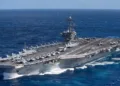
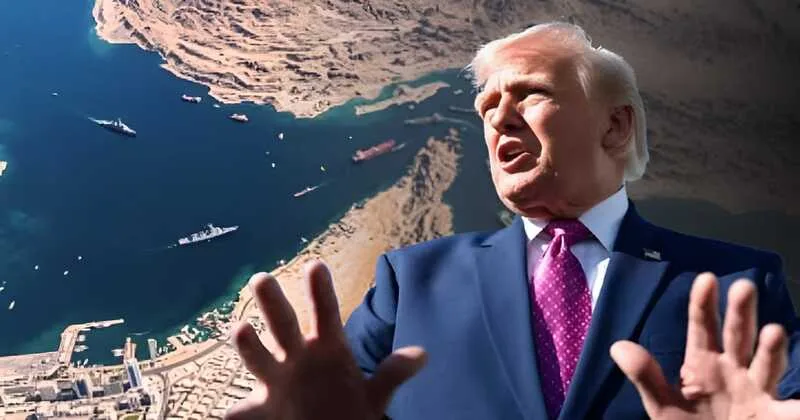
US naval vessels patrol strategic waters near the Strait of Hormuz as Washington enforces a blockade on Iran, heightening tensions and global trade concerns.

US naval vessels patrol strategic waters near the Strait of Hormuz as Washington enforces a blockade on Iran, heightening tensions and global trade concerns.

FacebookTwitterWhatsAppTelegramEmail

Washington/Tehran: The war in West Asia is rapidly evolving into an economic confrontation with global implications. What began as a military conflict is now taking the shape of a high-stakes economic battle, with the United States attempting to choke Iran’s financial lifelines. The US naval blockade, designed to halt Iran’s oil exports and maritime trade, is not merely a tactical move but a strategic gamble that could reshape regional power dynamics and disrupt global markets. By extending its military presence around the Strait of Hormuz, Washington is signalling a shift from direct confrontation to economic strangulation, a move that carries serious consequences for the world economy.

US blockade of Iran’s ports officially came into force on Monday, according to Donald Trump. The announcement marked a significant escalation, indicating that the United States is prepared to enforce strict maritime controls in one of the world’s most critical energy corridors. US Vice-President JD Vance accused Iran of “economic terrorism” earlier in the conflict, alleging that Tehran had attempted to disrupt global shipping by threatening the Strait of Hormuz.

Also Read: ‘Raza, Shahrukh, Shafi were too powerful, I stayed silent’: Nashik TCS victim speaks on coercion, conversion pressure

“Well, as the president of the United States showed, two can play at that game,” Vance said. “If the Iranians are going to try to engage in economic terrorism… no Iranian ships are getting out, either.”

In a strongly worded social media post, Trump warned that any Iranian “fast attack ships” approaching the blockade would be “immediately ELIMINATED,” underlining the seriousness of the US stance. Earlier, Iran’s parliament speaker insisted that the country would not “surrender under threats,” though there has been no direct response to Trump’s latest remarks. Meanwhile, the UK Maritime Trade Operations (UKMTO) issued an advisory stating that vessels in the region could encounter heightened military presence and may be subjected to “right-of-visit procedures” during transit.

Economic strategy behind the blockade

The economic logic behind these sanctions is straightforward. Since the outbreak of the war, Iran has been earning billions of dollars through the sale of petrochemical products. At the same time, it has attempted to disrupt exports from other Gulf nations, thereby exerting pressure on global energy markets. Washington’s calculation is that cutting off this crucial revenue stream will weaken Iran’s economy and limit its capacity to sustain the war. There is little doubt that the United States possesses the naval capability to control shipping routes in and out of the Gulf. However, experts argue that the key question is not whether the US can enforce the blockade, but what the long-term consequences will be.

Military assessments suggest that operating from the Sea of Oman is a safer strategy for US forces than entering the narrow Strait of Hormuz, where Iranian missile systems, mines, and fast attack boats pose a significant threat. Direct engagement in the Strait could expose US forces to heavy casualties, making the current approach a more calculated and lower-risk alternative. Experts also point out that intercepting Iranian vessels in open waters is far less dangerous than attempting to seize strategic locations such as Kharg Island or escort ships through heavily contested zones. From a purely military standpoint, enforcing the blockade in international waters is considered a relatively manageable task for the United States.

Rising tensions and global shipping concerns

According to signals from US Central Command, all vessels entering or leaving Iran’s coastline will be subject to inspection. In contrast, ships bound for other Gulf states will be allowed to pass without interference. Although humanitarian shipments are expected to be permitted, they will also undergo strict checks, potentially slowing the delivery of essential goods to Iran.

The implications of these measures are already being felt across global shipping networks. Maritime experts report a sharp rise in anxiety among commercial operators, with many vessels altering their routes to avoid the region.


Topics: IranWest Asia ConflictNaval BlockadeUS naval blockade
ShareTweetSendShareSend
✮ Subscribe Organiser YouTube Channel. ✮
✮ Join Organiser's WhatsApp channel for Nationalist views beyond the news. ✮
Previous News

Nashik TCS Case: Islamist told Hindu woman, “Your husband is not here; If you have physical needs, will fulfil them”

Next News

Himachal Pradesh | Bharat remains unshaken despite invasions due to its inner cultural strength: Prem Kumar

Related News

Indian Embassy issues advisory to citizens travelling to Iran

‘Postpone travel to Iran’: Indian Embassy issues advisory for nationals, asks citizens to consider leaving

Pakistan Prime Minister Shehbaz Sharif and Army Chief Field Marshal Asim Munir

Dalaal in a Trap: Pakistan’s Saudi Defence Pact and Iran mediation collide after Houthi strikes on Saudi Arabia

Iran-themed event at Shantiniketan High School in Hyderabad.
Image courtesy: Tathvam-asi (@Tathvam_asi on X

LRPF moves NHRC over display of Iran flags, Ayatollah Ali Khamenei poster at Hyderabad’s Shantiniketan school assembly

Iran-backed Yemeni Shia Houthis have reignited hostilities with Saudi Arabia, raising fresh fears of a wider regional conflict

Yemeni Shia terror group Houthis resume missile strikes on Saudi Arabia, ending four-year truce

The Fragile Truce: Why the US-Iran peace deal mediated by puppet Pakistan is primed for collapse

Economic resilience of India amid West Asia crisis

Load More

Latest News

Self-immolation by Lobsang Palden in front of UN Headquarters in New York, (inset) the activist shortly before immolating himself

China and Tibet: Immolation of ‘Imposed Unity’

Authorities attacked during anti-encroachment drive in Shivajinagar

Anti-Encrochment Drive in Karnataka: Officials attacked in Shivajinagar; BJP slams govt’s appeasement politics

The Shadow of politics & radical ideologies behind NEET protests

AgriBio 2.0 aims to build a self-reliant, climate-resilient agricultural future through biotechnology

NITI Aayog’s AgriBio 2.0: How biotechnology and climate-resilient crops will transform Indian agriculture

(L) Jalaudheen Ustad with Dr. Arif Hussein Theruvath (R)

Keralam: Islamic scholar inaugurates Ex-Muslim event anonymously over security fears

Delhi's CJP protest allegedly shifted from student issues to political confrontation, overshadowing educational concerns

Delhi’s CJP Protest: How opposition collectives hijacked the movement and compromised students’ interests

ASTRA Missile

Saudi Arabia eyes India’s Astra Mk1 missile for F-15 fleet, boosting indigenous defence export prospects globally

AI Generated Image

Bharat Beyond Western Lens: How science, tech, education, defence & infrastructure progress are powering nation’s rise

Karnataka: Cops suspended over Rs 5,000 monthly hafta from illegal Bangladeshi immigrants

Plywood workshop (Representative image)

Keralam: Nine child labourers rescued from Perumbavoor plywood factories; organised child trafficking racket suspected

Load More
  • Privacy
  • Terms
  • Cookie Policy
  • Refund and Cancellation
  • Delivery and Shipping

© Bharat Prakashan (Delhi) Limited.
Tech-enabled by Ananthapuri Technologies

  • Home
  • Search Organiser
  • Bharat
    • Assam
    • Bihar
    • Chhattisgarh
    • Jharkhand
    • Maharashtra
    • View All States
  • World
    • Asia
    • Africa
    • North America
    • South America
    • Europe
    • Australia
  • Editorial
  • Operation Sindoor
  • Opinion
  • Analysis
  • Defence
  • Culture
  • Sports
  • Business
  • RSS @ 100
  • Entertainment
  • More ..
    • Sci & Tech
    • Vocal4Local
    • Special Report
    • Education
    • Employment
    • Books
    • Interviews
    • Travel
    • Health
    • Politics
    • Law
    • Economy
    • Obituary
  • Subscribe Magazine
  • Read Ecopy
  • Advertise
  • Circulation
  • Careers
  • About Us
  • Contact Us
  • Policies & Terms
    • Privacy Policy
    • Cookie Policy
    • Refund and Cancellation
    • Terms of Use

© Bharat Prakashan (Delhi) Limited.
Tech-enabled by Ananthapuri Technologies