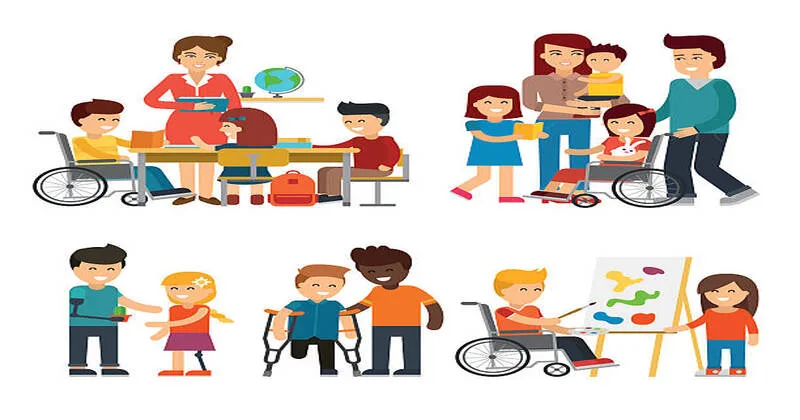
Under the visionary leadership of the current administration, Bharat has witnessed a profound shift toward an inclusive and empowered educational landscape, rooted in the principle of Antyodaya-serving the last person in the line. Between 2018 and 2026, the government has moved beyond mere welfare to a rights-based approach, ensuring that children with special needs are not just integrated, but prioritised as vital contributors to the nation’s future.
By dismantling the barriers of the past and leveraging cutting-edge technology through the National Education Policy(NEP) 2020, the state has championed the dignity and self-reliance of Divyang students. This era has been defined by a commitment to cultural sensitivity and structural reform, ensuring that every child, regardless of physical or neurological challenges, has the opportunity to excel within a robust, modern, and values-driven Indian education system. From accessible infrastructure to specialized teacher training, these initiatives represent a historic stride toward a truly Atmanirbhar(Self-Reliant) Bharat, where no child is left behind in the journey of national progress.
This report highlights 14 transformative initiatives from 2018 to 2026 that reinforce Bharat’s commitment to inclusive education for children with special needs. Aligning with the National Education Policy 2020 and Samagra Shiksha, these measures represent a historic shift toward an equitable, accessible, and self-reliant learning ecosystem for all.
Goa’s commitment to divyang empowerment: Rs2.8 crore sanctioned for inclusive learning
In 2026, the Goa government further solidified its dedication to the upliftment of the specially-abled by providing substantial financial benefits worth Rs2.8 crore to 11,166 children. This initiative, spanning the 2025-26 academic year, ensures that students in both special and regular schools receive essential resource support, including speech therapy, physiotherapy, and transport allowances. By providing assistive devices and specific stipends for girls with disabilities, the state is actively dismantling barriers to education. This move reflects a compassionate and result-oriented governance model that prioritizes the dignity and holistic development of every child, ensuring they are equipped to contribute to the nation’s progress.
Chandigarh unveils landmark inclusive education policy to champion equal opportunity
In a significant stride toward a more equitable society, Chandigarh launched its “Policy for Providing Education for Disabled Students 2025”. This comprehensive framework mandates free and non-discriminatory education for children with disabilities up to the age of 18, aligning with the national vision of inclusive growth. The policy goes beyond the classroom by integrating home-based education with transport support, vocational training starting from Class 9, and the deployment of trained special educators. By establishing robust oversight committees at both school and state levels, Chandigarh is ensuring that the promise of empowerment is met with strict accountability and structural excellence.
Haryana enforces strict non-discrimination mandates to protect special needs students
Demonstrating a zero-tolerance policy toward educational exclusion, the Haryana Education Department issued rigorous new guidelines on in 2025, directing all schools to admit children with disabilities without prejudice. These mandates require schools to develop Individual Education Plans and establish resource rooms staffed with specialized professionals to ensure no child is left behind. Under these rules, the inclusion of parents in School Management Committees is now mandatory, fostering a community-driven oversight mechanism. Schools that fail to comply or attempt to remove special needs students without due process now face the ultimate penalty of losing their official affiliation, showcasing the state’s iron-clad resolve to protect the rights of the Divyangjan.
Haryana state inclusive education guidelines 2025: A blueprint for integration
In 2025, Haryana further strengthened its educational infrastructure by introducing the “Haryana State Inclusive Education Guidelines, 2025.” This policy serves as a strategic roadmap for integrating children with special needs into the mainstream academic fold through early disability identification and specialized teacher training. By mandating the installation of ramps, Braille materials, and other barrier-free infrastructure across all schools, the state is physically and pedagogically reshaping the learning environment. This initiative reflects a deep-seated commitment to fostering an environment where merit and opportunity are accessible to all, regardless of physical challenges, through structured state-led intervention.
Arunachal Pradesh cabinet approves model center for special needs education in Miao
In a historic decision reflecting the spirit of compassion and regional empowerment, the Arunachal Pradesh Cabinet approved the establishment of a dedicated school for children with special needs in Miao in 2025. This institution is envisioned not merely as a school, but as a premier model center for education, healthcare, and holistic empowerment in the Northeast. Chief Minister Pema Khandu’s administration emphasized that this move is a cornerstone of the government’s steadfast commitment to equality and the nurturing of every citizen’s potential. By providing specialised resources in remote regions, the state is ensuring that the march toward a self-reliant India reaches the farthest corners of the frontier.
CBSE empowers divyang students with dedicated registration portal for 2026 exams
In a major move toward digital inclusion and administrative efficiency, the CBSE launched a specialised portal in September, 2025, to streamline the registration of Class 10 and 12 students with special needs. By integrating this feature into the Pariksha Sangam portal, the board has ensured that schools can seamlessly upload disability documentation and select necessary exam accommodations. This proactive step ensures that every CWSN (Children with Special Needs) candidate receives tailored support, with their required facilities clearly marked on admit cards, reflecting the government’s commitment to making the examination process dignified and accessible for all.
Maharashtra’s ‘Disha Abhiyan’: Redefining education for students with intellectual disabilities
In August, 2025, the Maharashtra government launched the pioneering “Disha Abhiyan”, a transformative scheme designed to standardize and elevate the quality of education across 453 special schools. This initiative focuses on eliminating disparities in teaching standards and providing high-quality, uniform learning modules that integrate life skills and vocational training. By adapting pedagogy to various intellectual ability levels, the state is moving beyond traditional care to foster true employability and social inclusion. This mission-driven approach exemplifies the state’s resolve to empower students with intellectual disabilities, ensuring they transition from the classroom to a productive role in society.
Arunachal Pradesh expands educational frontier with five new dedicated special schools
Furthering its vision of comprehensive regional development, the Arunachal Pradesh government announced a strategic plan in July, 2025, to establish five specialized schools for children with special needs across the Kameng, Lohit, Siang, Subansiri, and Tirap districts. Following the identification of nearly 3,000 special needs children through UDISE+ data, this expansion is a direct response to the need for localized, high-quality educational infrastructure. By bridging the access gap in these key districts, the state is ensuring that the benefits of specialized pedagogy reach the most remote corners of the frontier, reinforcing the national commitment to inclusive growth for every citizen.
Historic tripartite agreement in New Delhi to bolster inclusive learning under NEP 2020
In a landmark step for national educational reform, the DEPwD, NIOS, and NCERT signed a tripartite Memorandum of Understanding (MoU) in June, 2025, in New Delhi. This collaboration directly fulfills the mandate of the National Education Policy 2020 by allowing NIOS to recognize special schools as accredited centers for learning. Through this agreement, NCERT will spearhead the revision of curricula and textbooks to ensure they are accessible and inclusive, while NIOS provides the flexibility in courses and examinations that special needs students require. This synergy between top national bodies represents a robust, state-led effort to build a barrier-free academic ecosystem.
Uttar Pradesh and UNICEF launch ‘Sugamya Worksheets’ for nearly 3 lakh special students
In June, 2025, the Uttar Pradesh government, in collaboration with UNICEF, launched the ‘Sugamya Worksheets’ initiative, specifically designed for 2.96 lakh differently-abled students from Classes 1 to 8. These worksheets utilize simplified language and powerful visual aids tailored to various disability categories, making learning more intuitive and engaging. With a structured monitoring system involving monthly reviews by special educators, the initiative ensures consistent academic progress. This program highlights the Yogi Adityanath administration’s dedication to grassroots educational empowerment, utilizing innovative tools to ensure that no child’s physical or neurological challenges hinder their path to literacy and self-reliance.
“Every Child is Special”: Uttar Pradesh launches massive awareness campaign across 75 districts
In a major push toward social integration and the dignity of the Divyangjan, the Uttar Pradesh Basic Education Department, in collaboration with UNICEF, launched the “Every Child is Special” poster campaign in June, 2025. This initiative saw the distribution of 2.65 lakh poster sets across all 75 districts of the state, targeting schools and public spaces. By emphasizing equal participation, safety, and the inherent value of every child, the Yogi Adityanath administration is actively reshaping the cultural narrative around disability. This campaign serves as a powerful testament to the state’s resolve to build a more compassionate and inclusive society where every child is recognized as a vital part of the nation’s future.
Andhra Pradesh establishes 125 autism support centres under the “Bhavitha” initiative
Demonstrating a sophisticated approach to specialised healthcare and education, the Andhra Pradesh government announced the establishment of 125 Autism Support Centres in March, 2025. Launched under the “Bhavitha” initiative, these centers are strategically located within urban government schools across 26 districts to provide world-class therapeutic support. From Applied Behaviour Analysis (ABA) to speech and occupational therapy, these modern facilities are staffed by trained professionals dedicated to enhancing the life skills of children on the autism spectrum. This initiative reflects a forward-thinking governance model that prioritizes early intervention and specialized care to ensure that every child can achieve their maximum potential.
Kerala strengthens educational infrastructure with ₹72 crore allocation for barrier-free learning
In February, 2025, the Kerala state budget underscored its commitment to inclusive excellence by allocating Rs72 crore toward the education of students with disabilities. This substantial investment includes ₹10 crore specifically earmarked for creating barrier-free school environments and providing advanced learning aids, ensuring that physical limitations do not hinder academic pursuit. Additionally, Rs62 crore was dedicated to institutions supporting children with intellectual disabilities. By focusing on accessibility and structural reform, the state is reinforcing its educational framework to be more welcoming and supportive, ensuring that the marginalized are brought into the mainstream of development.
Samagra Shiksha: The national bedrock of inclusive and equitable education
Since its inception in May, 2018, the Samagra Shiksha scheme has stood as the cornerstone of India’s mission to provide equitable and inclusive quality education from pre-primary to Class 12. This flagship program of the Government of India prioritizes children with special needs through a comprehensive support system that includes disability assessment, assistive devices, and the recruitment of special educators. By mandating barrier-free infrastructure and providing financial stipends-with a special emphasis on the girl child-the scheme ensures that no student is denied their right to learn. Through home-based education and therapeutic counseling, Samagra Shiksha embodies the vision of a truly Atmanirbhar India, where every citizen is empowered through accessible and value-based education.
In conclusion, the strategic landscape of special education in Bharat has been permanently reshaped by a spirit of compassion backed by firm administrative action. The transition from 2018 to 2026 showcases a governance model that prioritises the most vulnerable with precision-utilising everything from standardised teaching modules and specialised therapeutic centers to statewide awareness campaigns. By fostering a synergy between federal mandates and localised state excellence, Bharat is successfully creating an environment where a child’s physical or neurological challenges do not dictate their destiny. As schools become more accessible and curricula more inclusive, the nation is not just fulfilling a policy requirement, but is honoring its moral duty to provide equitable opportunity for all. This collective effort stands as a cornerstone of a modern, inclusive, and resurgent Bharat, ensuring that the light of education reaches every home and empowers every mind.