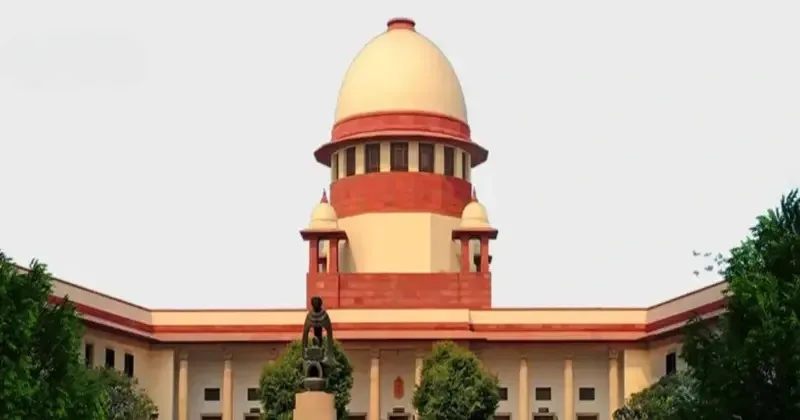
On March 24, the Supreme Court of India delivered a judgment that has once again brought into focus a long-standing constitutional and civilisational debate who qualifies as a Scheduled Caste(SC) and why. Upholding the Andhra Pradesh High Court’s decision, the apex court reiterated a foundational legal principle: only Hindus, Sikhs and Buddhists can claim Scheduled Caste status under the Constitution and conversion to religions such as Christianity or Islam results in the immediate and complete loss of such status.
Predictably, this ruling has triggered outrage among sections of the liberal ecosystem, activist circles and ideological platforms like The Wire, which have attempted to portray the verdict as discriminatory, regressive and insensitive to the plight of “Dalit Christians”. However, a closer examination reveals that the Court has merely upheld the letter and spirit of the Constitution, resisting pressures to dilute a carefully structured framework designed to address a specific historical injustice rooted in Indic society.
The Supreme Court’s judgment rests firmly on Clause 3 of the Constitution(Scheduled Castes) Order, 1950. This Presidential Order clearly states that only those professing Hinduism later extended to Sikhism (1956) and Buddhism(1990) can be recognised as Scheduled Castes. The rationale is not arbitrary; it is deeply tied to the historical and social context in which caste-based discrimination evolved.
Caste, as a rigid and oppressive social hierarchy, is intrinsically linked to the traditional Hindu social order. While Sikhism and Buddhism emerged from the same civilisational matrix and historically included communities affected by caste discrimination, Abrahamic religions like Christianity and Islam explicitly reject caste as a doctrinal principle. Therefore, the Constitution logically restricts SC status to those communities where caste-based disabilities are structurally embedded.
The Court, in its wisdom, clarified that this restriction is absolute. A person cannot simultaneously claim to have renounced the religious framework that produced caste discrimination while continuing to demand the benefits associated with that very system. This is not discrimination it is consistency.
The reaction from sections of the media, particularly The Wire, has been emblematic of a broader pattern selective respect for institutions. When judicial pronouncements align with their ideological preferences, they are hailed as progressive milestones. When they do not, the same institutions are accused of bias, insensitivity, or worse.
In its article on the issue, The Wire attempts to build a narrative of victimhood around Dalit Christians, particularly in Punjab. It highlights concerns about loss of legal protection under the SC/ST(Prevention of Atrocities) Act and frames the judgment as a blow to social justice. However, this framing conveniently ignores a fundamental contradiction: if conversion is meant to liberate individuals from caste oppression, why should the state continue to recognise them as victims of a system they have ostensibly left behind?
This is not merely a legal question but a philosophical one. Can one reject the cause and yet retain the consequence? Can one abandon the identity that attracted discrimination and still claim compensation for it? The Court’s answer is a resounding no.
The issue becomes even more complex when viewed in the context of increasing reports of religious conversions, particularly in regions like Punjab. Various organisations and local reports have pointed to a surge in conversions driven not purely by spiritual conviction but by inducements promises of healing, financial aid, employment or social mobility.
If such conversions are indeed taking place under questionable circumstances, then extending SC benefits to converts would create a perverse incentive structure. It would effectively reward conversion while simultaneously eroding the limited resources meant for historically disadvantaged communities within the Indic fold. This is not a hypothetical concern. The logic is simple: if benefits continue post-conversion, there is no disincentive to convert. On the contrary, it may even encourage targeted conversion campaigns aimed at vulnerable populations, thereby distorting both religious freedom and social justice.
Perhaps the most glaring issue in the discourse around Dalit Christians is the internal contradiction. On one hand, proponents argue that Christianity offers equality and freedom from caste discrimination. On the other, they claim that Dalit Christians continue to face caste-based disadvantages and therefore deserve reservations.
These two positions cannot logically coexist. If the Church indeed provides a casteless and egalitarian environment, then the basis for caste-based reservation disappears. If caste persists even after conversion, then it raises uncomfortable questions about the efficacy of conversion as a solution. Moreover, several voices within the community have themselves admitted that many individuals continue to avail SC benefits despite converting an outright violation of the law. This not only undermines the integrity of the reservation system but also deprives genuine beneficiaries of their rightful share.
The debate cannot be divorced from its political and national security implications. India, particularly border states like Punjab, has historically been vulnerable to external influences seeking to alter its demographic and cultural landscape. Large-scale, organised conversions especially those linked to foreign funding raise legitimate concerns.
The demand for extending SC status to converts must be viewed against this backdrop. It is not merely about social justice but about the potential reshaping of identity, loyalty, and social cohesion. The Constitution, in its current form, acts as a safeguard against such transformations being incentivised by state policy. It is also worth noting that the demand for SC status among Christians and Muslims is not universally supported within Dalit communities. Many Dalit Hindu organisations have strongly opposed such moves, arguing that it would dilute the already limited benefits available to them.
In reaffirming the 1950 Order, the Supreme Court has demonstrated judicial restraint and fidelity to constitutional principles. It has resisted the temptation to engage in judicial activism that could have far-reaching and unintended consequences.
The Court has also sent a clear message: social policy must be shaped through democratic processes and constitutional amendments, not through judicial reinterpretation driven by ideological pressure. If there is a genuine case for revisiting the criteria for SC status, it must be debated in Parliament, not imposed through court orders.
None of this is to deny the socio-economic challenges faced by Dalit Christians or Muslims. Poverty, discrimination, and lack of opportunity are real issues that affect individuals across religious lines. However, the solution lies in creating targeted welfare schemes based on economic and educational criteria, not in distorting a system designed for a specific historical context. India’s reservation framework is not a poverty alleviation programme; it is a mechanism for compensating communities that have suffered systemic, religion-specific discrimination. Expanding it indiscriminately would not only weaken its effectiveness but also fuel social tensions.
The Supreme Court’s judgment is not an act of exclusion but one of constitutional clarity. It reinforces the principle that rights and benefits must be grounded in logic, history, and legal consistency not ideological convenience. The outrage from certain quarters is less about justice and more about preserving a narrative that seeks to blur distinctions, undermine institutions, and advance a particular agenda. In standing firm, the Court has upheld not just the law but the integrity of India’s social justice framework. At a time when debates around identity, religion, and rights are becoming increasingly polarised, such clarity is not just welcome it is essential.
