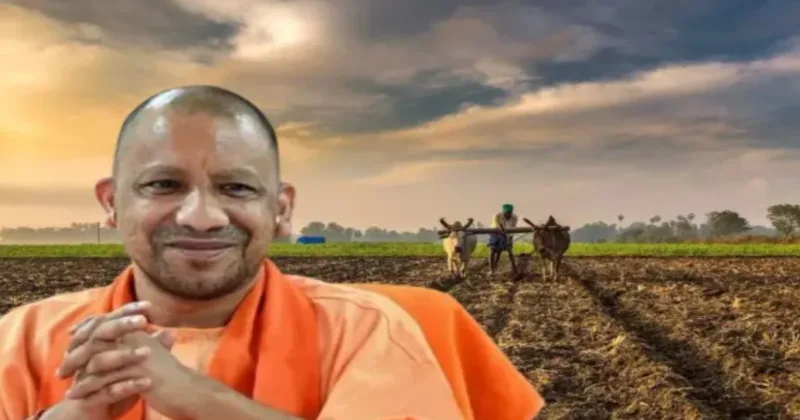
To strengthen agricultural self-reliance, Uttar Pradesh Chief Minister Yogi Adityanath has advocated for a transformative “Land is Lab” model. The approach will redefine farming practices by turning agricultural fields into live laboratories where the farmers and scientists will work together to drive innovation, improve productivity, and ensure sustainability. The Chief Minister said this while addressing the 6th Uttar Pradesh Agricultural Science Congress 2026 held in Lucknow. His speech emphasised the urgent need to modernise agriculture in response to global disruptions in food and energy supply chains, fluctuating input costs, and increasing pressure on farmers’ incomes.
Emphasising the vulnerabilities of recent global crises, Yogi Adityanath said that India’s food security is at risk when it depends on international supply chains for fertilisers, fuel, and agricultural inputs. He said that India, which has a strong agrarian base, should prioritise self-reliance by strengthening its domestic agricultural systems.
According to the Chief Minister Yogi, the solution is in building a robust local ecosystem that integrates production, processing, storage, and distribution. Such an ecosystem would not only protect farmers from external shocks but also enhance their income stability and overall economic resilience.
From ‘Lab to Land’ to ‘Land is Lab’
Traditionally, agricultural innovation in India has followed a “lab to land” approach, where research conducted in laboratories is later transferred to farmers. However, Yogi Adityanath proposed a paradigm shift toward a “land is lab” model. Under this concept, farmers’ fields themselves become testing grounds for new technologies, seeds, and techniques. Scientists, researchers, and agricultural experts can collaborate directly with farmers. This will ensure that innovations are practical, cost-effective, and suited to local conditions.
This model will encourage real-time experimentation, faster adoption of technology, and a two-way flow of knowledge, where farmers’ experiences also inform scientific research.
Strong emphasis was given on integrating advanced technologies into agriculture. He highlighted the growing importance of tools such as:
- Artificial Intelligence (AI) for crop monitoring
- Drones for precision spraying and surveillance
- Satellite imaging for weather and soil analysis
- Data-driven decision-making for better yield predictions
These technologies can significantly improve efficiency, reduce costs, and minimise risks associated with climate variability and pest attacks. By combining technology with traditional farming knowledge, the state aims to create a hybrid agricultural model that is both innovative and sustainable.
In addition to technological advancements, Yogi Adityanath also stressed on the importance of natural farming and how it is a long-term solution for sustainable agriculture. He highlighted that reducing chemical inputs not only lowers farmers’ costs but also improves soil health and environmental balance.
A key component of the Chief Minister’s vision is improving farmers’ access to markets. He said that reforms such as digital agricultural platforms and initiatives that are aligned with the “One Nation, One Market” concept, aim to eliminate barriers in agricultural trade.
These measures help farmers access wider markets beyond their local areas, achieve better price discovery for their produce, and reduce dependence on intermediaries. The Uttar Pradesh government believes that improved market linkages will play a crucial role in enhancing farmers’ incomes and making agriculture a more profitable venture.
During the event, Chief Minister Yogi Adityanath also honoured 15 distinguished scientists under the Uttar Pradesh Krishi Vaigyanik Samman Yojana 2025–26. An additional 30 scientists from the Uttar Pradesh Academy of Agricultural Sciences were recognised for their contributions. The awards covered multiple fields, including agricultural science, Horticulture and vegetable science, Animal husbandry and veterinary sciences, Fisheries and biotechnology, Agricultural extension and social sciences.
CM Yogi also noted that Uttar Pradesh plays a vital role in India’s agricultural landscape. Despite having a relatively smaller share of the country’s total cultivable land, Uttar Pradesh contributes significantly to food grain production and supports a large population dependent on agriculture. Uttar Pradesh’s agricultural growth rate has also shown improvement in recent years.
The government has also made substantial progress in expanding irrigation facilities across the state. Large-scale projects, including river-linking and canal modernisation efforts, have brought irrigation benefits to vast agricultural areas. Such infrastructure development forms a critical backbone of the “Land is Lab” model’s success. In his address, Yogi Adityanath called for a comprehensive transformation of the agricultural sector. He emphasised the need to move from production to productivity to profitability to prosperity.