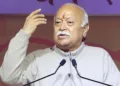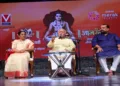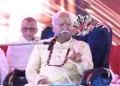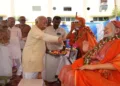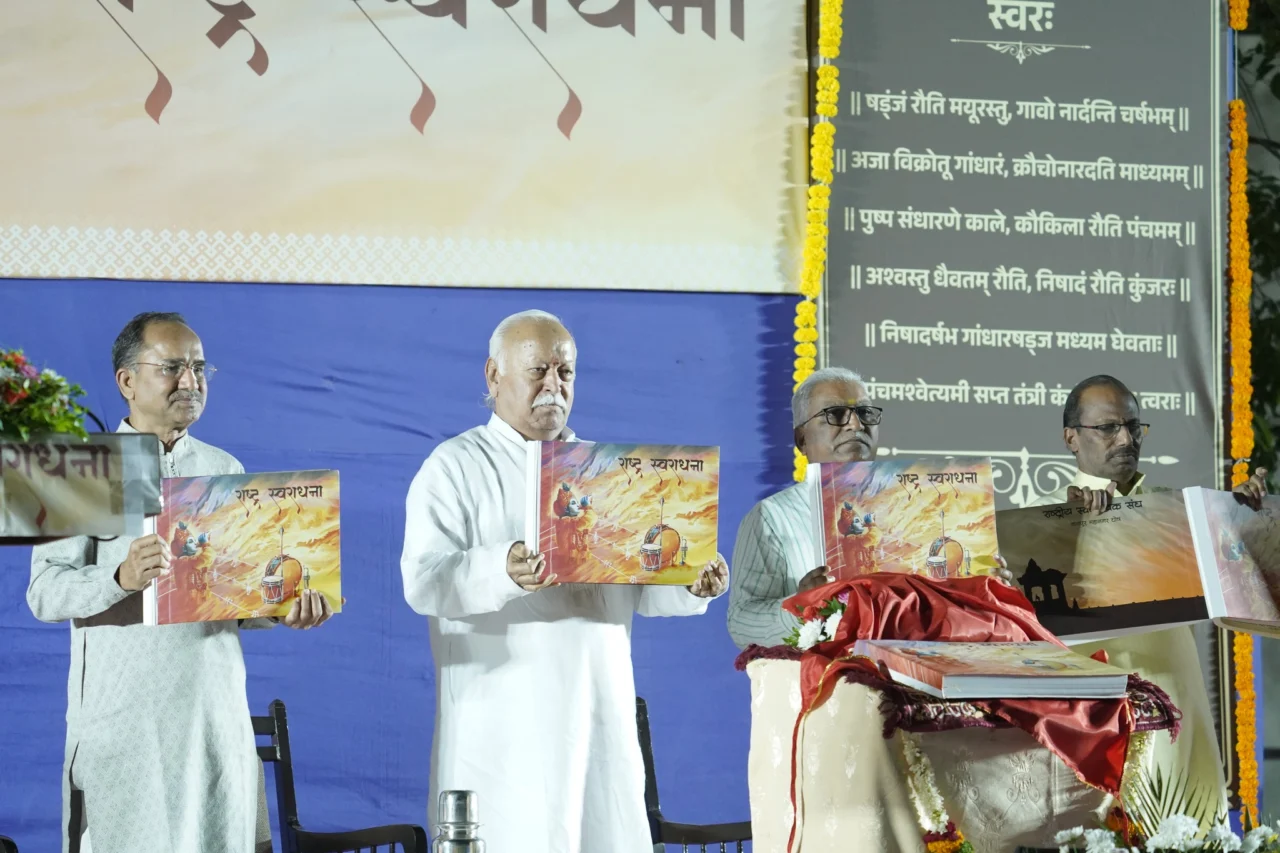
Nagpur: “Sangh activities are aimed at sanskar nirman (character building). The goal is to move towards a qualitative life through the coordination of a strong body and a cultured mind. In this context, the handwritten historical documentation of “Rashtra Swaradhana” holds special importance, as it preserves the original intent, spirit, and struggles through which the work was built”, said Rashtriya Swayamsevak Sangh Sarsanghchalak Dr Mohan Bhagwat while addressing the swayamsevaks at a programme held at Dr. Hedgewar Smriti Mandir, Reshimbagh, Nagpur, where the handwritten book “Rashtra Swaradhana”, based on the history of Nagpur Mahanagar Ghosh Pathak, was ceremonially released.
Reaffirming the core objective of the RSS, Dr Mohan Bhagwat stated that the aim of the Rashtriya Swayamsevak Sangh is to establish Satyam (Truth), Shivam (Auspiciousness), and Sundaram (Beauty) in society and the nation.
Explaining the significance of the Ghosh (band) in Sangh activities, he said that although different musical instruments produce varied sounds, swayamsevaks move in the same rhythm, reflecting unity, coordination, and discipline. When any work is done with dedication and sincerity, it results in harmony, ultimately leading to the experience of Satyam, Shivam, Sundaram.
Dr Bhagwat noted that swayamsevaks are not professional musicians or artists, yet they are able to present complex compositions without written support while managing their daily responsibilities. This often surprises people, but he clarified that creating miracles is not the aim of the Sangh, it happens naturally when work is done with dedication and inner commitment. The virtues of former swayamsevaks are reflected in these compositions, and true emotion arises only when the performer is internally connected to the act.
He further stated that the Sangh does not seek to inscribe its name in golden letters, as the credit for its hundred-year journey belongs to society and the nation. To achieve the goal of social unity, more organised and expansive efforts are required.
Highlighting the growth of the organisation, he said that the Sangh has progressed not due to anyone’s favour, nor has it been stopped by any opposition; rather, it has been built through the tireless efforts of swayamsevaks. Considering the Sangh as their own, swayamsevaks have devoted their full strength towards shaping the nation in accordance with its ideals. As a result, the Sangh today stands as a guiding force for the country.
Referring to the centenary year of the organisation, he described it not as a celebration, but as an opportunity for introspection, remembering the contributions of predecessors and striving to move towards a higher level of work. He called upon the present generation of swayamsevaks to evaluate the work of their predecessors, compare themselves, and carry forward the legacy in a more evolved form.
Emphasising discipline and training, he stated that coordinated practice, moving step by step and in tune is essential for organising society.
The Ghosh unit works closely with the Sharirik Vibhag, and bodily discipline has a direct impact on the mind. While the mind shapes the body, it is equally true that disciplined physical practice refines the mind and is both a known and scientific truth, he noted.
The programme also featured presentations and demonstrations by Nagpur Mahanagar Ghosh performers, showcasing various compositions, reflecting the spirit of unity, dedication, and cultural discipline nurtured within the Sangh.
On this occasion, Vidarbha Prant Sanghchalak Deepak Tamashettiwar, Sah-Sanghchalak Shridhar Gadge, and Mahanagar Sanghchalak Rajesh Loya were also present.