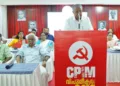
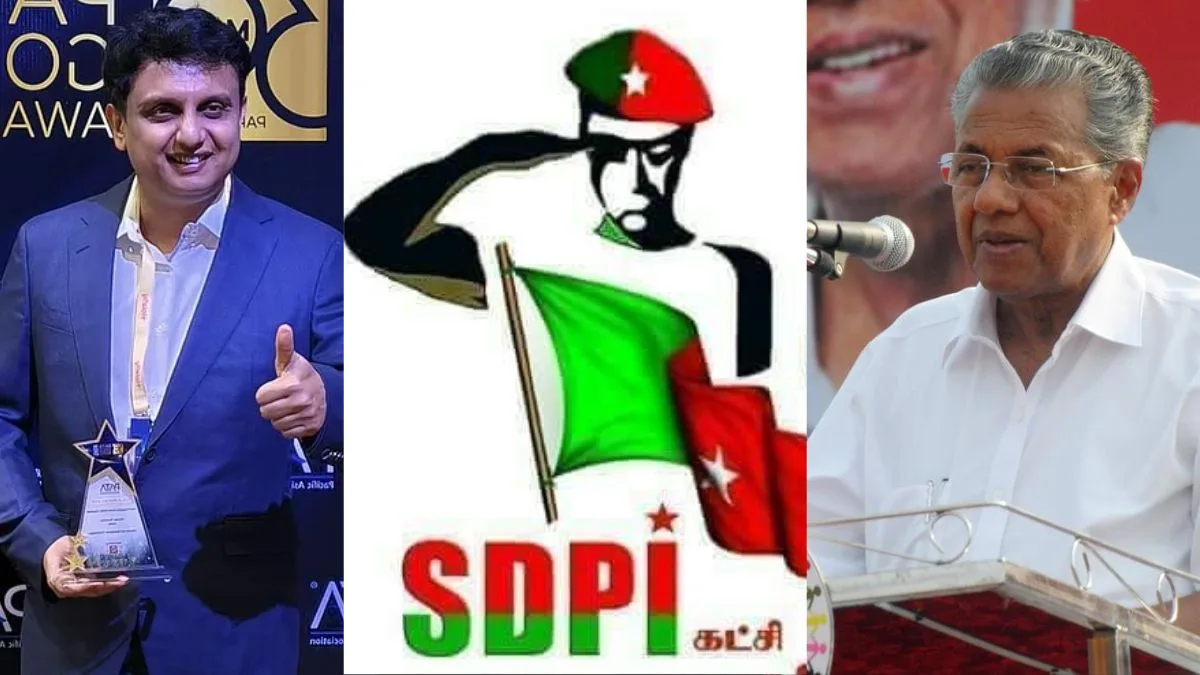
Kerala’s political battlefield is witnessing a fresh storm as explosive claims point to an alleged nexus between the Communist Party of India (Marxist) and Social Democratic Party of India—the political arm of the banned Popular Front of India.
At the centre of the controversy is a State Intelligence report, reportedly submitted to the government just before the Union government imposed a ban on PFI on September 28, 2022. A copy of the report is said to have been forwarded to Chief Minister Pinarayi Vijayan.
According to reports, the document allegedly categorises SDPI as an outfit involved in brutal, politically motivated killings, urging strict surveillance and action.
Murders, Hit Lists, and Intelligence Warnings
The report reportedly links SDPI cadres to multiple killings, including that of BJP leader Ranjith Sreenivasan in Alappuzha—an attack that shocked the state for its brutality, carried out in front of his family.
It also references the murder of SFI leader Abhimanyu at Maharaja’s College, Kochi, along with details of other alleged killings. Intelligence inputs, according to these claims, warned of:
- Organised political violence
- Maintenance of a “hit list”
- Execution patterns resembling extremist operations
State Intelligence is said to have urged the Home Department to closely monitor SDPI and initiate stringent action.
Raids, Leaks, and Central Intervention
Following the ban on PFI, nationwide crackdowns were launched by agencies including the National Investigation Agency.
While raids were conducted in Kerala, reports claim advance leaks compromised operations, allowing mid-level operatives to evade arrest. In contrast, central agencies reportedly carried out covert operations without prior state coordination to detain suspects.
Hartal Violence and Legal Fallout
The immediate aftermath of the PFI ban saw a statewide hartal that turned violent, causing large-scale damage to public property.
The Kerala High Court directed the state to recover losses from those responsible. However, allegations persist that:
- Recovery actions were delayed or ineffective
- The Home Department faced judicial reprimand for inaction
An estimated ₹5.20 crore in damages was reportedly attributed to the violence.
The Political Flashpoint: “Quid Pro Quo” Allegation
The controversy has now taken a sharp electoral turn. Opposition voices allege that the Intelligence report was deliberately buried, pointing to a political understanding between CPM and SDPI. The trigger: SDPI has not fielded candidates in the Dharmadam and Beypore constituencies where…
- Pinarayi Vijayan is contesting
- P. A. Mohammed Riyas, his son-in-law and PWD Minister, is in the fray
In the 2021 elections, SDPI secured over 2,000 votes in both constituencies. Critics call this SDPI’s ‘Not fielding’ candidates in both the constituencies is a quid pro quo—political space in exchange for silence and inaction.
The Bigger Question
At stake is not just an election narrative, but credibility of governance and internal security handling.
- Was intelligence input acted upon—or ignored?
- Were enforcement actions compromised?
- Is electoral arithmetic influencing security decisions?
As Kerala heads into a high-stakes election, these questions are no longer confined to dossiers—they are now central to the political discourse.