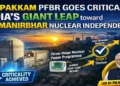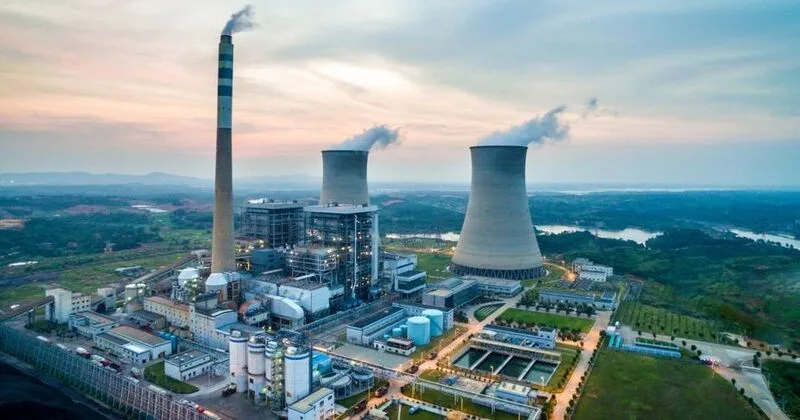
India has marked a major milestone in its nuclear energy programme. The indigenously designed and built Prototype Fast Breeder Reactor (PFBR) at Kalpakkam in Tamil Nadu successfully attained its first criticality on April 6, 2026, marking the initiation of a sustained nuclear chain reaction. This PFBR is a 500 MWe (MegaWatt electrical) reactor built by Bharatiya Nabhikiya Vidyut Nigam Limited (BHAVINI) at the Kalpakkam Nuclear Complex.
With this achievement, India has officially entered the second stage of its three-stage nuclear power programme, a vision first conceived by Dr Homi Jehangir Bhabha, the architect of India’s nuclear programme. The milestone carries substantial global significance. Once fully operational, India will become only the second country in the world, after Russia, to operate a commercial fast breeder reactor.
This achievement is a testament to the decades of scientific effort led by the Department of Atomic Energy. It also marks a significant step in India’s clean energy journey, reinforcing the country’s commitment to reliable, low-carbon power. Additionally, it brings India closer to its goal of achieving net zero emissions by 2070, as announced by Prime Minister Narendra Modi.
Overview of India’s Three-Stage Nuclear Power Programme
India holds limited uranium reserves but one of the largest thorium reserves in the world. To make the most of these resources, the Department of Atomic Energy designed a three-stage nuclear power programme built on a closed nuclear fuel cycle. The goal is to progressively multiply domestic fissile resources and secure long-term energy independence.
Stage 1: Pressurised Heavy Water Reactors (PHWRs)
Natural uranium is used as fuel in PHWRs to generate power. The spent fuel from these reactors produces plutonium, which becomes the primary input for the next stage.
Stage 2: Fast Breeder Reactors (FBRs)
The plutonium obtained from Stage 1 is used as fuel in Fast Breeder Reactors, which generate more fuel than they consume. The PFBR at Kalpakkam marks India’s entry into this stage. These reactors will be used to breed Uranium-233 from thorium, laying the groundwork for Stage 3.
Stage 3: Thorium-Based Reactors
This stage will harness India’s vast thorium reserves at scale, using the Uranium-233 bred in Stage 2 as fuel. Thorium is considered a practically vast energy source, and this stage holds the key to India’s long-term energy security.
Each stage feeds into the next, making India’s nuclear programme one of the most forward-looking energy strategies in the world.
PFBR: An Overview
The PFBR represents decades of indigenous research, design, and engineering. Its technology was developed by the Indira Gandhi Centre for Atomic Research (IGCAR), an R&D centre under the Department of Atomic Energy.
Fuel and Design: Unlike conventional thermal reactors, the PFBR uses Uranium-Plutonium Mixed Oxide (MOX) fuel. The fissile material used is recovered from the reprocessing of spent fuel from Pressurised Heavy Water Reactors, closing the loop on Stage 1.
Breeds More Than It Burns: The core of the PFBR is surrounded by a blanket of Uranium-238. Fast neutrons convert this fertile material into fissile Plutonium-239, enabling the reactor to produce more fuel than it consumes.
Bridge to Stage 3: The reactor is designed to eventually use Thorium-232 in the blanket. Through transmutation, Thorium-232 will be converted into Uranium-233, the fuel that will power India’s third stage of nuclear energy based on thorium.
Closed Fuel Cycle: The spent fuel generated by the PFBR will be reprocessed and recycled back into the reactor. This closes the second-stage fuel cycle and paves the way for large-scale use of India’s abundant thorium reserves in Stage 3.
Current Nuclear Power Landscape in India
India’s nuclear energy programme has maintained a steady presence in the country’s electricity mix. It now stands at a pivotal moment, with significant expansion planned over the coming years.
Installed Capacity: India’s current nuclear capacity is 8.78 Gigawatt (GW). In 2024–25, nuclear power plants generated 56,681 Million Units of electricity across the country.
Stable Contribution: Nuclear power has consistently accounted for around 3% of India’s total electricity generation. In 2024–25, its share stood at 3.1%.
Planned Expansion: India’s nuclear capacity is set to grow nearly 3x in the coming years. With indigenous 700 Megawatt (MW) reactors and 1,000 MW reactors being developed through international cooperation, the installed capacity is projected to reach 22.38 GW by 2031–32.
International Cooperation: India has signed Inter-Governmental Agreements (IGAs) on Civil Nuclear Cooperation for peaceful purposes with 18 countries, reflecting the growing global confidence in India’s nuclear programme.
Taken together, these numbers tell a clear story. Nuclear energy is no longer just a supplementary source of power in India. It is fast becoming a cornerstone of the country’s clean energy future.
Long-Term Mission
India has set its sights on a significantly larger role for nuclear energy in its overall power mix. The Government has announced the Nuclear Energy Mission, outlined in the Union Budget 2025–26, with the aim of achieving 100 GW of nuclear power generation capacity by 2047. The mission also supports India’s broader goal of achieving net-zero carbon emissions by 2070.
The following measures have been put in place to drive this vision forward:
Financial Commitment: The Nuclear Energy Mission allocates Rs 20,000 crore towards the design, development, and deployment of Small Modular Reactors (SMRs), signalling a serious long-term investment in indigenous nuclear technology.
SMR Target: At least five indigenously designed SMRs are to be operational by 2033, strengthening India’s clean and reliable energy roadmap.
BARC Initiatives: The Bhabha Atomic Research Centre (BARC) is leading the development of next-generation reactor designs, including the 200 MWe Bharat Small Modular Reactor (BSMR-200), the 55 MWe SMR-55, and a High-Temperature Gas-Cooled Reactor of up to 5 MWth (Megawatt thermal) designed for hydrogen generation.
SHANTI Act, 2025: To support the mission, the Government has enacted the ‘The Sustainable Harnessing and Advancement of Nuclear Energy for Transforming India (SHANTI) Act, 2025.’ The Act consolidates and modernises India’s nuclear legal framework. It enables limited private participation in the nuclear sector under regulatory oversight, opening new avenues for collaboration and investment.
India’s long-term nuclear vision is ambitious by design. With policy backing, dedicated funding, and indigenous research at its core, the country is building a nuclear future that is both self-reliant and globally significant.
The attainment of criticality at the Prototype Fast Breeder Reactor marks more than a technological milestone. It reflects the maturity of India’s long-standing nuclear vision and the strength of its indigenous capabilities. From limited uranium resources to a future powered by thorium, India’s three-stage programme is now moving steadily from design to delivery. The progress at Kalpakkam Nuclear Complex signals confidence in advanced reactor technologies and reinforces the role of institutions such as the Department of Atomic Energy in driving this transformation. As capacity expands and new technologies take shape, nuclear energy is set to play a far more central role in India’s energy mix. This moment, therefore, stands as both an achievement and a turning point, strengthening the country’s pathway towards energy security, technological self-reliance, and its net-zero commitment for 2070.