Tuticorin: In June 2020, inside a police station in Tamil Nadu, a horrifying episode unfolded that would later shake the conscience of the entire nation. Jayaraj and his son Bennix were taken into custody, where they were subjected to brutal torture by those entrusted to uphold the law. What transpired that night was not merely custodial violence; it was a complete breakdown of humanity within the very institution meant to protect citizens. The victims were beaten relentlessly, stripped, humiliated, and inflicted with severe physical injuries that ultimately led to their deaths. Their cries echoed within the station, but the system that should have intervened remained complicit in silence.
जब एक थाने में भारत के कानून के रखवाले आम आदमी को नंगा करके विभत्स अत्याचार कर रहे थे तब एक कमजोर समझी जाने वाली महिला ने तय किया हो कि वो इन जैसी नही बनेगी…
जब जेठ की दुपहरी चल रही हो तो रेवती बनना आसान नहीं होता…
आज जब पूरा देश सथानकुलम हिरासत यातना और हत्या मामले में नौ… pic.twitter.com/hEbtBz0GMm
— 🇮🇳Jitendra pratap singh🇮🇳 (@jpsin1) April 7, 2026
The Silent Witness Who Refused to Stay Silent
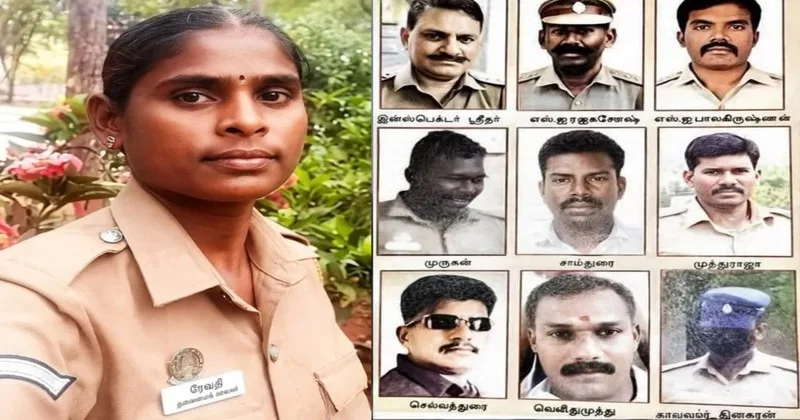
Amid this horrifying brutality stood Constable Revati, a woman with no authority to challenge her superiors but with enough moral clarity to recognise the crime unfolding before her. She witnessed the torture firsthand, the repeated assaults, the deliberate targeting of sensitive parts of the body, and the sheer inhumanity of the acts committed. Despite her limited power, she tried to show small acts of compassion, offering water and attempting to provide comfort to the victims. However, even these gestures were suppressed by her colleagues. Revati was deeply shaken, and although she could not stop the violence that night, she carried the weight of truth that would later become crucial in exposing it.
A Risk Beyond Imagination
When Magistrate Bharathidasan arrived to investigate the incident, the truth was still buried under fear, manipulation, and systemic pressure. It was at this moment that Revati made a life-altering decision. As a mother of two young daughters, she was acutely aware of the risks involved: loss of job, threats to her safety, and potential harm to her family. Yet, she chose to come forward. She approached the magistrate with honesty and vulnerability, seeking assurance for her family’s safety before revealing everything she had witnessed. Her testimony was detailed, consistent, and deeply disturbing, forming the foundation of the case against the accused officers.
Defying the System from Within
Revati’s courage went beyond simply narrating events; she actively resisted an entire system that attempted to erase the truth. Following the incident, efforts were made within the police station to destroy evidence—bloodstains were cleaned, CCTV footage was removed, and witnesses were intimidated into silence. Despite these obstacles, Revati assisted the investigation by identifying overlooked traces of evidence, including DNA remnants from walls, floors, and furniture. She endured sustained pressure, including threats, questioning, and inducements aimed at silencing her. Yet, she remained steadfast, choosing integrity over fear and justice over institutional loyalty. Her actions demonstrated that even within compromised systems, individuals can still uphold the law.
The Verdict: Justice After Years of Struggle
After years of investigation, legal scrutiny, and courtroom proceedings, the court delivered a landmark judgment in the Sathankulam custodial death case. Nine police personnel were found guilty of their involvement in the brutal torture and deaths of Jayaraj and Bennix. The court, recognising the extreme gravity and inhuman nature of the crime, classified it among the “rarest of rare” cases. It held that those entrusted with enforcing the law had instead grossly violated it, abusing their authority in a manner that struck at the very foundation of justice. Consequently, all nine accused were sentenced to death, sending a strong and unequivocal message that custodial violence and abuse of power will not be tolerated. The judgment emphasised accountability within law enforcement and reaffirmed that no individual, regardless of position, is above the law.
A Beacon of Hope in Uniform
Revati’s role in securing this verdict cannot be overstated. At a time when public trust in institutions was deeply shaken, her courage restored faith in the idea that justice is still possible. She was neither powerful nor influential, yet her unwavering commitment to truth became the turning point in a case that could easily have been suppressed. Her story highlights that integrity within the system can prevail, even under immense pressure. In a uniform often associated with authority, she represented humanity, proving that the true strength of law enforcement lies not in power, but in accountability and compassion.
Revati’s journey is not just about one case or one verdict; it is a reminder of the moral responsibility that lies with every individual within a system. Her actions underscore the importance of speaking out against injustice, even when it comes at great personal cost. She did not possess the authority to stop the crime when it occurred, but she possessed the courage to ensure it did not go unpunished. In doing so, she became more than a witness—she became a symbol of resistance against injustice and a testament to the enduring power of truth.