In Tamil Nadu, under Dravidian dynastic rule since the 1960s, corruption has not been a major electoral issue determining the fate of incumbent regimes prior to polls in the State. Instead, politicians have focused on wooing voters by offering incentives that capture their attention and create strong appeal, thereby diverting focus from key concerns such as corruption, worsening law and order, and other issues affecting daily life.
In 1967, the DMK promised three measures of rice and free land pattas to the landless and the poor. At that time, due to earlier wars, famine, and drought conditions, food grain production had been severely affected, causing rice prices to rise beyond the reach of common people. There were also instances of hoarding by traders seeking quick profits. Taking advantage of the shortcomings of the then Congress government, the DMK offered such incentives. This was among the first instances in independent Bharat where promises of material benefits were used to attract voters and secure electoral support. What began as much-needed assistance or subsidy has continued even decades after the country attained independence from colonial rule, which had left people in poverty and with a poor standard of living. Even today, the distribution of goods such as kitchen and household appliances reflects on the government’s performance and efficiency. At the same time, welfare measures remain necessary to uplift disadvantaged sections and help them sustain their livelihoods with government support.
As some political commentators rightly point out, it is the responsibility of the government in power to provide financial assistance, welfare, and developmental initiatives to improve people’s standard of living using public funds. However, successive Dravidian governments have approached this differently. Such measures have often been used as a means to misuse public funds in the name of welfare, with benefits sometimes reaching only a limited section of people. The practice of distributing incentives before and after elections, under the guise of welfare schemes, has increasingly become a part of the electoral system. Although courts have at times come down heavily over the culture of freebies, governments across the country continue to announce such schemes and win elections. This raises concerns about long-term dependency, even as the nation moves towards the centenary of independence. While welfare support remains necessary, the distribution of household items that many beneficiaries may already possess can lead to redundancy and inefficiency. Such practices may appear beneficial in the short term, but ultimately, the cost is borne by the public through taxation after new governments assume power.
Law and Order, Governance, and Religious Concerns
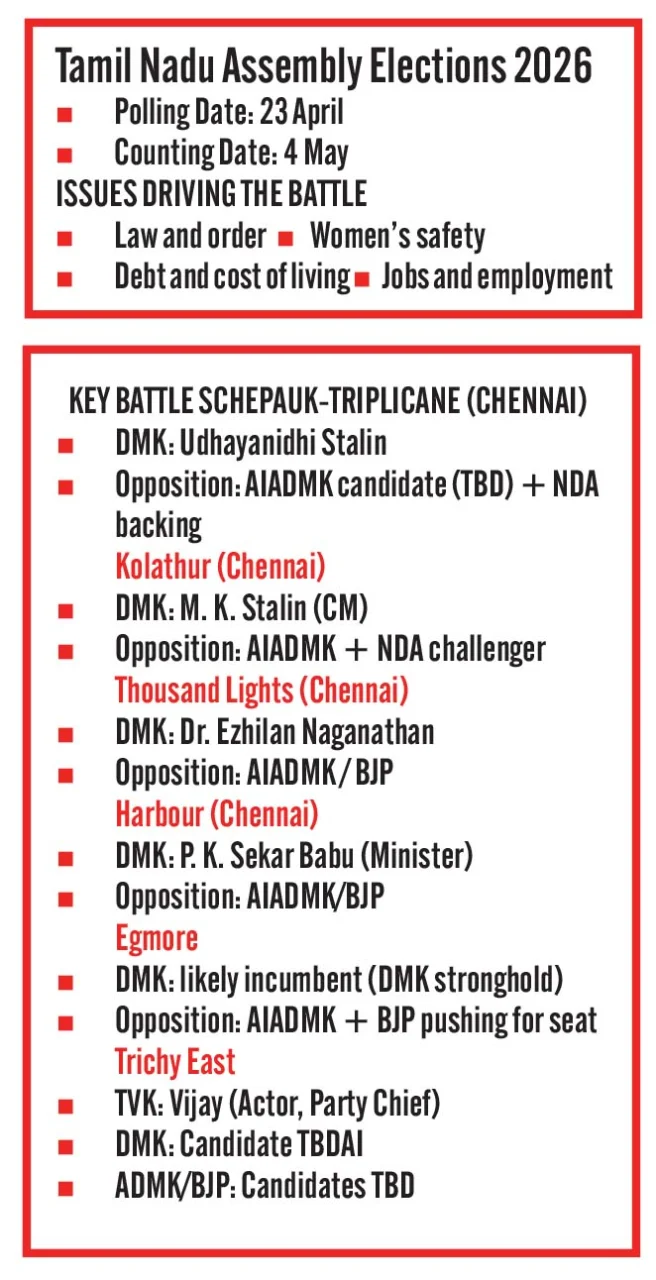
In Tamil Nadu, the prime issues include rampant corruption, the free availability of narcotic drugs, their consumption by school-going children, lack of safety for women and children from sexual predators, robberies, murders for gain, political revenge, land grabbing, etc.
The Hindu-phobic DMK government has a track record of demolishing over 200 Hindu temples while leaving churches and mosques untouched, despite court orders which, according to critics, will have an effect on Hindu unity. In the Thiruparakundram issue, the DMK government prevented Hindus from lighting lamps atop the hill and moved from court to court despite losing in all instances. DMK leaders not wishing or greeting people on Hindu festivals, while doing so for minority communities, have forced Hindus to take note of such actions. The DMK government has been accused of meddling with Hindu temple rituals, alienating temple properties, converting them into public utilities, allowing encroachments by members of other religions, and misusing temple funds. People are also fed up with Dravidian governments offering tons of rice for Ramzan porridge, tons of sandalwood logs for Urs and sandal paste celebrations in dargahs, while leaving Hindu temples in poor condition with inadequate upkeep and repairs. Most temples are conducting only one pooja a day and are in need of renovation. Many are in a dilapidated condition, and priests are struggling, whereas the government provides funds for the renovation of churches and mosques, along with cash assistance to clerics and church pastors. In Thiruparankundam, Hindus were even prevented from worshipping at the Kashiviswanathar temple, while Muslims were allowed access atop the hill to hoist a flag on the temple tree and conduct Urs and sandal paste festivals.
The BJP, Hindu outfits, and the TVK have been facing difficulties in obtaining permission to hold rallies, public meetings, and protests. They have to approach the courts every time, whereas this is not the case for minorities or the DMK and its allies. They are able to protest freely against Israel in the Gaza conflict and against the United States and Israel in the ongoing attack on Iran. They are also allowed to make hate speeches on religion, the BJP, RSS, the Prime Minister, and Hindu gods in a highly disparaging manner, and even issue threats to Hindus and BJP leaders. They have been able to protest against films like The Kerala Story, The Kashmir Files, Dhurandhar, and others with government and police support. The government does not arrest them or even file FIRs against them, but it acts swiftly against social media activists who criticise the government and the DMK’s first family.
Freebie Politics and Welfare Debate
The ruling DMK has unveiled a raft of welfare measures, claiming it to be the “superstar” of the elections. Stalin said the document marks the next phase of Tamil Nadu’s Dravidian model of governance. Continuing his earlier remark that “the DMK manifesto is the hero,” he added that “now the Dravidian manifesto is the superstar.”
The DMK said that the introduction of the ‘Illatharasi’ (housewives or queen of the house) coupon scheme for women, under which women from households not falling under the income tax bracket will receive a one-time coupon worth Rs 8,000 to buy or replace household electronic goods and appliances like TVs, refrigerators, washing machines, mixies, microwave ovens, or induction stoves. The DMK also assured to double the financial assistance under the ‘Kalaignar Magalir Urimai Thogai’ (KMUT – women’s rights grant scheme) from Rs 1,000 to Rs 2,000 and include new eligible women. The Chief Minister’s breakfast scheme will be expanded to cover students up to Class 8, benefitting around 15 lakh students. The monthly education grant for girls under the Puthumai Penn and Tamil Pudhalvan schemes will be raised from Rs 1,000 to Rs 1,500. The old-age pension will be increased from Rs 1,200 to Rs 2,000, while persons with disabilities will receive Rs 2,500.
TVK promises that graduates above 29 years of age without a job will receive Rs 4,000 per month, while diploma holders will receive Rs 2,000 per month, aimed at providing basic financial support. TVK also promises interest-free loans of up to Rs 20 lakh for students from Class XII to PhD level, with no collateral required. The government and private sector together are to offer five lakh internships each year. Graduates are promised a stipend of Rs 10,000 per month, while IT graduates are promised Rs 8,000 per month, to provide young people with work experience and some income.
Following in the footsteps of party founder MG Ramachandran and J Jayalalithaa, who had made promises after promises during elections to keep voters in good stead, EPS announced the distribution of free refrigerators, targeting 2.22 crore rice ration card holders across the state. Jayalalithaa had rolled out several populist and women-centric welfare schemes, such as free mixer grinders and table fans, goats for farmers, scooters for women, and gold for mangalsutra. Her regime also implemented free rice for cardholders, along with tur dal, palm oil, and urad dal at highly concessional rates, besides extending Pongal cash assistance to cardholders. DMK veteran M Karunanidhi introduced schemes like free colour televisions, free LPG connections, and gas stoves.
In the manifesto unveiled on March 24, listing 297 promises under 31 heads for the April 23 Assembly polls, it centres on welfare, with a proposed monthly payment of Rs 2,000 to female heads of households and a one-time Rs 10,000 special assistance to every family to address financial stress.
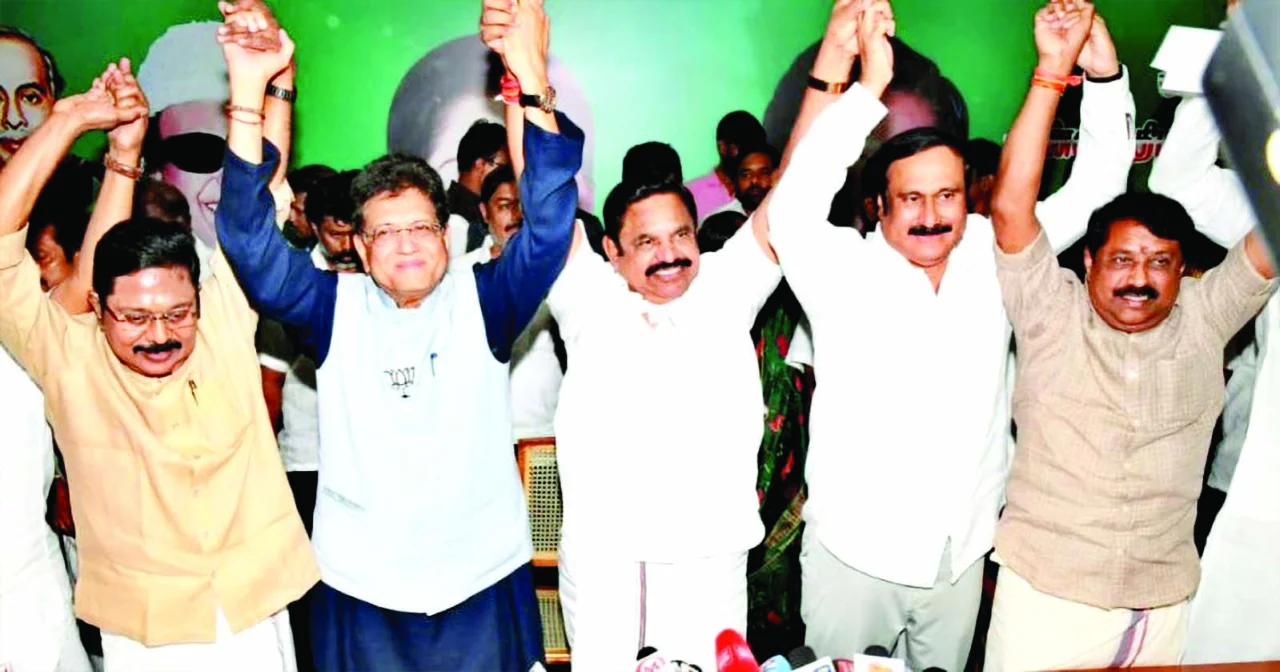
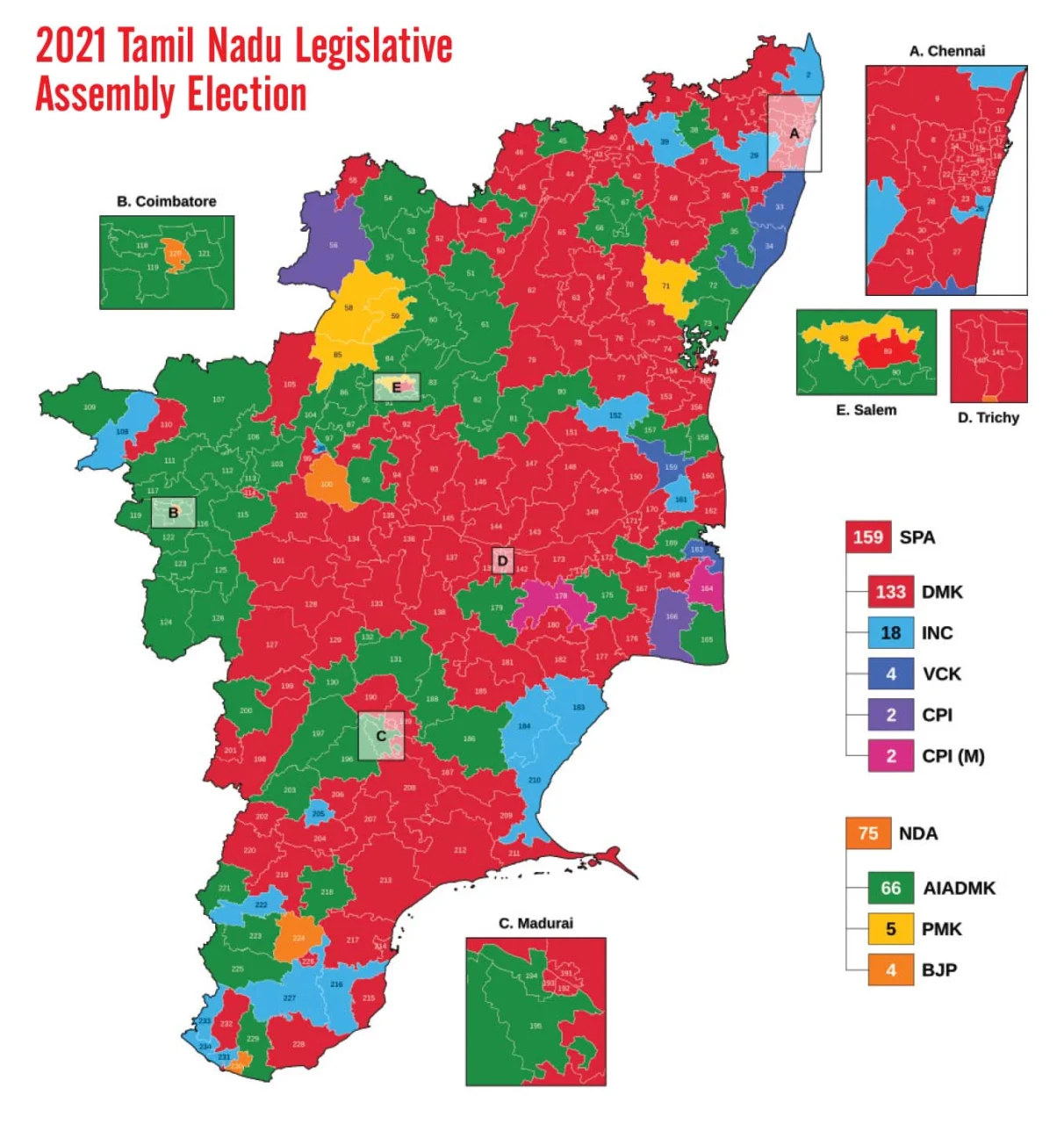
In one of the closely contested, multi-cornered, and keenly watched Tamil Nadu Assembly polls on April 23, the stakes are high for both the DMK- and AIADMK-led alliances. At the core stands former Chief Minister Edappadi K. Palaniswami’s AIADMK, which is contesting the lion’s share of seats, reportedly over 170, while allocating around 65 constituencies to allies including the Bharatiya Janata Party, PMK, AMMK, TMM, IJK, and others. The AIADMK has already released extensive candidate lists, signalling early groundwork and organisational readiness across the state.
TVK has decided to go it alone in the 2026 Tamil Nadu Assembly elections, finalising candidates for all 234 constituencies — a move that positions the fledgling outfit as a serious disruptor against both the ruling Dravida Munnetra Kazhagam (DMK) and the formidable All India Anna Dravida Munnetra Kazhagam – Bharatiya Janata Party alliance.
With barely weeks to polling, multiple surveys indicate a tightening race. While the DMK and the AIADMK-led alliance remain front-runners, TVK is increasingly being seen as a decisive third force, particularly in urban clusters like Chennai. Critics term TVK a spoiler that could split the strong anti-incumbency vote, potentially helping the DMK gain more. TVK’s presence, with support from Christians, could prevent their votes from going en masse to the DMK and AIADMK. Elements that do not accept the BJP may cast their votes either for the DMK or TVK, which could be a loss for the AIADMK-led alliance. Likewise, youngsters and first-time voters, who had been voting for Seeman-led NTK, may this time shift towards actor-turned-politician Vijay and the BJP. Hindu polarisation in some pockets could help the alliance secure gains. However, unlike the DMK and AIADMK, TVK lacks grassroots support and organisational setup, and its leaders are not as experienced compared to the Dravidian majors.
In a battlefield dominated by Dravidian heavyweights and entrenched alliances, TVK’s solo surge adds a volatile new dimension, where youth connect, urban swing, and perception will play a role. Besides NTK, a new front led by Sasikala and PMK founder S Ramadoss has taken shape under the banner of AIPTMMK.
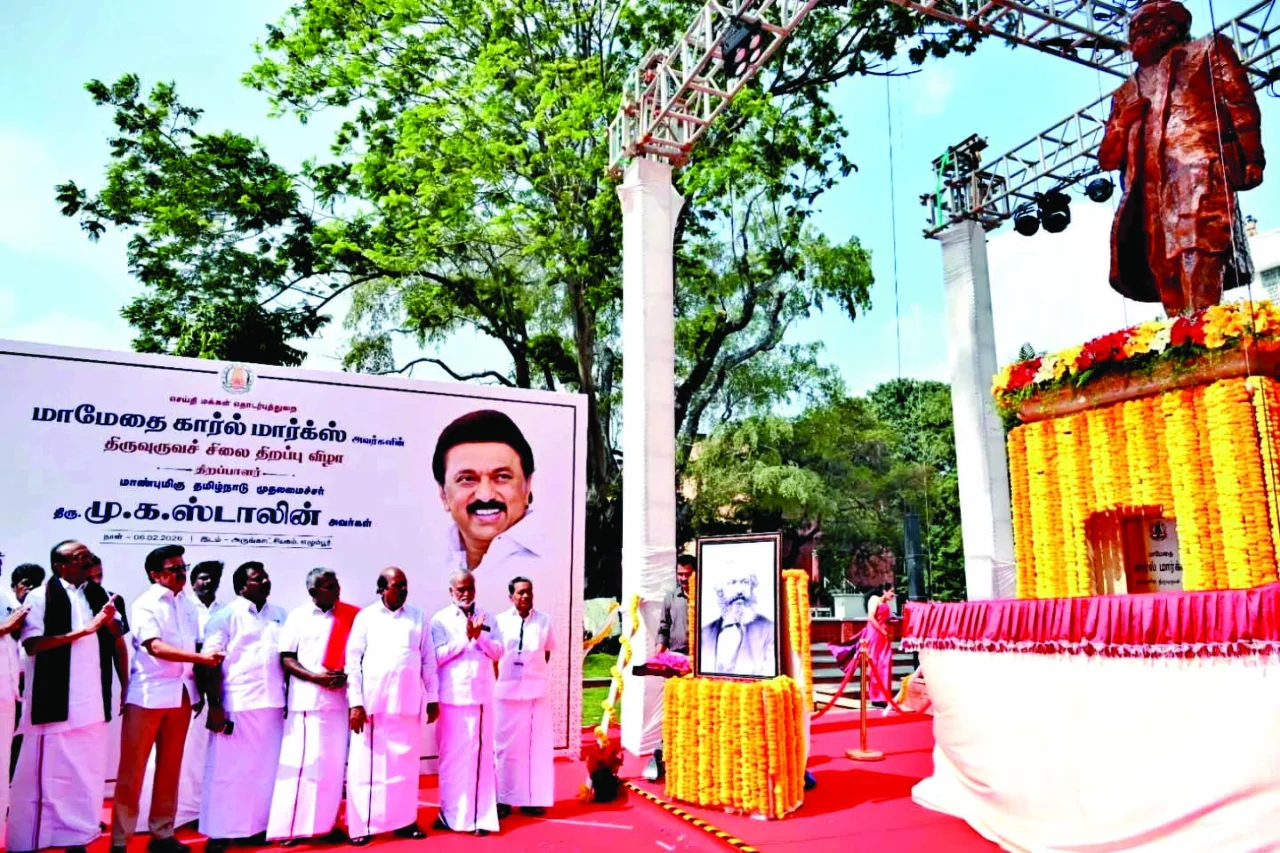
Stalin has announced that DMK and its alliance candidates together will contest 175 constituencies under the party’s iconic ‘Rising Sun’ symbol, projecting a unified electoral identity. He said, “All 234 Assembly constituencies are ours,” underscoring the need for seamless coordination among cadres and allies. He added that the Dravidian model has restored growth and stability in Tamil Nadu after a decade of setbacks.
The BJP’s strategy appears clear — expand its footprint while consolidating anti-DMK votes. Stalin said the real fight is between the DMK and the NDA (“Tamil Nadu vs Delhi rule”), while the fledgling TVK, contesting its maiden election, has termed it a contest between the DMK and itself, undermining the presence of the AIADMK and the BJP.
Political observers say, “the election is becoming a referendum not just on governance but also on the future direction of Dravidian politics in the state. Tamil Nadu elections have historically featured welfare promises, but the 2026 contest has intensified the competition among parties. Welfare schemes have improved social indicators in Tamil Nadu, but voters must examine the fiscal sustainability of such promises.”