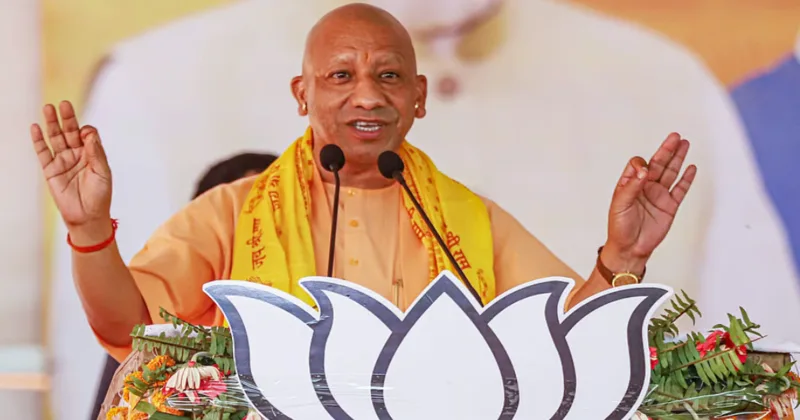
In March 2026, it has been nine years since Yogi Adityanath was sworn in as Chief Minister of Uttar Pradesh, a tenure that has now become the longest uninterrupted in the state’s political history. What began with scepticism about an untested administrator has gradually turned into one of modern India’s more compelling governance stories. The journey from a state known for lawlessness and lethargy to one that lures foreign investment and even serves as an example in infrastructure. This process has emerged from the implementation of a specific governance system that unites policing, economics, culture, and technology.
Rebuilding Order: The Law and Policing Reformation
When Yogi was elected Chief Minister, Uttar Pradesh was known for organised crime. The Mafia gangs committed their crimes openly, with no consequences to fear; meanwhile, instances of caste-related violence occurred regularly. The new government response was swift, and within less than two quarters, bulldozers started demolishing properties of accused criminals, the Gangster Act was invoked, and police encounters neutralised several high-profile offenders. Critics labelled parts of this approach as bulldozer justice and questioned due process. Supporters point to a measurable shift in murder cases, reportedly dropped by over 40 per cent, kidnappings fell by around 50 per cent, and organised dacoity nearly vanished from the headlines.
Parallel to enforcement the government built out institutions. Cyber police stations were established in every district. Forensic laboratories were modernised. Programmes like Mission Shakti, Anti-Romeo Squads, and Safe City projects, backed by thousands of CCTV cameras and dedicated women’s helplines, addressed a long-standing deficit in women’s safety. Whether one views these measures as transformative policing or targeted political theatre, the net result is that Uttar Pradesh no longer appears on the no-go lists that investors and industries once cited when explaining their reluctance to enter the state.
Economy From Rs 13 Lakh Crore to Rs 36 Lakh Crore
Yogi tenure is one of the success stories behind economic expansion. In 2017, Uttar Pradesh Gross State Domestic Product (GSDP) stood at approximately Rs 13 lakh crore a figure it had taken 70 years after Independence to reach. According to the Chief Minister’s statements in the Legislative Council, backed by figures cited in the state Economic Survey, the GSDP has climbed to Rs 36 lakh crore in nine years, with a target of ₹40 lakh crore in 2026–27. The state’s share in India’s national economy had slipped from 14% at Independence to just 8% in 2016–17, and has now recovered to 9.5 per cent.
Per capita income has followed a similar trajectory. From roughly Rs 43,000 in 2016–17, it has risen to over Rs 1,20,000 by the end of 2024–25, nearly a threefold increase. The 2026–27 state budget, pegged at Rs 9.12 lakh crore, is the largest in UP’s history, with capital expenditure prioritised at around 19.5 per cent of total spending. Fiscal discipline has been an achievement: the debt-to-GSDP ratio has fallen from around 30 per cent to approximately 26 per cent, and the fiscal deficit now stands at 2.97 per cent, within the 3 per cent ceiling set by the Reserve Bank of India. Global Investors Summits attracted MoUs worth Rs 50 lakh crore, with ground-breaking ceremonies already covering Rs 15 lakh crore in investments.
Infrastructure: Expressways, Airports and Connectivity
Infrastructure is where the Yogi government has scored most marks and is visibly inscribed on the landscape. Uttar Pradesh today accounts for 55 per cent of India’s entire expressway network a figure confirmed by the Chief Minister himself and by infrastructure data cited across multiple government reports. Six expressways are operational, including the Purvanchal, Bundelkhand and Gorakhpur Link stretches. The Ganga Expressway, connecting Meerut to Prayagraj with over 99% of work completed in present time, it will push UP share toward 60% once inaugurated. Seven more expressway projects covering 866 kilometres have been cleared by the state cabinet, aimed at linking 56 of UP 75 districts to the network.
Aviation presents an equally sharp contrast. Before 2017, just two airports were operational in the entire state. Today, 16 airports are functional, of which four are international: Lucknow, Varanasi, Kushinagar and Ayodhya. The fifth international airport at Jewar, set to be among the largest in the country is inaugurated in late March 2026 by Prime Minister Modi. Metro services, once absent entirely, now run in seven cities: Lucknow, Kanpur, Agra, Noida, Greater Noida, Ghaziabad and Meerut. India’s first Rapid Rail between Meerut and Delhi also passes through UP. Rural roads under the PM Gram Sadak Yojana have reached 1.5 lakh habitations, and 100% village electrification has been achieved. The Jal Jeevan Mission has delivered tap water connections to 2.5 crore homes.
Agriculture and the Farmer: Clearing Arrears, Building Markets
No one can skip agriculture; Uttar Pradesh is considered the country’s agrarian heartland. The Yogi government cleared a backlog of Rs 1 lakh crore in sugarcane arrears that had plagued farmers for years. MSP procurement was digitised, covering over 50 lakh farmers. Irrigation coverage reached 90 per cent through micro-irrigation and canal renovation. Zero electricity bills were extended to 1.5 crore tube wells. PM Kisan direct benefits to farmers to the tune of Rs. 2 lakh crores were transferred to farmers in UP. Crop insurance claims to 2 crores farmers were made.
The conventional form of agriculture, along with initiatives such as ODOP, has helped restore some dying traditional practices, such as Bhadohi Carpets, Moradabad Brassware, and Varanasi Silk. These dying traditional practices generated a revenue of Rs. 1.5 lakh crores and generated employment for 6 lakh people by means of online sales and brand promotion of exports. The drought-hit region of Bundelkhand, which had long been on the radar of the state planning department, saw an increase in production due to diversified farming practices and soil health cards. These are changes that are actually taking place, even as farmers face challenges due to climate change and market fluctuations that no government can completely protect farmers from.
Welfare, Youth and the Digital Backbone
Welfare delivery in UP was often leaky, marked by ghost beneficiaries, middlemen and opaque processes. The shift to Direct Benefit Transfer (DBT) has transferred Rs 3 lakh crore directly into bank accounts, substantially reducing leakages, according to government data. Around 80,000 fair price shops have been integrated with electronic point-of-sale (PoS) devices to improve ration distribution for the 15 crore beneficiaries under the National Food Security Act. Over 62 lakh houses have been allocated under PM Awas Yojana, 1.5 crore homes have been connected to cooking gas through Ujjwala, and the Ayushman Bharat health cover has been extended to 6 crore people. One crore beneficiaries include the elderly, widows and persons with disabilities who receive annual financial support.
The government record on recruitment has been a particular point of pride. Around 9 lakh government jobs were filled through competitive examinations, with AI-proctored tests introduced to prevent paper leaks a direct response to the examination scandals that had damaged public trust for years. Skill development hubs trained 15 lakh youth. Tablets and smartphones were distributed to 25 lakh students. The Rani Laxmibai Scooty Yojana gifted scooters to 30 lakh girls, boosting college enrolment in semi-urban and rural areas. UP startup count crossed 50,000 under the state’s startup policy, while e-governance rankings placed the state at the top of national indices.
Culture, Faith and the Tourism Economy
Yogi’s governance has attracted national attention, as he fuses development with cultural and religious heritage. The Ram Mandir in Ayodhya catalysed a $2 billion urban redevelopment, airports, rail hubs, and riverfront now draw an estimated 10 crore pilgrims annually. Varanasi Kashi Vishwanath Corridor and the ongoing Mathura masterplan have revived temple-town economies. Deepotsav festivals in Ayodhya have entered the Guinness World Records for the scale of lamp-lighting. Circuit tourism, Buddhist pilgrimages through Kushinagar, and Kabir heritage in Maghar have added layers to an offering that was previously underdeveloped.
Tourism revenue has climbed to approximately Rs 20,000 crore, generating around 10 lakh jobs directly and indirectly. Hotel occupancy rates are up by 50 per cent across the pilgrimage belt, and air passenger traffic, which grew by only 55 lakh over 17 years between 1999 and 2016, surged by 82 lakh in eight years. Critics raise concerns about the exclusionary dimensions of faith-centric branding. Supporters argue that it reclaims a neglected cultural identity while simultaneously turning spiritual heritage into genuine economic activity.
A nine-year report card is complete without acknowledging what remains unfinished. Eastern Uttar Pradesh continues to lag behind western districts in industrial activity and per capita income. These are not trivial critiques, and a state of UP’s complexity cannot be judged on economic data alone. The 2027 assembly elections will be the real test of whether the growth story has percolated deeply enough to convert numbers into lived experience across communities.
Nine Years of Excellence
In 2017, Uttar Pradesh was routinely described as ungovernable, large and complex, driven by caste and crime for any administration to meaningfully steer. Nine years on, that characterisation has been overtaken by events. The GSDP has nearly tripled. The expressway network is the envy of every other state. Airports have multiplied from two to sixteen. Nine lakh jobs were filled without the taint of scandal. And a state once written off as a drag on national growth now contributes 9.5 per cent to India’s GDP, with ambitions of a trillion-dollar economy by 2029–30.
The Yogi model is not without its tensions between speed and due process, between cultural assertion and social inclusion, between headline investment figures and on-the-ground job creation. But the direction of travel is unmistakable. From BIMARU to booming is not merely a slogan, it is an accurate description of the distance that Uttar Pradesh has covered in the last nine years.