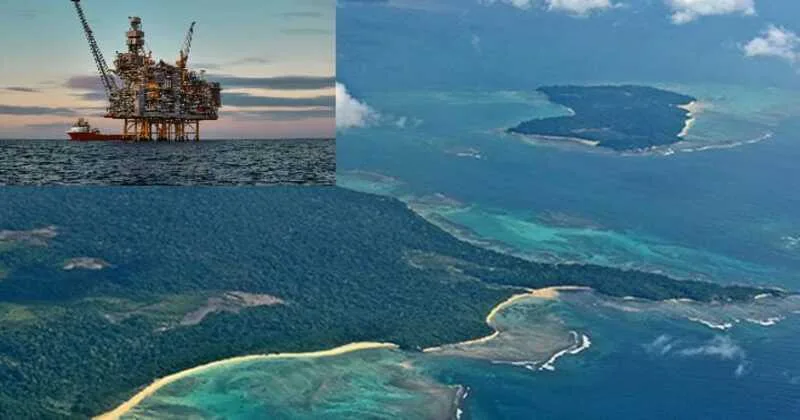
New Delhi: India’s energy security is facing renewed pressure as global oil and gas markets remain volatile amid the ongoing US-Israel–Iran conflict. With the country importing nearly 85 per cent of its crude oil and about 70 per cent of its natural gas, any disruption in global supply chains has direct economic implications. In this uncertain environment, the deep waters off the Andaman Islands have emerged as a potential long-term solution, with early signs pointing to a significant untapped energy reserve that could reshape India’s energy future.
For decades, the Andaman-Nicobar basin remained a restricted and largely unexplored zone. However, under the government’s Open Acreage Licensing Policy (OALP), nearly 10 lakh square kilometres of this previously off-limits region have now been opened for exploration. Geologists and energy experts consider it one of India’s most promising offshore basins, despite its “frontier” status and limited exploration history. Current estimates suggest that the basin could hold approximately 371 million tonnes of oil equivalent (mmtoe), a substantial volume by any standard.
Mega drilling by OIL and ONGC
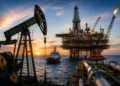
At the beginning of 2026, India’s leading energy companies, Oil India Limited (OIL) and Oil and Natural Gas Corporation (ONGC), initiated major exploratory drilling operations in the basin. However, the region is still classified as “frontier” and “pre-commercial”, meaning that while there are indications of hydrocarbons, full-scale exploration and commercial production remain distant goals. OIL has drilled three wells, Vijaypuram-1, Vijaypuram-2 and Vijaypuram-3. Among these, Vijaypuram-2 confirmed the presence of gas, with 87 per cent methane detected at depths ranging between 2,212 and 2,250 metres. However, Vijaypuram-1 did not yield any hydrocarbons. Meanwhile, ONGC is working on the ultra-deepwater ANDP-1 well, aiming to drill up to 6,000 metres below the seabed. So far, drilling operations have reached a depth of 4,000 metres. Additional wells, such as ANDW-7 and ANDW-9, have also indicated the presence of gas, although none have yet achieved commercial viability. Industry analysts note that the current phase of activity is primarily focused on understanding the geological characteristics of the basin through exploratory and test drilling, rather than immediate production.
Technological challenges and long timelines
Exploration and eventual commercial production in the Andaman basin present significant technological and logistical challenges. The ultra-deepwater environment involves extreme depths and high seabed pressures, pushing drilling technology to its limits. As a result, even initial discoveries require extensive validation before being deemed commercially viable.
According to Saurav Mitra, a specialist with Grant Thornton India, the detection of hydrocarbons during early drilling stages is an important milestone, but not sufficient for commercial production. He notes that if exploration efforts prove successful, the basin could contribute significantly to India’s energy requirements over the next decade and help reduce dependence on imports. However, the timeline for such developments remains long. The full cycle, from exploration to production, in such complex environments typically takes between six and ten years. Beyond drilling, the creation of supporting infrastructure is equally critical. This includes underwater pipeline networks, liquefaction facilities to process gas, and secure transportation systems to deliver fuel to mainland India.
Experts estimate that building the necessary infrastructure alone could take around five years. Mitra emphasises that even in the event of a major discovery in the near future, commercial production is unlikely before the early to mid-2030s. He suggests that the Andaman basin should be viewed as a strategic long-term investment rather than an immediate solution to current energy challenges.
A broader three-pronged energy strategy
While the Andaman basin holds promise, the government is simultaneously pursuing a broader, three-pronged strategy to strengthen domestic energy production. This includes enhancing output from mature fields such as Mumbai Offshore and Assam through advanced techniques like Enhanced Oil Recovery (EOR). Additionally, efforts are underway to maximise production from established basins like Krishna-Godavari and Barmer.
At the same time, exploration is being accelerated in newer and less-developed basins, including Andaman, Mahanadi and Cauvery. This diversified approach aims to reduce India’s long-term dependence on energy imports while ensuring greater resilience against global market disruptions.
If commercial production in the Andaman basin materialises as expected, it could play a crucial role in cutting India’s import dependence by the middle of the 2030s, marking a significant shift in the country’s energy landscape.