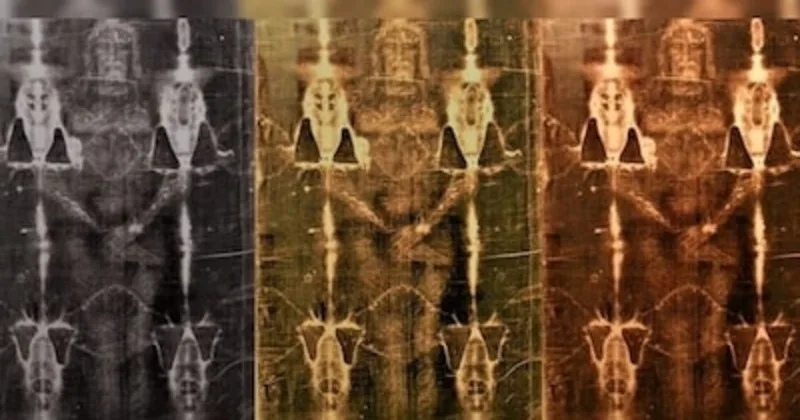
The Shroud of Turin, a linen cloth long believed by many to be the burial shroud of Jesus Christ, continues to intrigue scientists and historians alike. According to a report by New Scientist, recent DNA analysis has added a surprising dimension to the centuries-old debate by suggesting possible links to India.
Researchers from the University of Padova examined material samples originally collected in 1978. Their findings indicate that nearly 40 per cent of the human DNA detected on the cloth traces back to Indian genetic lineages. Measuring about 4.4 metres in length and 1.1 metres in width, the shroud may have been woven using yarn that originated in the Indus Valley.
The idea of an Indian connection was first proposed in 2015 by Gianni Barcaccia, who has continued to study the artefact with his team. Their latest analysis reinforces earlier conclusions, revealing that the shroud has accumulated a wide range of DNA over time, spanning medieval and modern periods.
In addition to human DNA, the researchers identified genetic traces from domestic animals such as cats and dogs, livestock, and wildlife, including deer and rabbits. They also found DNA from marine species like grey mullet, Atlantic cod, and other ray-finned fishes, indicating extensive environmental exposure.
Several explanations have been proposed for the presence of Indian DNA. One possibility is that linen or yarn used to create the cloth was traded from the Indus Valley to the Mediterranean world during ancient times. Another is that individuals of Indian origin may have come into contact with the shroud over centuries, leaving behind genetic traces.
The researchers caution that the cloth has been handled by numerous people across different eras, making it difficult to isolate any original DNA. Instead, the findings reflect the shroud’s long history of exposure and interaction with diverse environments and populations.
The Shroud of Turin’s documented history dates back to 1354 in France, and it is now preserved at the Cathedral of Saint John the Baptist in Turin. Despite ongoing scientific investigation, it remains one of the most debated and visited religious artefacts in the world.
