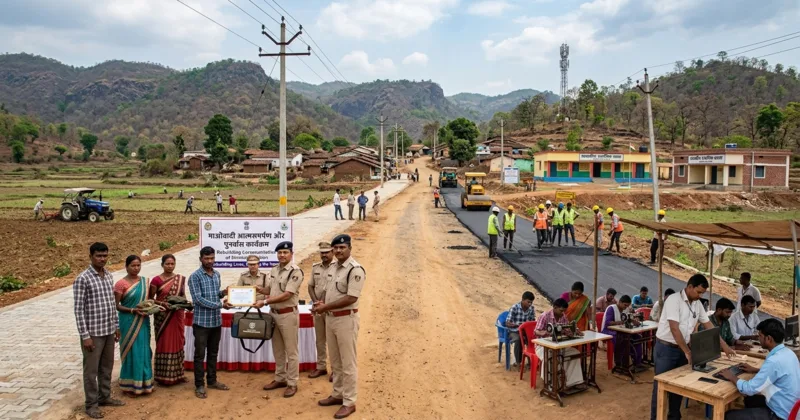
Between 2019 and 2026, the Indian government’s resolute “zero-tolerance” approach has fundamentally dismantled the Red Corridor, transitioning from a decade of reactive containment to a proactive era of total elimination. Driven by a “security-first” development model, the administration has successfully choked Naxalite financing and neutralised top-tier leadership, forcing thousands of cadres to abandon an ageing, destructive ideology in favour of the national mainstream. A cornerstone of this victory has been the strategic rehabilitation and employment of surrendered Naxals, most notably through their induction into specialised units like the Bastariya Battalion and District Reserve Guards (DRG). By transforming former Maoists into disciplined defenders of the law, the state has not only provided secure livelihoods and dignity to tribal youth but has also utilised their local expertise to reclaim “liberated zones.” With the March 31, 2026 deadline marking the near-total eradication of Left-Wing Extremism, these employment initiatives stand as a testament to a stronger Bharat that replaces “the barrel of a gun” with the stability of the Constitution and the prosperity of the double-engine growth model.
This special report chronicles 15 landmark victories for the Indian state, showcasing how the Central Government’s “Iron Fist, Healing Touch” policy has dismantled the Maoist insurgency. By reintegrating former cadres into the national mainstream through disciplined employment and vocational honour, these initiatives have successfully replaced a failed, anti-national ideology with a renewed commitment to Bharat’s sovereignty and progress.
The Final Blow: Amit Shah Declares the Near-Extinction of Maoism
On March 31, 2026, Union Home Minister Amit Shah delivered a historic address to the Lok Sabha, signalling the total sunset of Left-Wing Extremism in India. Underscoring the government’s unwavering commitment to a Naxal-free Bharat, he announced that the once-dreaded Bastar region has been reclaimed and set on a path of rapid development through the expansion of schools, healthcare, and essential infrastructure. The Minister reaffirmed the state’s dual strategy: an open door for those willing to surrender and embrace national progress through comprehensive rehabilitation and employment-linked initiatives, in contrast to an “iron fist” policy of strict, decisive action against any remaining elements who continue to wage war against the Indian state.
Project Sanjeevani Empowers 72 Former Maoists in Gadchiroli
Demonstrating the success of the state’s rehabilitation model, the Gadchiroli Police and SEARCH Foundation successfully integrated 72 surrendered Maoists into the mainstream in 2026. Under the visionary Project Sanjeevani, these former cadres moved away from the path of destruction to receive intensive skill training and industrial placements. By equipping these individuals with expertise in sectors such as motor driving and animal husbandry, while providing them with legal identity documents and housing, the Maharashtra government has effectively fortified the region against a resurgence of extremism and ensured that tribal youth contribute to the nation’s economic strength.
Literacy and Skill-Building Drive for 110 Surrendered Cadres
In, 2025, the Gadchiroli administration marked a significant milestone in the cultural and economic reintegration of 110 surrendered Maoists. Through Project Sanjeevani, these individuals commenced literacy classes at the Police Headquarters to qualify for advanced vocational training under the Maharashtra State Skill Development Society. This initiative highlights the government’s proactive efforts to transform former Naxals into productive citizens, replacing extremist propaganda with practical education and sustainable livelihoods in trades such as sewing and beauty services, thereby ensuring their long-term loyalty to the constitutional framework.
Chief Minister Vishnu Deo Sai Inaugurates Cafe Pandum in Jagdalpur
In a powerful symbolic and economic victory for the Bastar region, Chhattisgarh Chief Minister Vishnu Deo Sai inaugurated “Cafe Pandum” in, 2025, in Jagdalpur city, specifically to provide dignified employment to surrendered Maoists. This state-led initiative has turned former Naxalites into entrepreneurs and service professionals, directly involving them in the local economy. For beneficiaries like Phoolmati and Biren Thakur, the cafe represents a transition from a life of fear in the jungles to a life of stability and respect, showcasing the “double-engine” government’s success in restoring the dignity of the tribal population.
Hospitality Training Marks India’s First Campus Placements for Former Maoists
Breaking new ground in counter-insurgency rehabilitation, 30 surrendered Maoists in Bastar began a specialised hospitality training programme at the Adawal Livelihood College in 2025. These youth, who once carried arms against the state, are now being trained in professional hotel management, guest relations, and hygiene to serve in the region’s growing tourism sector. This historic initiative, which includes India’s first-ever campus placements for former Maoists, demonstrates that the government’s development-centric approach is successfully turning former disruptors into ambassadors for Bastar’s hospitality and cultural heritage.
Poona Margham Initiative Transforms Former Platoon Member into Productive Entrepreneur
In 2025, the success of the Poona Margham skill-training programme was highlighted through the story of Rahul, a former PLGA platoon member in Narayanpur, Chhattisgarh. After years of engaging in violent attacks against security forces, Rahul surrendered to the state and utilised government startup funds and professional tools to establish a motorbike repair shop in Paraguda. This transition from a combatant to a self-reliant mechanic demonstrates the power of the government’s rehabilitation framework, as Rahul now not only earns a steady, honest income but actively collaborates with local authorities to protect vulnerable youth from falling prey to extremist recruitment.
Former Central Committee Member G. Narasimha Reddy Advocates for National Integration
G. Narasimha Reddy, once a high-ranking Maoist leader known as Jampanna, has fully transitioned from a life of insurgency to a role as a peace advocate through his NGO, the Peace Dialogue Committee. After spending 17 years in the central committee of the extremist movement, Reddy’s transformation by May 2025, serves as a significant ideological victory for the Indian state. By urging remaining cadres to shun the path of violence and embrace the democratic process, Reddy’s new mission underscores the total collapse of Maoist morale and the increasing appeal of the national mainstream under the current administration’s firm yet welcoming policy.
Lloyd Metals Recruits 68 Surrendered Cadres in Landmark Private Sector Partnership
In a major stride for the “Security through Development” model, 68 surrendered Naxals were employed by Lloyd Metals and Energy Limited in 2025, at their new plant in the Maharashtra-Chhattisgarh border region. This recruitment was made possible through seamless coordination between state police forces and strategic government wage subsidies designed to encourage private-sector integration of former Maoists. Individuals like Maniram Atla, who fled the certain death and misery of the jungle, now earn respectable monthly salaries of up to Rs 20,000, proving that the state’s industrial growth is the ultimate antidote to the hollow promises of Naxalism.
Former Naxal Commander Sanjay Potam Honoured with Third President’s Medal for Gallantry
The incredible journey of Sanjay Potam, once a Naxalite commander known as Badru, reached a new pinnacle in 2025, when he was awarded the President’s Medal for Gallantry for the third time. After abandoning the insurgency to serve the nation, Potam’s transition into the Indian Police Service (IPS) stands as the ultimate testament to the transformative power of the Indian Constitution. His exceptional bravery in defending the very borders he once disrupted showcases how the government has successfully redirected the tactical expertise of former cadres to fortify India’s internal security and uphold the rule of law.
Disillusioned Bounty-Carrier Jaymati Banjam Now Serves in the District Reserve Guard
Jaymati Banjam, a former Naxalite with a Rs 5 lakh bounty on her head, has completed her journey from an armed Maoists to a dedicated member of the District Reserve Guard (DRG) as of, 2024. Citing the hypocrisy and double standards of Maoist leadership, Banjam chose to surrender and was immediately integrated into the security forces with a reward of Rs 5 lakh and a stable government job. Now utilising her knowledge of the terrain to protect her community rather than terrorise it, Banjam’s story exemplifies the success of the state’s strategy to dismantle the Naxalite structure by turning its own former members into the frontline defenders of a New Bharat.
Former Maoist Victim Joins Chhattisgarh Police as a Dedicated Constable
On December 15, 2024, the story of Joymati Vanjan highlighted the coercive and brutal nature of the Naxalite insurgency. Vanjan, who was forced into the CPI (Maoist) ranks in the early 2000s under the threat of Naxal brutality, has successfully transitioned from a reluctant combatant to a proud Constable in the Chhattisgarh Police. Having once been coerced into offensives against the state, she now serves as a guardian of the law, personifying the government’s success in liberating tribal citizens from the shackles of extremist intimidation and integrating them into the security apparatus of a developing Bharat.
Former Maoist Shankar Markade Trades the Bounty for a Police Badge
Shankar Markade, a former tribal youth from a remote area of Chhattisgarh who was misled into extremism after dropping out of school, was officially integrated into the police force on December 15, 2024. Despite once carrying a Rs 5 lakh bounty and participating in the destruction of industrial infrastructure, Markade’s surrender has paved the way for a life of dignity and national service. By providing him with a stable government job, the administration has effectively demonstrated that the path of the mainstream offers far more hope and security than the hollow, destructive promises of the “Red Corridor.”
Soni Markani Rejects Maoist Ideology for a Life of Peace and Service
Soni Markani, a former CPI (Maoist) cadre who spent fourteen years within the insurgency, has found a new lease on life as a cook in Malkangiri, as reported on December 15, 2024. Having surrendered in 2016, Markani has become a vocal critic of the movement, stating clearly that the Maoists have no future and that their violence is fundamentally against humanity. Her journey from the jungle to a peaceful profession stands as a testament to the state’s successful long-term rehabilitation efforts, proving that even those deeply entrenched in extremist groups can find happiness and stability under the protection of the Indian state.
High-Ranking Commander Bima Sodi Now Serves as an Odisha Home Guard
Bima Sodi, a former prominent local commander who led a team of 12 Maoists, has completed his transition to a Home Guard in Odisha as of December 15, 2024. After eight years of disillusioned service within the Maoist ranks, Sodi’s move to the security forces represents a significant tactical loss for the Maoists. His commitment to guarding homes rather than destroying them underscores the government’s success in breaking the chain of command of the Naxalite movement and redirecting the energy of its former leaders toward the safety and well-being of the rural population.
Madkam Mudraj Rises to DRG Inspector to Protect the People of Bastar
In a powerful display of the state’s transformative power, former Maoist commander Madkam Mudraj was highlighted on May 18, 2022, for his rise to the rank of Inspector in the District Reserve Guard (DRG). Once a dreaded Naxal carrying a weapon to spread terror, Mudraj now carries his firearm as a symbol of protection for the villagers of Bastar. His promotion from a Special Police Officer to an Inspector demonstrates the government’s meritocratic approach to rehabilitation, effectively turning the “hunter into the protector” and ensuring that former cadres use their local knowledge to eradicate the remnants of the insurgency.
Dhananjay, also known as Sudhir, a former high-ranking member of the Gumma Area Committee, successfully transitioned into a role as a private security guard by February 2019. After witnessing the Maoists’ systematic destruction of schools, dispensaries, and infrastructure, vital lifelines for tribal communities, Dhananjay chose to surrender to the Odisha police. His decision to leave behind a leadership position in the banned outfit to pursue an honest living in the private security sector highlights the profound ideological disillusionment among Naxal ranks when faced with the tangible development and order of the Indian state.
The successful reintegration of former Maoists into society stands as a crowning achievement of Bharat’s internal security strategy, proving that the state’s resolve is as compassionate toward those who surrender as it is firm against those who persist in violence. By providing honourable livelihoods, vocational expertise, and a sense of belonging, the government has permanently broken the cycle of recruitment that once fueled the Naxalite movement. As the sun sets on the era of “Red Terror,” these individual success stories coalesce into a broader national triumph, where the “barrel of the gun” has been decisively replaced by the stability of the “double-engine” growth model. Today, the reclaimed regions are no longer defined by conflict, but by their integration into the vision of a Viksit Bharat, where every citizen is empowered to serve the nation with pride and purpose.