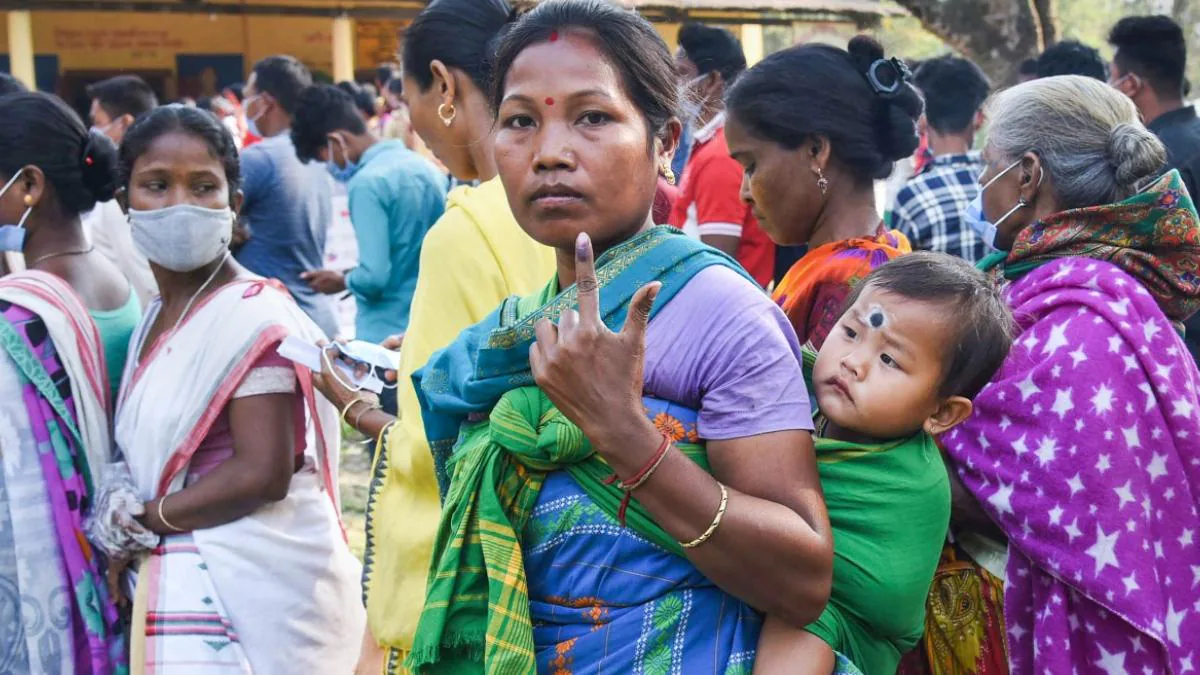
In the politically charged landscape of West Bengal, a silent yet significant churn is underway among one of the most decisive voter groups – women. Accounting for nearly 49 per cent of the electorate and having outnumbered male voters in turnout during the 2019 elections, women voters have long been seen as a cornerstone of electoral strategy, particularly for the ruling Trinamool Congress led by Chief Minister Mamata Banerjee. However, as the 2026 Assembly elections approach, a detailed ground report by News18 suggests that this crucial demographic may no longer be politically monolithic.
While welfare schemes such as Lakshmir Bhandar, Kanyashree, and Rupashree have cemented a loyal support base among rural women, emerging concerns around safety, employment, and migration are beginning to reshape voter priorities, particularly in urban and semi-urban pockets. The shift is neither abrupt nor uniform, but it is unmistakably present, reflecting a deeper socio-economic transformation underway in the state.
The report highlights that despite the continued popularity of welfare initiatives, recent incidents involving crimes against women such as those reported from RG Kar Medical College and Kasba Law College have triggered anxieties about personal safety. These concerns, coupled with a perceived lack of employment opportunities, are pushing many women, especially younger voters, to rethink their electoral choices.
In urban areas like Barasat, the mood among women voters appears to be distinctly different from previous election cycles. At a bustling saree market, conversations revolved less around financial assistance and more around structural issues.
According to the report, Reshmi Bag, a woman in her thirties, expressed her dissatisfaction bluntly: “We should be given our basic rights, jobs, education, and healthcare. I am not interested in Lakshmir Bhandar. We are not secure, and we don’t know whether our vote will change anything.”
Her statement encapsulates a growing sentiment among urban women who feel that welfare schemes, while helpful, are not substitutes for systemic development. This perspective is echoed by Tiyasha Roy, who pointed to the growing trend of male migration from the state. As cited by News18, she said, “There are no good industries here. My husband and brother-in-law work in Bengaluru. Women are raising children alone. The government should create job opportunities.”
This issue of migration is not merely economic, it has social and emotional implications as well. With men moving to cities like Bengaluru, Pune, and Hyderabad in search of employment, women are often left behind to manage households single-handedly. The burden of caregiving, combined with concerns about safety, has created a complex web of challenges that welfare schemes alone cannot address.
Among younger voters, particularly Gen Z women, the demand for employment and safety is even more pronounced. At Swami Vivekananda College in Barrackpore, students articulated a clear preference for opportunities over financial assistance. Mitu Roy, a final-year journalism student, told, “There is no point in pink booths if women’s safety is not ensured. We are not safe.”
Similarly, first-time voter Rita Chatterjee emphasised the importance of economic independence, stating, “Lakshmir Bhandar is fine, but jobs are more important. Real empowerment comes from employment,” as reported by media.
These voices reflect a generational shift in political expectations. Unlike older voters, who may view welfare schemes as essential safety nets, younger women are increasingly aspirational, seeking opportunities that offer long-term growth and self-reliance.
In contrast, homemakers in urban areas present a more nuanced perspective. In Salt Lake, for instance, opinions were divided. Chandrani Roy acknowledged the benefits of welfare schemes, telling CNN-News18, “I receive Lakshmir Bhandar, and it helps. If others can benefit, why not us?”
However, this pragmatic acceptance is often accompanied by concerns about the future. Saheli Das raised an important question about the long-term sustainability of the state’s economic model, remarking, “Our children are leaving Bengal for jobs. Will this become a state only for senior citizens?” as quoted by News18.
Among professionals and entrepreneurs, the demand for systemic reform is even more pronounced. Women working in high-pressure environments, such as the Calcutta High Court, have highlighted persistent safety challenges. Junior advocate Rai Roy noted, “Our work ends late at night, and even cab rides feel unsafe. Bengal doesn’t feel as safe as before.”
Senior advocate Anamika Pandey, meanwhile, stressed the need for greater political representation and infrastructure development, arguing that women’s voices must be better represented in policymaking.
Entrepreneurs, too, pointed to structural gaps that hinder women’s economic participation. Poulami Dutta, an education consultant, highlighted the lack of institutional support, stating, “We need funding, training, and incubation support to grow,” according to News18.
Swastika, a small business owner, drew attention to the lack of awareness around financial schemes, saying, “Many women don’t even know how to access loans. The government should address this.”
Perhaps the most striking observation came from Swati Chakraborty, who succinctly linked welfare dependence to unemployment. As quoted by media, she said, “Freebies exist because of unemployment. The real solution is to eliminate unemployment.”
Yet, this emerging narrative is far from universal. In rural areas, particularly among economically weaker sections, welfare schemes continue to command strong support. In Begumpur, Hooghly, a region known for its handloom industry women weavers expressed unwavering loyalty to the current government.
Menoka, a weaver earning modest wages, told News18, “The money from Lakshmir Bhandar helps us support our children’s education. That is why I support Didi.”
Another weaver, Kamini, highlighted the broader ecosystem of welfare schemes, noting, “Schemes like Kanyashree and Rupashree are helpful. We will always support Didi.”
The contrast between urban and rural perspectives reveals a sharp electoral divide. While urban women are increasingly prioritising safety, employment, and economic growth, rural women remain largely aligned with welfare-driven governance. This divergence poses a complex challenge for political parties, particularly the ruling Trinamool Congress, which must balance immediate relief measures with long-term development strategies.
As West Bengal approaches the 2026 elections, the central question remains unresolved: will the demand for jobs, safety, and opportunity outweigh the appeal of welfare schemes, or will continued financial support ensure sustained loyalty among women voters?
The answer may ultimately lie not in a binary choice but in how effectively political actors can bridge the gap between welfare and opportunity, between immediate relief and sustainable empowerment. What is clear, however, is that Bengal’s women voters are no longer passive recipients of policy; they are active participants in shaping the state’s political future.