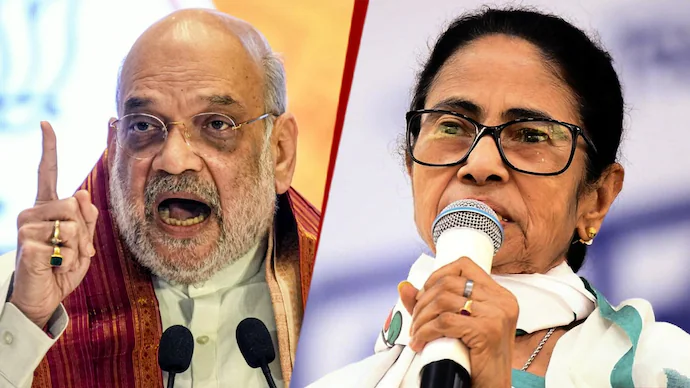
With the West Bengal Assembly Elections approaching, Union Home Minister Amit Shah intensified the Bharatiya Janata Party’s campaign by unveiling a detailed “chargesheet” against the ruling Trinamool Congress. Addressing a high-energy rally, Shah accused the government led by Chief Minister Mamata Banerjee of plunging the state into what he described as “anarchy, fear, and corruption.”
Positioning the upcoming elections as pivotal not just for West Bengal but for the nation as a whole, Shah asserted that the polls carry significant implications for national security. “This election is important not just for Bengal but for the country,” he said, linking the outcome directly to issues of internal stability and border security.
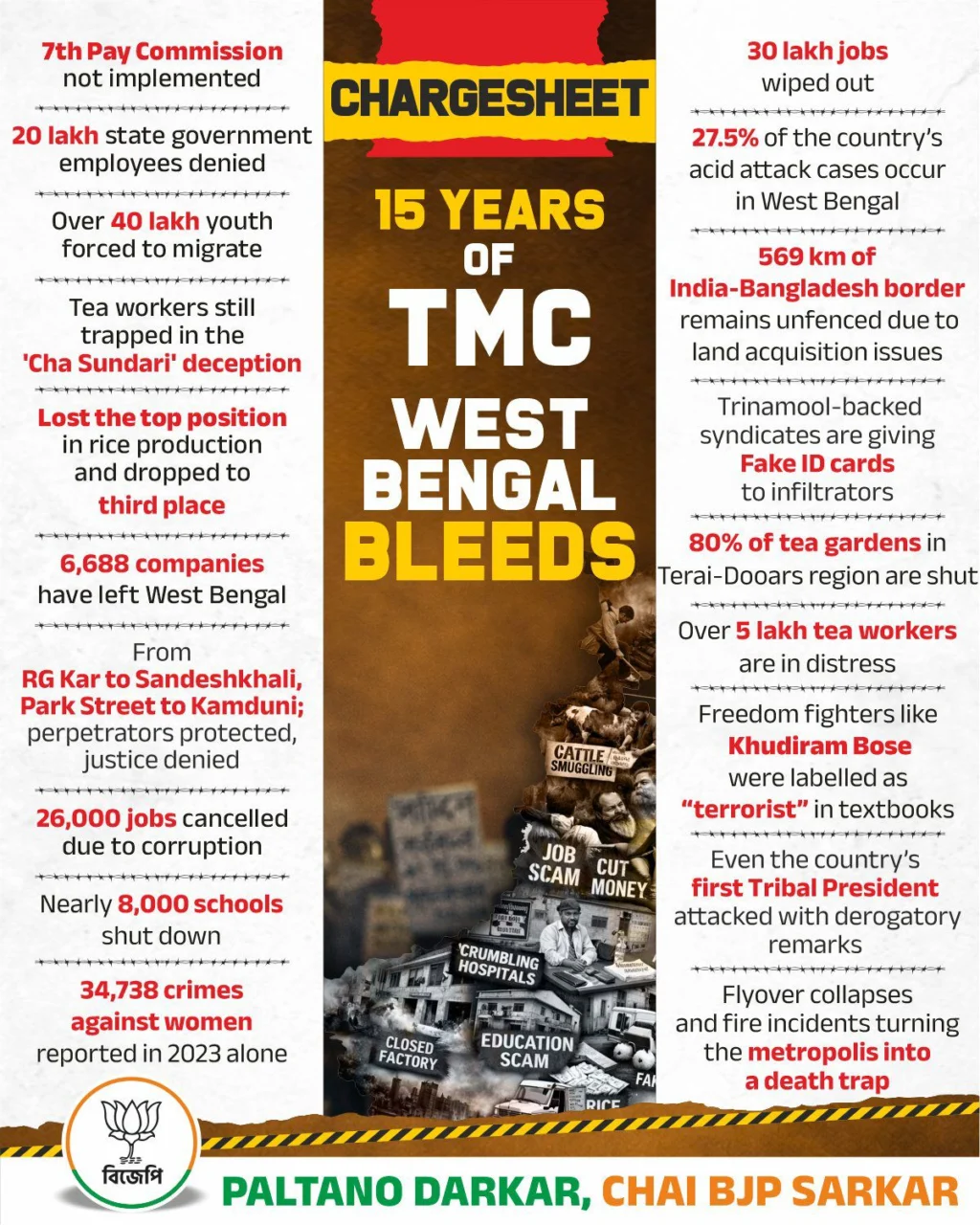
In a strategic move aimed at consolidating voter sentiment, Shah announced that the BJP would foreground public issues and present solutions through its campaign. He acknowledged that the party may face criticism for releasing a chargesheet but framed it as a reflection of its accountability to the people. According to him, the document outlines the alleged failures and governance deficits of the TMC government over the past 15 years.
Launching a scathing attack on the state administration, Shah accused the TMC of fostering a climate of fear and intimidation. He alleged that party workers have been harassing citizens, creating an environment where ordinary people feel unsafe. “Bengal has seen 15 years of lies and fear,” he said, adding that the electorate now seeks relief from what he termed “tyranny.”
The Union Home Minister also criticised the state’s economic trajectory, claiming that industrial growth has stalled under TMC rule. “Bengal has been turned into a graveyard of industries,” he remarked, accusing the government of replacing development with a system plagued by corruption, which he described as a “cut money government.”
A significant portion of Shah’s speech focused on the issue of illegal infiltration, a recurring theme in BJP’s Bengal campaign. He alleged that the TMC government has allowed unchecked cross-border infiltration, thereby compromising both the demographic balance and security of the state. Drawing comparisons with neighbouring Assam, Shah claimed that infiltration had been effectively curbed there after the BJP came to power, suggesting that West Bengal remains the primary entry point.
“Are infiltrators the stakeholders to decide the future of the state?” he questioned, arguing that such dynamics pose a direct threat to democratic processes. He further alleged that illegal migrants have been included in voter lists, promising that a BJP government would take decisive action to remove them both from electoral rolls and from the country.
Shah also raised concerns over what he described as an “artificial demographic change” in the state, suggesting that such shifts have contributed to growing insecurity among residents. He claimed that people in West Bengal are increasingly fearful about their safety, identity, and future, particularly highlighting concerns related to women’s security.
Targeting Mamata Banerjee personally, Shah accused her of engaging in “victim politics” and deflecting criticism rather than addressing governance challenges. He also questioned certain administrative decisions, including the appointment of judicial officers in electoral processes, suggesting inconsistencies in implementation.
Framing the election as a moral and political choice, Shah presented it as a battle between “bhoy” (fear) and “bharosa” (trust). He urged voters to choose a government that can ensure safety, development, and transparency. According to him, only a change in leadership can restore public confidence and secure the future of the state’s youth.
Highlighting the BJP’s growing electoral footprint, Shah expressed confidence in the party’s prospects. He pointed out that the BJP’s vote share in West Bengal has steadily increased over the past three elections, while traditional players like the Congress and the Left have weakened significantly. He also cited the party’s recent electoral successes in states like Maharashtra and Bihar as evidence of its expanding national appeal.
In a strong assertion of intent, Shah predicted that the BJP would form the next government in West Bengal. He also raised strategic concerns about the security of the Siliguri Corridor, often referred to as the “Chicken’s Neck,” alleging that infiltration and lack of fencing have weakened its defence.
Concluding his address, Shah emphasised that the election is fundamentally about safeguarding citizens’ rights, ensuring women’s safety, and creating opportunities for the youth. He reiterated that a “trustworthy government” can only be established by removing what he termed a corrupt regime and bringing the BJP to power.