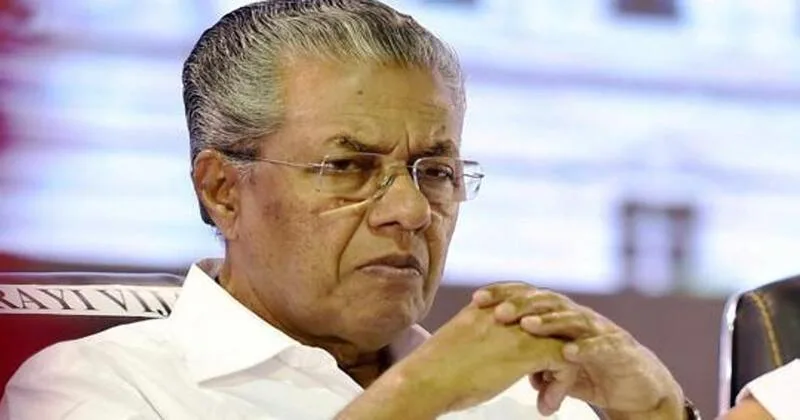
Kollam: As the Assembly election campaign reached its peak, an unusual and tense scene unfolded at a press conference addressed by CPI(M)’s Chief Minister Pinarayi Vijayan, exposing growing concerns over his government’s handling of the media. Journalists openly protested, accusing him of favouring party-aligned outlets while evading critical questions from the broader press.
The protest erupted when several journalists alleged that only pro-CPI(M) media organisations, particularly Kairali and Deshabhimani Daily, were being given priority to ask questions. As tensions escalated, journalists raised slogans, stating that it was unacceptable for the Chief Minister to respond only to “friendly” media while ignoring others. The press conference soon descended into chaos, with visible frustration among reporters over what they described as a controlled and selective interaction.
Selective media access sparks protest
The Chief Minister had convened the press meet to highlight the government’s development achievements and counter opposition allegations ahead of the polls. However, the event was overshadowed by accusations that the interaction was stage-managed. Journalists claimed that a disproportionate number of representatives from Deshabhimani and Kairali were present and were given the first opportunity to ask questions, reinforcing perceptions of bias.
When a question related to terron outfit PFI backed SDPI surfaced, the Chief Minister reportedly dismissed the journalist’s intent, suggesting bias against him. This further fuelled discontent among media personnel, who saw it as an attempt to de-legitimise uncomfortable questions. The situation worsened when the Chief Minister attempted to conclude the press conference abruptly without addressing several pending queries, particularly those concerning alleged links between CPI(M) and SDPI.
Chief minister accused of evading questions
Dramatic moments followed as the Chief Minister, after initially leaving the podium, returned briefly to answer a few more questions. However, after responding to just three, he again attempted to exit, citing time constraints. Journalists pressed him to stay and respond to critical issues, but he maintained that sufficient time had been given and that he had already addressed the queries adequately.
The media’s protest intensified after the abrupt conclusion, with accusations that the Chief Minister, despite publicly calling for debates, was unwilling to face tough questions. Critics argue that the release of the government’s ten-year report card has made the leadership defensive, fearing scrutiny over its shortcomings.
The controversy has also triggered wider political debate, especially as CPI(M) leaders, including Nemom candidate V. Sivankutty, continue to challenge opponents to public debates. On social media, many have pointed out what they describe as a contradiction between the party’s call for open discussion and the Chief Minister’s reluctance to engage freely with the press. With the election campaign entering its final phase, such incidents are expected to shape voter perception. Beyond development claims, the Chief Minister’s approach, seen by critics as evasive and apprehensive of media scrutiny, nhas now emerged as a significant political issue. As he is scheduled to address the media again tomorrow, attention is firmly on whether he will confront questions more openly or continue to avoid critical engagement.