
“In this, the fiftieth year of our independence, India stands at a defining moment in our history. The rationale for the Government’s decision is based on the same policy tenets that have guided the country for five decades. These policies were sustained successfully because of the underlying national consensus. The present decision and future actions will continue to reflect a commitment to sensibilities and obligations of an ancient civilisation, a sense of responsibility and restraint, but a restraint born of the assurance of action, not of doubts or apprehension” – Shri Atal Bihari Vajpayee, Former Prime Minister, in his Statement on Nuclear Tests in Pokhran in the Parliament on May 27, 1998
Amidst the cacophony of bombings from both sides and mixed signalling of dialogue with military mobilisation from the United States and Iran, Prime Minister Narendra Modi delivered important speeches in both houses of the Parliament. He warned that the war created difficult global conditions that may persist for a long time, and as we displayed a remarkable sense of maturity and unity during the COVID–19 crisis, we need to be prepared to effectively mitigate this situation with the same zeal. The message is simple, yet critical at this juncture.
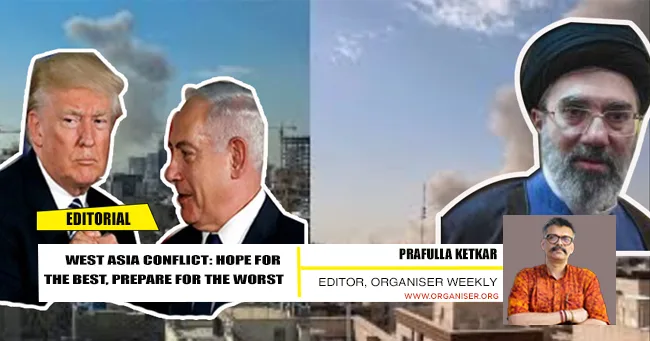
The war that started with the joint operation by the United States and Israel, eliminating the top leadership in Iran, has reached a point of no return for all those who are involved. The war without a clear objective is bound to face this dilemma. When both sides have decided not to respect international law and conventions, it is very difficult to take sides based on right and wrong. Every day, the US-Israel combined forces claim the elimination of Iranian capabilities, and Iran continues to retaliate by bombing Israeli cities and American bases in the Gulf. Despite loud claims by the US President, Strait of Hormuz is still facing the Iranian expurgation, impacting the global oil, gas and fertilisers supply. The talks about dialogue are on and so is the military mobilisation. The American allies in the region – mainly the Arab world, strangely aligned with the sworn enemy of the past, that is, Israel – are firm on dismantling the Iranian regime. The American agenda revolves around undoing Iran’s nuclear programme, which is unacceptable to the existing regime. Despite the unprecedented media glare, what is baffling is that there are no talks about human life and material losses that are taking place in this war.
The United Nations system has become defunct. International law and conventions have been reduced to ritualistic terms for the speeches. The mindless bombing on civilians and oil infrastructure indicates the moral crisis at the international level. Even if a truce or temporary ceasefire with a face-saving exit for all parties is reached in the coming days, it is unlikely that normalcy would soon be restored. With millions of Bharatiya people working in the Gulf region, the situation is all the more precarious for Bharat. Prime Minister Modi’s cautionary call becomes even more critical in this context.
Bharat has a tradition of building consensus on key global and foreign policy issues. At a time when the world is looking upto Bharat and its leadership to play a pivotal role with regards to the early resolution of the ongoing conflict, the opposition parties in Bharat and some media platforms are trying to spread negativity, first by questioning the Modi Government’s stance in the war and now about the oil and gas shortages, which can fetch few political brownie points but would harm the national interest.
In this war of Adharma, Bharat cannot choose a side. Over the past few years, we have diversified our energy imports and strengthened our renewable energy capabilities. This war has thrown new challenges for our scientists, policymakers, and the nation as a whole. There is an opportunity to develop domestic energy-sector capabilities by pursuing alternatives. In fact, Bharat’s search for Atmanirbharta, based on our cluster-based model and small-scale industries with lower energy consumption and reduced dependence on foreign investment, can gain new momentum in this period of crisis. This cannot happen just with Government initiatives. All sections of society need to be prepared for the worst, while hoping for the best. When we faced global sanctions after the Nuclear Tests in 1998, our scientists, youth, and industry demonstrated remarkable resilience and found innovative ways to maintain economic growth through domestic production and investment.
Initially, the tie can be testing, but eventually it will allow us to have a Swadeshi model of development, on our own parameters. The same can pave the way for a sustainable model at the global level. Let us reach a national consensus on the difficult but sustainable path of development.