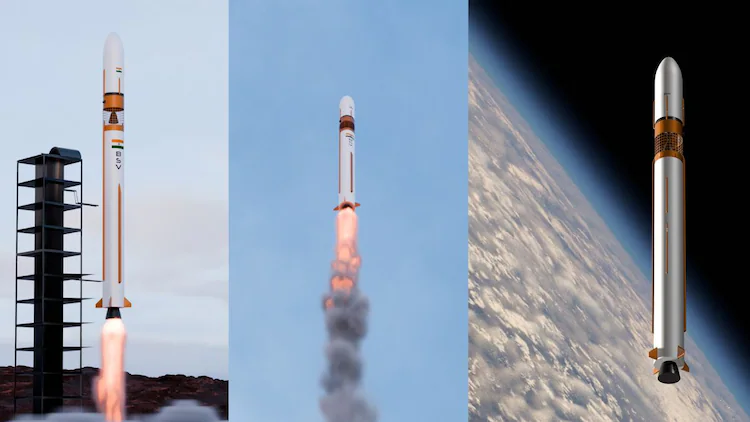
India’s rapidly evolving private space ecosystem has found a powerful new contender in Bharath Space Vehicle (BSV), a startup founded in 2024 and headquartered in Surat. Built by a team of veteran scientists with over 70 years of combined experience at the Indian Space Research Organisation (ISRO), the company is developing Agasthya-1, a small-lift launch vehicle designed to redefine how India accesses space. At a time when global demand for satellite launches is surging, driven by communication, surveillance, climate monitoring, and defence needs, BSV’s ambitious project reflects India’s growing confidence in private-sector innovation and its intent to emerge as a serious player in the global commercial space race.
What is Agasthya-1?
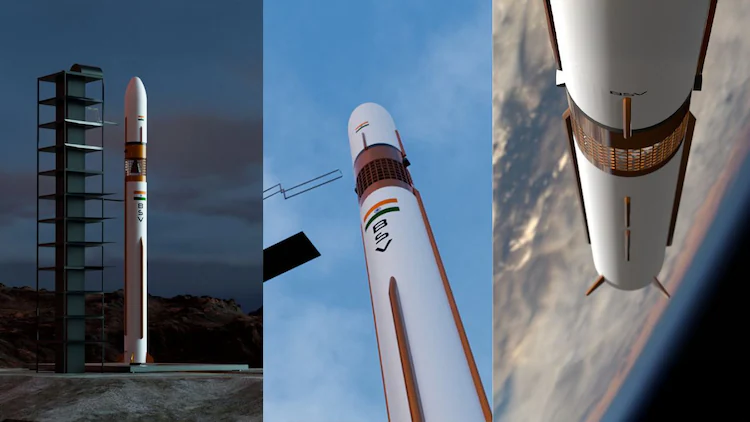
Agasthya-1 is a 28-metre-tall, two-stage rocket powered by liquid oxygen (LOX) and kerosene (RP-1), a combination widely used in modern launch systems worldwide for its efficiency and reliability. The rocket has been specifically designed to serve the small satellite market, one of the fastest-growing segments in the global space economy.
It is capable of carrying up to 500 kilograms to a Sun-Synchronous Polar Orbit and around 800 kilograms to a low-inclination Low Earth Orbit at an altitude of approximately 400 kilometres. These specifications place Agasthya-1 in direct competition with emerging global small-lift launch vehicles, while also complementing India’s existing capabilities, especially as demand for cost-effective and frequent launches continues to rise.
What truly sets Agasthya-1 apart is its ability to be launch-ready within just 24 hours, a capability that could prove to be a game-changer for both commercial and strategic applications. In an era where defence operations, disaster response, and real-time surveillance demand rapid satellite deployment, such quick turnaround times are increasingly critical.
Traditional launch systems often require weeks or even months of preparation due to complex integration and testing requirements. However, BSV aims to drastically compress this timeline, enabling near-immediate response capabilities. This means that in situations such as natural disasters, border tensions, or urgent surveillance needs, India could potentially deploy satellites within a day, significantly enhancing its operational readiness and strategic flexibility.
Why liquid fuel makes all the difference
A key technological decision that differentiates Agasthya-1 from many other Indian small satellite rockets, including ISRO’s SSLV, is its use of a liquid bipropellant engine instead of solid propellants. This choice is central to the rocket’s reliability and flexibility. Liquid fuel systems allow engineers to conduct “hot-fire” tests before launch, ensuring that engines perform as expected under real conditions.
The second-stage engine can be tested for durations ranging from 10 to 40 seconds, while the first-stage engine undergoes a brief test just before liftoff. Additionally, critical systems such as stage separation and fairing jettison can be validated on the ground, significantly reducing the risk of failure during flight.
This “fly-what-you-test” philosophy offers a major advantage over solid-fuel rockets, which are typically ignited only once on launch day, leaving minimal scope for pre-launch validation. As a result, Agasthya-1 aims to deliver higher reliability and mission success rates.
The strength of BSV lies in its leadership, which is deeply rooted in India’s space legacy. One of the key figures behind the project is Dr N Vedachalam, former Director of ISRO’s Liquid Propulsion Systems Centre. A recipient of the Padma Shri, he played a crucial role in developing cryogenic engine technology for the GSLV programme, a milestone in India’s space journey. Another important member of the team is S V Sharma, co-founder and Chief Technology Officer, who worked closely with A P J Abdul Kalam on the SLV-3 programme.
His contributions span several landmark missions, including the PSLV and GSLV Mk III programmes. The leadership team also includes Bhavin Patel, an IIT Kanpur-trained aerospace engineer who oversees operations and finance, bringing a blend of technical expertise and managerial acumen to the venture.
IN-SPACe and ISRO Collaboration
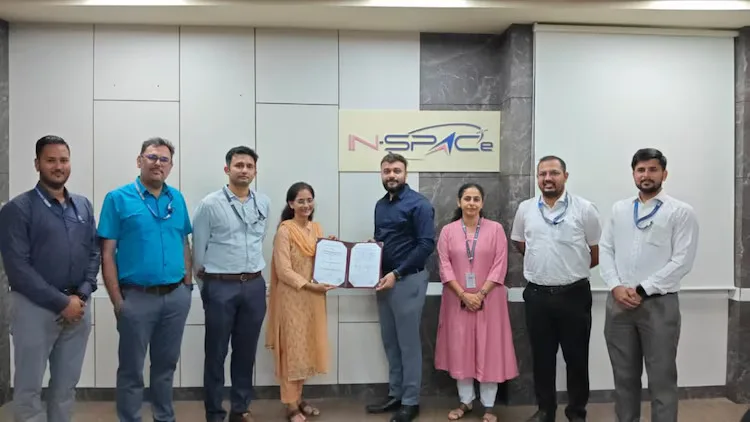
BSV’s ambitions are further strengthened by institutional support through a framework agreement with IN-SPACe, India’s space sector regulator. This partnership allows the startup to access ISRO’s testing facilities, launch infrastructure, and technical expertise, which are critical for any early-stage space company. Such collaboration highlights the impact of India’s New Space Policy 2023, which opened the space sector to private players and marked a decisive shift from a government-dominated model to a more collaborative ecosystem.
By enabling startups to leverage decades of institutional knowledge and infrastructure, the policy is fostering innovation and accelerating the growth of India’s private space industry.
One of the most intriguing aspects of the Agasthya-1 project is the proposal to develop a new launch complex in Gujarat. The site, located near Kodinar in the Gir Somnath district, has been identified as a potential spaceport. If developed, it could become India’s first west-coast orbital launch facility, complementing the existing launch site at Sriharikota.
The coastal location offers several advantages, including open access to the Arabian Sea, flexible launch trajectories, and reduced congestion at existing facilities. The development of such a site could decentralise India’s launch infrastructure, enhance capacity, and provide greater flexibility for different types of missions.
India’s private space race heats up
BSV is not alone in this race, as other startups like Skyroot Aerospace and Agnikul Cosmos have already made significant progress, including successful test launches and growing investor confidence. However, Agasthya-1’s focus on liquid propulsion and rapid launch readiness gives it a distinct edge in the emerging market.
Globally, the demand for small satellite launches is booming, driven by the rise of satellite internet constellations, Earth observation systems, and military and intelligence applications. India’s entry into this segment through private players could significantly boost its share in the global space economy and position it as a competitive alternative to established players.
The development of Agasthya-1 is not just a technological milestone but also carries significant strategic and economic implications. For defence, the ability to launch satellites quickly can enable rapid deployment of surveillance systems during crises, enhancing national security. In the context of disaster management, satellites can be launched on short notice to assess damage and coordinate relief efforts, potentially saving lives and resources.
Economically, affordable and reliable launch services can attract global clients, boost exports, and create high-tech jobs, contributing to India’s growth as a knowledge-based economy.
For decades, India’s space achievements were synonymous with ISRO. While the agency continues to play a central role, the emergence of startups like BSV marks a transition towards a hybrid ecosystem where public and private sectors work together.
The government’s policy shift has enabled private participation in launch services, increased innovation, and faster project execution. Agasthya-1 represents this new era, where the experience of legacy institutions is combined with the agility and innovation of startups, creating a dynamic and competitive space ecosystem.
Despite its promise, the road ahead for Agasthya-1 is not without challenges. The project will need to navigate technical validation and testing timelines, secure regulatory approvals, and compete with global players such as SpaceX and Rocket Lab. Infrastructure development, particularly for new launch sites, will also be a critical factor in determining its success.
However, the experience of BSV’s leadership and the institutional backing it has received may help overcome these hurdles and ensure steady progress.
Agasthya-1 is more than just a rocket; it symbolises India’s ambitions in the new space race. With its focus on speed, reliability, and affordability, the project has the potential to redefine how India and possibly the world, approaches satellite launches. If successful, it will not only strengthen India’s strategic capabilities but also position the country as a major player in the global commercial space market. As private innovation meets decades of scientific expertise, India’s journey from a spacefaring nation to a space powerhouse appears firmly on track.