Uttar Pradesh Targets 50% Treated Water Reuse by 2030
July 21, 2026
  • Read Ecopy
  • Circulation
  • Advertise
  • Careers
  • About Us
  • Contact Us
Android AppiPhone AppArattai
Organiser
  • ‌
  • Bharat
    • Assam
    • Bihar
    • Chhattisgarh
    • Jharkhand
    • Maharashtra
    • View All States
  • World
    • Asia
    • Europe
    • North America
    • South America
    • Africa
    • Australia
  • Editorial
  • International
  • Opinion
  • RSS @ 100
  • More
    • Op Sindoor
    • Analysis
    • Sports
    • Defence
    • Politics
    • Business
    • Economy
    • Culture
    • Special Report
    • Sci & Tech
    • Entertainment
    • G20
    • Azadi Ka Amrit Mahotsav
    • Vocal4Local
    • Web Stories
    • Education
    • Employment
    • Books
    • Interviews
    • Travel
    • Law
    • Health
    • Obituary
  • Subscribe
    • Subscribe Print Edition
    • Subscribe Ecopy
    • Read Ecopy
  • ‌
  • Bharat
    • Assam
    • Bihar
    • Chhattisgarh
    • Jharkhand
    • Maharashtra
    • View All States
  • World
    • Asia
    • Europe
    • North America
    • South America
    • Africa
    • Australia
  • Editorial
  • International
  • Opinion
  • RSS @ 100
  • More
    • Op Sindoor
    • Analysis
    • Sports
    • Defence
    • Politics
    • Business
    • Economy
    • Culture
    • Special Report
    • Sci & Tech
    • Entertainment
    • G20
    • Azadi Ka Amrit Mahotsav
    • Vocal4Local
    • Web Stories
    • Education
    • Employment
    • Books
    • Interviews
    • Travel
    • Law
    • Health
    • Obituary
  • Subscribe
    • Subscribe Print Edition
    • Subscribe Ecopy
    • Read Ecopy
Organiser
  • Home
  • Bharat
  • World
  • Operation Sindoor
  • Editorial
  • Analysis
  • Opinion
  • Culture
  • Defence
  • International Edition
  • RSS @ 100
  • Magazine
  • Read Ecopy
Home Politics

UP’s 2030 water vision: State unveils ambitious plan to reuse 50 percent treated wastewater

The Uttar Pradesh government has approved a landmark policy aimed at tackling water scarcity and reducing river pollution through large-scale reuse of treated wastewater. The roadmap targets 50% safe reuse by 2030, with a long-term goal of achieving full utilisation

WEBDESKWEBDESK
Mar 29, 2026, 10:30 am IST
in Politics, Bharat, Uttar Pradesh
Follow on Google News
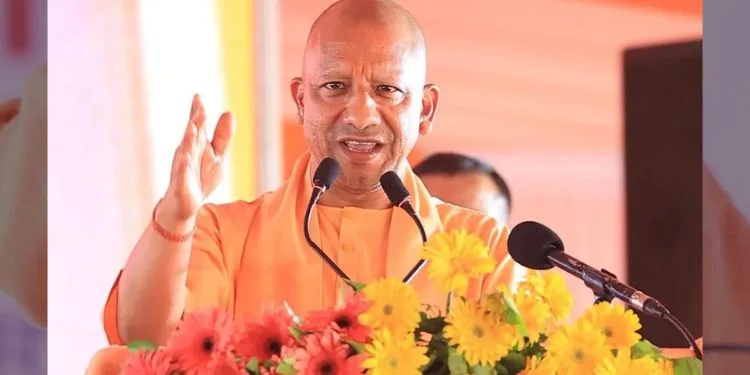
UP CM Yogi Adityanath in Barabanki

UP CM Yogi Adityanath in Barabanki

FacebookTwitterWhatsAppTelegramEmail

In a major step towards sustainable water management, the Uttar Pradesh government has approved the Safe Reuse of Treated Water Policy, 2026, setting an ambitious target to reuse 50 percent of treated wastewater by 2030. The policy outlines a phased roadmap aimed at addressing the twin challenges of water scarcity and river pollution, while promoting a shift towards a circular water economy.

The initiative marks a significant departure from traditional water management practices that focused primarily on treatment and disposal. Instead, the new policy emphasises the productive reuse of treated wastewater across sectors such as agriculture, industry, construction, and urban landscaping.

According to the roadmap, the first phase will prioritise regions where sewage treatment infrastructure is already in place. In these areas, the government aims to achieve 50 percent safe reuse of treated water by 2030, eventually scaling up to 100 percent reuse in the subsequent phase within the same regions. This approach is designed to maximise existing capacity while ensuring efficient utilisation of resources.

The policy further outlines a parallel strategy for areas where sewage treatment plants are either non-existent or non-operational. In such regions, the third phase targets 30 percent reuse of treated wastewater by 2030. This will be followed by a gradual scale-up to 50 percent by 2035 and complete reuse by 2045, ensuring statewide coverage over time.

Officials emphasise that the policy is aimed at reducing dependence on freshwater sources and curbing excessive groundwater extraction, two pressing concerns in a state that faces increasing water stress due to rapid urbanisation, population growth, and climate variability.

Also Read: Yogi Adityanath and nine years of transformation in Uttar Pradesh: A story of governance and growth

Experts have welcomed the move, describing it as a forward-looking intervention in water governance. Subrata Chakraborty, Director of the Water Programme at the Centre for Science and Environment, noted that the policy reflects a decisive shift in approach.

He stated that the initiative “signals a paradigm shift from conventional ‘treat-and-dispose’ practices to a circular economy model, where wastewater is recognised as a valuable resource.” According to him, such a framework is expected to enhance water security, improve environmental sustainability, and generate economic efficiencies in the long run.

A key feature of the policy is its emphasis on decentralised planning at the city level. Urban local bodies will be required to develop City-Level Reuse Action Plans, which will identify potential reuse opportunities, map sectoral demand, and create the necessary infrastructure for distribution and utilisation of treated water.

Cities such as Agra and Prayagraj have already taken the lead in implementing this approach. In Prayagraj, four proposed projects worth ₹1,625 crore aim to enable the reuse of 126.45 million litres per day of treated water. Meanwhile, Agra has planned three projects worth ₹93 crore to facilitate the reuse of 28 million litres per day.

These projects are being supported technically by the Centre for Science and Environment and financially by the National Mission for Clean Ganga. The initiative also aligns closely with the broader objectives of the Namami Gange Programme, which seeks to reduce pollution in the Ganga and its tributaries.

Environmental experts highlight that increasing the reuse of treated wastewater can significantly reduce the discharge of untreated sewage into rivers. This, in turn, will help lower pollution loads, improve water quality, and strengthen ongoing river rejuvenation efforts.

Beyond environmental benefits, the policy also has important economic implications. By promoting the reuse of treated water in industrial and construction activities, the state aims to reduce the cost burden associated with freshwater extraction and supply. It also opens up opportunities for innovation in water recycling technologies and infrastructure development.

The policy comes at a time when water security is emerging as a critical issue across India. With groundwater levels declining in several regions and demand for water rising steadily, states are increasingly exploring alternative strategies to ensure sustainable supply.

Uttar Pradesh’s initiative is likely to serve as a model for other states grappling with similar challenges. By integrating wastewater reuse into mainstream policy planning, the state is positioning itself at the forefront of water resource management in India.

However, successful implementation will depend on several factors, including the expansion of sewage treatment infrastructure, effective monitoring mechanisms, and public acceptance of treated water reuse. Ensuring quality standards and building trust among end-users will be crucial to achieving the policy’s ambitious targets.

As the state moves forward with its 2030 roadmap, the focus will remain on translating policy into practice. If implemented effectively, the initiative has the potential to transform wastewater from a liability into a valuable resource, reshaping how water is managed in one of India’s most populous states.


Topics: water scarcity Indiacircular economy waterNamami GangeSewage treatment PlantsUttar Pradesh water policytreated wastewater reuse
ShareTweetSendShareSend
✮ Subscribe Organiser YouTube Channel. ✮
✮ Join Organiser's WhatsApp channel for Nationalist views beyond the news. ✮
Previous News

Amit Shah calls Bengal ‘Anarchy-ridden’, unveils chargesheet against TMC

Next News

Mangaluru Cooker Blast Case: NIA court accepts Mohammed Shariq’s confession, exposes wider terror funding network

Related News

A representatie image

NMCG expands river-centric planning across Ganga basin; Urban river management plans now cover 60 cities

Representative Image

How Namami Gange is reviving India’s lost botanical inheritance

Representative Image

Namami Gange Delivers Results in Uttarakhand: Water quality in river Ganga improves significantly

Massive infrastructure push under Namami Gange brings visible improvement in Ganga water quality in Uttarakhand

From Pollution to Purity: How the Namami Gange Programme is reviving the Ganga across Haridwar and Rishikesh

Union Minister CR Paatil

Centre to divert Indus treaty river water to address shortages, says Union Minister CR Paatil

Aerial view of modern sewage treatment facilities in Haridwar developed under the Namami Gange Mission to restore Ganga river

Namami Gange Mission: Haridwar strengthens Ganga clean-up with two modern sewage treatment plants

Load More

Latest News

A CJP protest in Delhi turned violent, injuring police personnel, damaging government property, and triggering an investigation

CJP Protest in Delhi Turns Violent: Police injured, government property damaged; Investigation underway

Britain's market opens wider as India's textile sector gains a long-awaited competitive edge

India-UK CETA: Duty-Free access set to double textile exports, adding $1.6 billion, challenging China and Bangladesh

Representative Image

Pune Horror: 4 Muslim men Farhan, Fazal, Rehan & Sahil arrested for year long rape and blackmail of college student

Congress supremo Rahul Gandhi

If Rahul Gandhi backed Sonam Wangchuk, why did he never visit the CJP protest at Jantar Mantar?

Senior IPS officer G S Rao

Tripura govt appoints G S Rao as in-charge DGP after Anurag Dhankar found dead at police headquarters

Dipke was at NCP-SP leader Anish Gawande's house when Delhi Police detained him

Who is Anish Gawande? NCP (SP) spokesperson at whose house CJP founder Abhijeet Dipke was staying during Delhi protest

When Indira Gandhi government killed hundreds of Sadhus and Gau rakshaks

Do you know, Indira Govt killed thousands of sadhus & Gaurakshaks? Revisiting Jantar Mantar to Parliament march of 1966

Over 50 police and paramilitary personnel sustain injuries in the violence.

CJP protest breaches barricades, sparks violent clashes in Delhi; Over 118 police personnel hurt

Cockroach Janata Party (CJP) founder Abhijeet Dipke speaks following a protest

Did CJP deliberately flout India’s security norms? Illegal protest and drone footage from red zone spark major question

NTA debunks five viral NEET 2026 OMR claims, forbids ai-edited answer sheets

NTA clears air on five viral NEET 2026 OMR cases, warns against fake answer sheets submission

Load More
  • Privacy
  • Terms
  • Cookie Policy
  • Refund and Cancellation
  • Delivery and Shipping

© Bharat Prakashan (Delhi) Limited.
Tech-enabled by Ananthapuri Technologies

  • Home
  • Search Organiser
  • Bharat
    • Assam
    • Bihar
    • Chhattisgarh
    • Jharkhand
    • Maharashtra
    • View All States
  • World
    • Asia
    • Africa
    • North America
    • South America
    • Europe
    • Australia
  • Editorial
  • Operation Sindoor
  • Opinion
  • Analysis
  • Defence
  • Culture
  • Sports
  • Business
  • RSS @ 100
  • Entertainment
  • More ..
    • Sci & Tech
    • Vocal4Local
    • Special Report
    • Education
    • Employment
    • Books
    • Interviews
    • Travel
    • Health
    • Politics
    • Law
    • Economy
    • Obituary
  • Subscribe Magazine
  • Read Ecopy
  • Advertise
  • Circulation
  • Careers
  • About Us
  • Contact Us
  • Policies & Terms
    • Privacy Policy
    • Cookie Policy
    • Refund and Cancellation
    • Terms of Use

© Bharat Prakashan (Delhi) Limited.
Tech-enabled by Ananthapuri Technologies