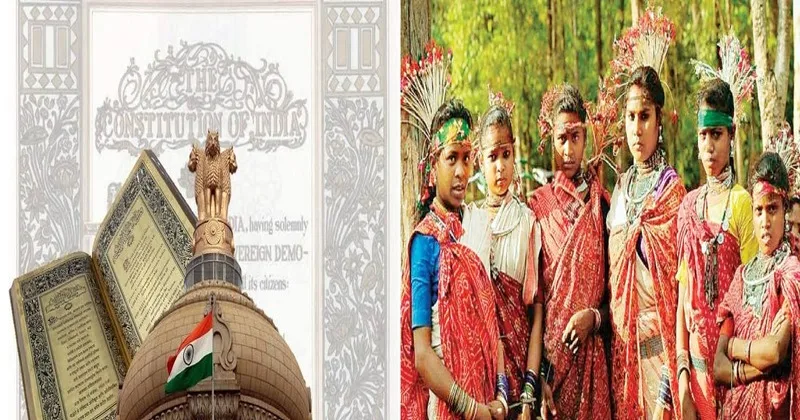
The debate around Article 342 of the Constitution of India, which defines Scheduled Tribes(STs), has resurfaced due to long-standing concerns regarding its scope and interpretation. Historically, under the Government of India Act 1935, individuals from tribal communities who converted to Christianity were classified as Indian Christians and were granted minority rights. Over time, this created a situation where converted individuals continued to avail benefits meant for Scheduled Tribes while also enjoying minority protections.
Unlike Article 341 of the Constitution of India, which restricts Scheduled Caste status based on religion, Article 342 of the Constitution of India does not impose any religious condition. This omission has led to a structural inconsistency. Prominent tribal leader Kartik Oraon strongly argued that individuals who have abandoned traditional tribal customs, culture and belief systems through religious conversion should not continue to be classified as Scheduled Tribes. He viewed this as a constitutional, social and moral anomaly that deprived genuine tribal communities of their rightful share in reservations, welfare schemes and representation.
The Lokur Committee (1965) also emphasized that tribal identity is rooted in distinct culture, primitive traits and social isolation. It clearly stated that communities that have largely assimilated into the mainstream should not remain in the ST list. Despite a legislative attempt in 1967 to address this issue, political pressures prevented reform. As a result, the anomaly persists, where converted individuals may benefit from both ST reservations and minority privileges, potentially diluting resources meant for historically disadvantaged tribal populations.