At a time when escalating tensions in West Asia—particularly the confrontation involving Iran, Israel and the United States have repeatedly threatened global energy supply chains, the question of energy security has moved firmly to the centre of national strategy. For India, whose oil shipments routinely pass through the highly sensitive Strait of Hormuz, ensuring uninterrupted energy flows has become both a diplomatic and strategic priority.
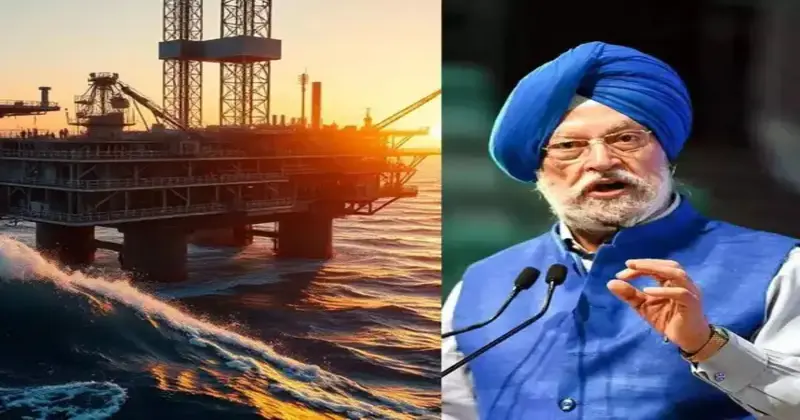
It is in this broader context that the announcement made earlier in 2025 by Union Petroleum Minister Hardeep Singh Puri assumed historic significance. At the time, he had indicated that India was close to discovering a massive oil reserve in the Andaman Basin comparable to the landmark discoveries in Guyana. The statement signalled the possibility that India’s long-ignored offshore potential could eventually transform the country’s long-term energy outlook.
Early discoveries and ignored warnings
Back in the 1980s, the Oil and Natural Gas Corporation(ONGC) conducted geological surveys and seismic studies, which pointed towards significant sedimentary deposits in the Andaman-Nicobar Basin. These studies revealed the presence of an accretionary prism structure—a geological feature indicative of source rock essential for oil formation. According to these assessments, the Andaman Deepwater Region exhibited strong potential for commercial hydrocarbon exploration. Despite the promising reports, the government at that time refrained from initiating any action, citing India’s lack of deep-sea drilling technology as the primary barrier.
Furthermore, the region was deemed high-risk due to its location in an active seismic zone, created by tectonic plate subduction. However, internal technical reports classified the area as an unexplored but highly prospective offshore basin. ONGC had recommended a long-term approach, suggesting the preservation of the reserves for future use and the need for comprehensive environmental mapping to distinguish viable blocks from ecologically sensitive zones.
Geopolitics and strategic delay
The strategic location of this region, near the Strait of Malacca which is a critical global oil shipping route, adds a geopolitical dimension to the exploration effort. This invites an essential question. Was the government’s inaction justified or was it yet another example of missed opportunity due to political inertia? Even if India lacked the requisite technology at the time, it could have facilitated joint ventures with foreign players proficient in deepwater drilling.
While some Congress supporters may argue that energy independence should not be surrendered to foreign entities, such views reflect a post-colonial mindset. Restrictions on Foreign Direct Investment(FDI) guided the Indian economy along a path of socialism and protectionism. The emphasis was consistently on strengthening Public Sector Undertakings such as ONGC and GAIL, rather than opening the energy sector to private and international collaboration. Guided by the advice of left-leaning economists and bureaucrats, successive administrations kept western oil giants like Exxon, Shell and BP at bay.
The lost decade of opportunity
India had not chosen to liberalise its oil sector earlier. It could have unlocked its offshore potential in the 1990s itself. The Indian Navy, with its established presence in the Andaman Sea and Bay of Bengal, could have provided logistical and security support. Such a step would not only have ensured resource development but also significantly boosted India’s geopolitical posture in Southeast Asia. Unfortunately, political fear, a tendency toward economic isolationism and a Nehruvian Socialist worldview held India back.
Policy shifts in the PM Modi era
By contrast, the Narendra Modi-led NDA government introduced the Hydrocarbon Exploration and Licensing Policy(HELP) and the Open Acreage Licensing Policy(OALP), enabling 100 per cent FDI in oil and gas exploration, including offshore blocks. These reforms also streamlined the process of obtaining environmental clearances. Earlier, under Congress rule, significant portions of this region were declared “No-Go Zones”, with exploration activities prohibited on the grounds of environmental protection and tribal rights.
Environmental concerns or strategic inaction?
Internationally funded NGOs and green lobbies contributed to this policy paralysis. Mr. Rahul Gandhi, the current Leader of the Opposition, even wrote a letter to the Prime Minister urging him to cancel offshore mining tenders in the Andaman and Nicobar Islands, citing ecological and marine life concerns. Former Environment Minister Jairam Ramesh labeled development projects in the Great Nicobar Island as “ecocide,” calling them an “ecological nightmare”. These positions reflect a political philosophy no longer aligned with the aspirations of a rising economic power.
A Soviet connection that never materialised
In the 1980s, India functioned predominantly as a socialist economy. Yet even within that framework, there was a viable option to collaborating with the USSR. Soviet assistance had already been instrumental in the establishment of Bhilai Steel Plant, Heavy Engineering Corporation, ITR Chandipur(for missile testing) and India’s space program. Despite this history of deep strategic and technological cooperation, India’s bureaucracy opted to wait until indigenous capability caught up.
The role of Indian Navy: Underused potential
Following the 1971 Indo-Pak War, the Indian Navy adopted the “Blue Water Doctrine”, reinforcing its influence in the Andaman Sea and Bay of Bengal through platforms like aircraft carriers INS Virat and INS Vikrant. Unlike Gulf countries, which lacked a naval presence and remained dependent on Western oil companies, India had both maritime capability and strategic location. However, the government viewed the Navy primarily as a symbol of “National Prestige” rather than a tool of “Economic Enabler”. This disconnect between civilian leadership and military assets meant that India never fully utilised its naval infrastructure to support offshore exploration.
Manage India vs. Aspirational India
The Congress-era policy of “Manage India” stood in stark contrast to the idea of an “Aspirational India”. Their cautious approach confined the country to a passive global role, promoting an image of India as a soft power rather than a strategic one. Their doctrine discouraged the pursuit of greatness, fearing it would provoke resistance from global status quo powers.
No-go zones and scientific contradictions
In 2002, the Congress government reaffirmed Andaman’s status as a “No-Go Zone” for drilling. They insisted that no exploration would be allowed unless there was absolute certainty of commercial viability. This position ignored the reality that oil and gas exploration, by nature, involves calculated risk. Geological data had already pointed to promising prospects. But political considerations overruled scientific rationale. Congress failed to champion liberalisation and economic freedom—key elements necessary for achieving large-scale development.
Southeast Asia’s gains: India’s losses
Meanwhile, countries within the same geological belt, such as Indonesia, Malaysia, Brunei and Thailand, had successfully extracted billions of barrels of oil. The Andaman-Nicobar Basin lies on the Sunda tectonic plate which is the same plate that extends into Sumatra, Aceh and the Brunei Shelf, bordering the shallow waters of the South China Sea. This continuity underscores the massive untapped potential of India’s basin. These countries reaped massive economic rewards, while India chose red tape and regulatory paralysis.
Tectonic reality and geological certainty
The tectonic mechanism involves the subduction of the Indo-Australian plate beneath the Eurasian plate, which compresses organic sediments and generates the heat and pressure needed for oil formation. Similar geological processes occur in the Andaman Trench and the Burma Microplate. In 2010, both ONGC and the Directorate General of Hydrocarbons reaffirmed the region’s continuity with Southeast Asia’s proven reserves. In 2015, the Directorate auctioned multiple blocks, classifying the Andaman region as a high-potential deepwater zone.
Global risks, national rewards
Indonesia took bold steps and has now attained oil independence from OPEC. Malaysia partnered with Shell to generate billions in revenue. In contrast, India’s policy architects kept drawing red lines on maps, labeling them eco-sensitive and unsuitable for drilling.
Busting energy myths
Green lobbies and anti-development NGOs consistently spread alarmist narratives. One such myth was that oil extraction from Bombay High would cause Mumbai to sink which was proved factually incorrect. Bombay High is 160 kilometres offshore and has been in production since 1974 without any such incident. Similarly, nuclear energy was labelled dangerous, with comparisons drawn to the Chernobyl disaster. Yet, India’s modern reactors like PHWR and AHWR come with multi-layered safety mechanisms.
Policymakers also suggested India had inexhaustible coal reserves, a claim contradicted by the ongoing import of high-grade coal. These narratives were crafted to create an illusion of energy sufficiency, preventing reforms and private players entry into the coal sector. Another myth was that solar and wind power alone could illuminate the entire nation. The truth is that renewable sources are intermittent and cannot provide the base load necessary to maintain grid stability. Even today, over 60 per cent of India’s power supply comes from thermal energy.
The Cairn success story
Opponents of privatisation often claim that handing over oil assets to private players will jeopardise energy security. But the success of Cairn India tells a different story. The company developed the Mangala, Bhagyam and Aishwariya(MBA) oil fields in Rajasthan’s Barmer district, which collectively hold around 1 billion barrels of recoverable reserves. These fields currently contribute 23–25 per cent of India’s domestic crude output. To date, Cairn has produced over 550 million barrels, generating $15 billion in revenue and ₹33,000 crore in royalties for the Rajasthan government. This stands as a landmark achievement in India’s energy sector liberalisation.
Reclaiming the future
India’s energy future remained constrained for decades by ideological rigidity, bureaucratic inertia and performative environmentalism. The underutilisation of the Andaman Basin’s hydrocarbon potential stands as a telling example of these missed opportunities. Yet, if India decisively capitalises on the Andaman offshore reserves in the coming years, the country could dramatically reduce its dependence on imported oil and gas moving through vulnerable routes such as the Strait of Hormuz, strengthening both its economic resilience and strategic autonomy.