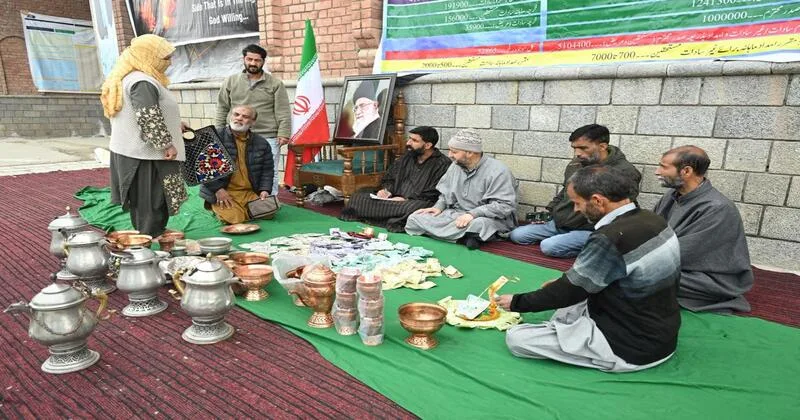
In recent weeks, ‘Kashmiris’ have initiated widespread donation drives by collecting cash, gold jewellery, copper utensilsand even selling vehicles to support Iran amid the ongoing conflict in West Asia. Driven by a deep emotional and religious connection to the Iranian Supreme Leader, many locals view these contributions as a purely humanitarian response. However, a critical examination of these actions against the backdrop of Indian law, specifically the Bharatiya Nyaya Sanhita (BNS), 2023, reveals profound legal, diplomatic and security risks that make the act of direct citizen-to-foreign-state donations highly problematic.
While humanitarian aid is a noble pursuit, executing it outside the rigorous oversight of the Indian state during an active international armed conflict risks violating several stringent provisions of the BNS.
The risk of abetting foreign wars and depredation
India maintains a delicate diplomatic balance in West Asia, holding peaceful and friendly relations with multiple nations, including Israel. When citizens independently fund a nation currently engaged in active warfare, they risk crossing the line from humanitarian aid to unlawfully interfering in foreign conflicts.
Under Section 153 of the BNS, it is a severe offence to wage war, attempt to wage war, or abet the waging of war against the Government of any foreign State that is at peace with the Government of India. If the funds or valuables collected in Kashmir are diverted by the receiving state to fund military operations or weapons procurement against a friendly nation, the donors and organizers could be investigated for abetting such warfare. The punishment for this offence is exceptionally severe, extending to life imprisonment. Even their ‘humanitarian’ act must be seen as abetting the waging of war against Israel and USA.
Furthermore, Section 154 of the BNS penalizes anyone who makes preparations to commit depredation (plunder or attack) on the territories of a foreign State at peace with India. The unchecked collection of funds intended for a conflict zone creates a legal minefield where the line between “relief” and “preparation for depredation” can easily be blurred.
Domestic unrest and threat to sovereignty
The donation drives in Kashmir have not occurred in a vacuum. They have been accompanied by protests where youth clashed with security forces, defied barricades and chanted provocative slogans such At Lal Chowk’s clock tower, they chanted in Persian and Urdu: “Marg bar Amrika, Marg bar Israel (Death to the United States, Death to Israel); Israel ka jo Yaar Hai, Gaddar Hai, Gaddar Hai (The friends of Israel are traitors)”.
When financial contributions to a foreign power are coupled with domestic unrest and the defiance of local law enforcement, it flirts dangerously with Section 152 of the BNS. This section criminalizes acts that use words, signs, or “financial means” to purposefully or knowingly excite subversive activities, encourage separatist feelings, or endanger the sovereignty or unity and integrity of India.
Economic offences and organized crime
Finally, the logistics of transferring massive amounts of physical wealth such as copper, gold and livestock raise red flags regarding economic offences. Section 111 of the BNS broadly defines “organised crime” to include continuing unlawful activities undertaken by a group to obtain direct or indirect material or financial benefits.
Diplomatic acknowledgment vs. Domestic law
The diplomatic mission has actively facilitated the collections by sharing designated bank account UPI details and took to social media to post images of the collected wealth, expressing profound gratitude: “We sincerely thank the kind people of Kashmir… this kindness will never be forgotten. Thank you, India”, which was later on got deleted from the social media account.
If the enormous influx of cash, gold and liquidated assets, even when routed through official embassy channels, is ultimately utilized by the receiving state to sustain armed conflict against a friendly nation, the Indian citizens organizing and facilitating these funds could still face severe legal scrutiny. Under the Indian laws, an embassy’s “thank you” cannot override the stringent national security thresholds of abetting the waging of war against a friendly foreign state. Diplomatic validation does not absolve citizens of the legal strictures of the Bharatiya Nyaya Sanhita, 2023.
While the Kashmiris may view their donations of heirlooms and pocket money as an act of heartfelt solidarity, the reality of international conflict makes this a deeply hazardous legal undertaking. By bypassing official Indian state-sanctioned aid channels, these unregulated donation drives risk implicating citizens in the abetment of foreign wars, potential terror financing, hawala networks and domestic subversion under the strict legal framework of India Laws. True humanitarian aid must be balanced with absolute adherence to national law and sovereign diplomatic policy.