One of the most surprising elements of the ongoing war in West Asia is Iran’s decision to attack its 12 gulf neighbours. Even President Trump has admitted that the US could not visualise the way Iran has targeted American assets in the gulf countries in the first two weeks of the ongoing conflict. In the last 10 days, Iran has targeted oil and gas facilities of its gulf neighbours with missiles and drones. Both the US and Israel had hoped to restrict the offensive with Iran, with no collateral involvement, as had happened in the previous 12-day conflict from 13-24 June last year. Iran’s gamble to regionalise the conflict now has wider ramifications.
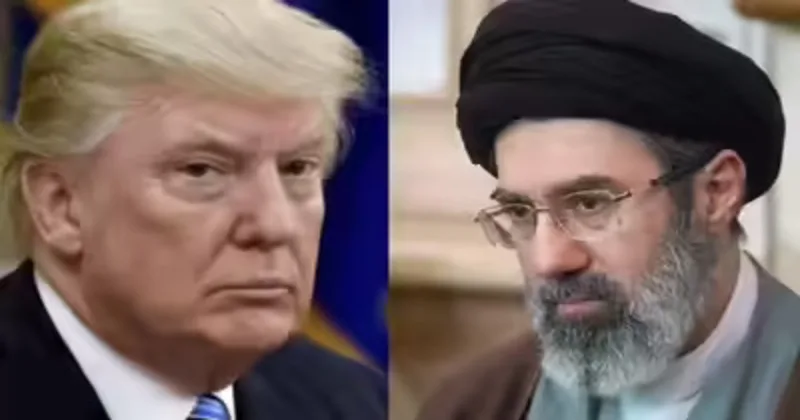
The immediate cause for Iran to retaliate against the gulf nations was their non-condemnation of US -Israel strikes leading to the death of Iranian supreme leader Ayatollah Ali Khamenei and a large number of political and military leadership. The gulf nations share uneasy relationship with Iran and their failure to condemn the decapitation of their supreme leader was seen as open collaboration with the US. Then there was this perception that the US, particularly President Trump was persuaded to attack Iran by Israel and Saudi Arabia. Saudi Arabia heads the Gulf Cooperation Council (GCC) and is generally perceived to be a direct competitor of Iran in the West Asian power politics.
Iran initially targeted the American military assets in the gulf countries. These American bases have their presence in the gulf for decades and are meant to provide the security cover to the respective gulf countries. Most of the gulf countries import a large amount of American military hardware. Saudi Arabia has been the largest importer of arms in the world. Thus, the American assets should have proved to be impregnable against Iranian missile and drone attacks. But the Iranian missiles and drones could pierce the expensive air defence systems of the US and could cause visible damage to the American military assets.
When the US and Israel launched air strikes on Iran’s nuclear, oil and power facilities, Iran found a valid reason to target the civilians and oil infrastructure in the gulf, particularly against the UAE, Saudi Arabia, Kuwait and Qatar. Once again, the Iranian strikes proved to be successful and have already caused considerable damage to the oil refineries and oil tankers. The gulf countries depend heavily on export of their oil and gas for running their economy and earn huge income through the petro dollars. Iran has thus made it clear that any country hosting American military bases will be targeted by them. Iran has even gone on to state that these gulf nations should close down the American bases.
The biggest gamble on part of Iran was to choke Strait of Hormuz, which is just 33 km wide at its narrowest point. Since most of the oil and gas for the Asian economic giants like India, Japan and South Korea pass through Strait of Hormuz, Iran has successfully controlled this vital energy chokepoint. The targeting of maritime assets in the vicinity of Strait of Hormuz has further threatened the economy of the gulf countries. Thus, Iran has used the military escalation matrix against the gulf countries.
Iran has clearly exploited the vulnerability of the gulf countries to its advantage, both militarily and diplomatically. The cause of Iran has also been helped by non-participation of America’s NATO alliance in the conflict. Thus, Iran has continued to target the gulf countries, particularly UAE. Dubai in UAE has emerged as a major economic hub in the region and Iran has attacked the assets in Dubai to assert its dominance. Though the intensity of Iranian strikes against the gulf countries has reduced in the last week, but Iran has been successful in weakening the US alliance in the gulf.
As the unconfirmed news of backchannel talks and temporary ceasefire have emerged, it can be safely assumed that the gulf countries, particularly Saudi Arabia would have urged President Trump to end the war soon. Thus, the gamble of Iran to target the gulf countries and their oil & gas assets seems to be paying off in the immediate term. In the long run, these gulf countries would be extremely vary of Iranian dominance in the region. Iran also a large network of regional proxies like Hezbollah, Hamas and Houthi to indulge in asymmetric warfare in the region.
Thus, it can be concluded that even a militarily weakened Iran may emerge as a dominant force in the region posing significant challenge. Even in an adverse security situation, the gulf nations have wisely avoided direct military confrontation with Iran. Once the hostilities end, a lot would depend on how the gulf countries recalibrate their security guarantee as also seek safe passage through Strait of Hormuz. India has to carefully monitor the emerging security equations in the gulf and also ensure the safety of nearly one crore Indians working in the gulf countries. India under the leadership of PM Modi has played an active role of peacemaker in the region.