Pakistan in Focus: Is next nuclear flashpoint taking shape?
June 23, 2026
  • Read Ecopy
  • Circulation
  • Advertise
  • Careers
  • About Us
  • Contact Us
Android AppiPhone AppArattai
Organiser
  • ‌
  • Bharat
    • Assam
    • Bihar
    • Chhattisgarh
    • Jharkhand
    • Maharashtra
    • View All States
  • World
    • Asia
    • Europe
    • North America
    • South America
    • Africa
    • Australia
  • Editorial
  • International
  • Opinion
  • RSS @ 100
  • More
    • Op Sindoor
    • Analysis
    • Sports
    • Defence
    • Politics
    • Business
    • Economy
    • Culture
    • Special Report
    • Sci & Tech
    • Entertainment
    • G20
    • Azadi Ka Amrit Mahotsav
    • Vocal4Local
    • Web Stories
    • Education
    • Employment
    • Books
    • Interviews
    • Travel
    • Law
    • Health
    • Obituary
  • Subscribe
    • Subscribe Print Edition
    • Subscribe Ecopy
    • Read Ecopy
  • ‌
  • Bharat
    • Assam
    • Bihar
    • Chhattisgarh
    • Jharkhand
    • Maharashtra
    • View All States
  • World
    • Asia
    • Europe
    • North America
    • South America
    • Africa
    • Australia
  • Editorial
  • International
  • Opinion
  • RSS @ 100
  • More
    • Op Sindoor
    • Analysis
    • Sports
    • Defence
    • Politics
    • Business
    • Economy
    • Culture
    • Special Report
    • Sci & Tech
    • Entertainment
    • G20
    • Azadi Ka Amrit Mahotsav
    • Vocal4Local
    • Web Stories
    • Education
    • Employment
    • Books
    • Interviews
    • Travel
    • Law
    • Health
    • Obituary
  • Subscribe
    • Subscribe Print Edition
    • Subscribe Ecopy
    • Read Ecopy
Organiser
  • Home
  • Bharat
  • World
  • Operation Sindoor
  • Editorial
  • Analysis
  • Opinion
  • Culture
  • Defence
  • International Edition
  • RSS @ 100
  • Magazine
  • Read Ecopy
Home World North America USA

After Iran, Pakistan in Focus: Is the next nuclear flashpoint taking shape?

As tensions in West Asia intensify following strikes on Iran, attention is increasingly shifting toward Pakistan, long seen as both a victim and source of global terrorism, now facing growing scrutiny over its nuclear arsenal.  Amid fears of strategic encirclement and rising US–Israel pressure, Pakistan finds itself at a precarious crossroads where its security, stability, and nuclear future are under question.

Dr Vishnu AravindDr Vishnu Aravind
Mar 27, 2026, 02:30 pm IST
in USA, World, Asia, International Edition
Follow on Google News
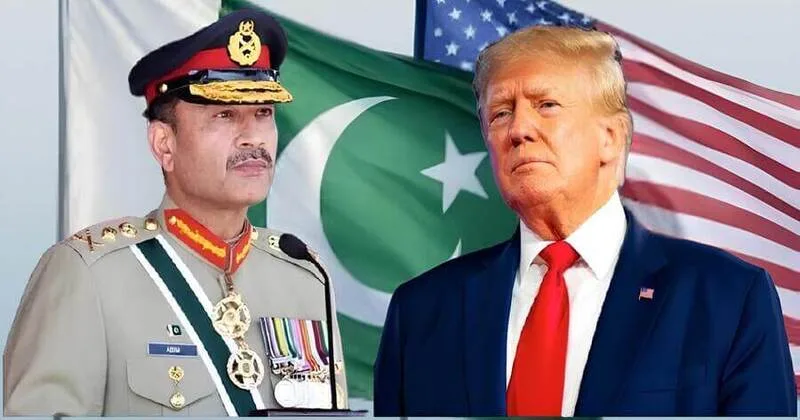
After Tulsi Gabbard flagged Pakistan as a nuclear threat, a deeper unease emerges as doubts grow over whether Islamabad could become the next strategic target for the United States after Iran

After Tulsi Gabbard flagged Pakistan as a nuclear threat, a deeper unease emerges as doubts grow over whether Islamabad could become the next strategic target for the United States after Iran

FacebookTwitterWhatsAppTelegramEmail

When Israel launched its anti-terror operation in Gaza in 2024, many analysts were already convinced that Prime Minister Benjamin Netanyahu had a larger objective in mind, which was Iran.

From Netanyahu’s perspective, Israel cannot ensure its long-term security without dismantling the Iranian regime that provides financial and military support to militant groups such as Hamas in Palestine, Hezbollah in Lebanon, and the Houthis in Yemen. These groups, backed by Tehran, have been central to regional instability.

Iran’s pursuit of nuclear weapons has further heightened concerns. This is not seen as a threat only to Israel, but also to Arab nations and the United States. It is in this context that the United States reportedly struck Iran’s nuclear facilities in 2025. The current military developments appear to be reaching a decisive stage in Iran.

Pakistan: A nuclear threat

It is at this juncture that Pakistan, Iran’s immediate neighbour, enters the picture. According to the Global Terrorism Index 2026, Pakistan is the country most severely affected by terrorism. In the 2025 report, it ranked second. Having long nurtured various militant groups, Pakistan now finds itself increasingly threatened by the very forces it once supported. Pakistan is not only a victim of terrorism but also widely regarded as one of its principal sources globally.

Also Read: Nepal: Balendra Shah takes oath as the 47th Prime Minister at an auspicious time on the occasion of Ram Navami

For many countries, including India, any meaningful global fight against terrorism must involve ending Pakistan’s support for extremist groups. Groups such as Jaish-e-Mohammed, which have targeted India, have received support from Pakistan. Islamabad has also been accused of aligning with Hamas in Gaza against Israel. Moreover, Pakistan has a history of providing shelter to figures such as Osama bin Laden, one of America’s most wanted enemies.

Against this backdrop, a critical question arises: could Pakistan’s nuclear arsenal become the next target? Current developments suggest that this possibility cannot be ruled out. If a regime change occurs in Iran in line with Israeli interests, it could result in a pro-US, pro-Israel government in Tehran. This would leave Pakistan strategically encircled, with India on one side and Afghanistan, along with a potentially hostile new Iranian regime, on the other.

This concern has been openly acknowledged by Pakistan’s Defence Minister Khawaja Asif, who warned that Israel’s ultimate aim in Iran is to reduce Pakistan to a “Vassal state”.

Further reinforcing these fears was a controversial statement by former Pakistani High Commissioner to India Abdul Basit. In a speech in Pakistan, he declared, “If America attacks Pakistan we have to attack India, Mumbai, New Delhi, without a second thought. We won’t leave it we’ll see what happens later.” Tensions were further escalated by a statement from the US Director of National Intelligence, Tulsi Gabbard, before the Senate Intelligence Committee. In the 2026 Annual Threat Assessment, Pakistan was included among countries posing a nuclear threat to the United States, alongside Russia, China, and North Korea. This classification has significantly alarmed Pakistan’s leadership. It is partly due to these concerns that Pakistan has attempted to position itself as a mediator in the Iran crisis. Islamabad is wary of any regime change in Iran that could favour Israel and the United States.

Pakistan’s fear of Trump

Pakistan’s distrust is not limited to U.S. institutions, it extends strongly to President Donald Trump. During his first term (2017–2021), Trump adopted a confrontational stance toward Pakistan, accusing it of providing safe havens to militants fighting U.S. forces in Afghanistan. This marked a significant departure from previous U.S. administrations. His criticism soon translated into concrete actions. In 2018, Trump publicly stated that despite the United States giving Pakistan $33 billion over 15 years, it had received nothing but “lies and deceit” in return. Subsequently, he suspended $70 million in security aid to Pakistan.

Given this history, Pakistan fears that Trump, especially when combined with Tulsi Gabbard’s recent threat assessment, could take steps to neutralise its nuclear capabilities.

There is also a perception that Israel could exert pressure on the United States to act against Pakistan. From Israel’s perspective, a proposed military bloc involving Islamic nations, potentially led by Pakistan and resembling NATO, could pose a strategic threat. When combined with Pakistan’s nuclear arsenal, this becomes an even greater concern. Pakistan’s distrust of the United States was also evident in remarks by Defence Minister Khawaja Asif during a parliamentary session. He stated that after serving U.S. interests in Afghanistan, Pakistan was “used like toilet paper and then discarded.”

Today, Pakistan is in a fragile economic condition. The country is grappling with inflation, fuel shortages, and rising unemployment. Its survival is heavily dependent on assistance from the IMF.

This economic weakness significantly limits Pakistan’s ability to respond to any potential U.S.–Israel actions. China, too, is unlikely to intervene decisively, as seen in its limited role in crises involving Iran and Venezuela. At the same time, Pakistan faces strategic pressure from multiple fronts, including India, Afghanistan, and potentially Iran. This further compounds its vulnerabilities. Given these factors, the possibility of action against Pakistan cannot be dismissed.

Topics: West Asia ConflictUS President Donald TrumpNuclear ThreatPakistan’s Defence Minister Khawaja Asif
ShareTweetSendShareSend
✮ Subscribe Organiser YouTube Channel. ✮
✮ Join Organiser's WhatsApp channel for Nationalist views beyond the news. ✮
Previous News

Nepal: Balendra Shah takes oath as the 47th Prime Minister at an auspicious time on the occasion of Ram Navami

Next News

Odisha rolls out new excise policy with de-addiction cess, liquor ban near Jagannath Temple at Puri

Related News

At the G7 Summit, PM Modi urged support for developing nations affected by the West Asia crisis

G7 Summit 2026: PM Modi seeks economic shield for global south from West Asia war fallout

Prime Minister Narendra Modi with US President Donald Trump

Hormuz Disruptions: “Several Indian civilians lost lives,” says PM Modi & expresses concern in presence of Trump

Representative image

West Asia Conflict: Donald Trump announces landmark US-Iran agreement, raises hopes for peace

West Asia Conflict: 3 Days, 3 Tankers & 3 Deaths; How US muscle flexing is fueling humanitarian crisis in Hormuz?

America’s Friend, Pakistan’s Burden: The hidden cost of Washington’s Iran strategy

Representative Image

The Labyrinth of War: Easy to enter; Difficult to exit

Load More

Latest News

President Droupadi Murmu confers the Padma Shri on former civil servant R.V.S. Mani on June 23, 2026.

Former MHA official RVS Mani honoured with Padma Shri for contributions to internal security

Tamil Nadu: Temple funds only for temple property; TVK govt concedes before Madras High Court

Keralam’s former Industries Secretary, Mohammed Haneesh IAS (Right Side)

Keralam Cashew Scam: Former Industries Secretary Md Haneesh apologises before High Court after contempt proceedings

Tamil Nadu: Assembly Speaker directs all bureaucrats to strictly follow warrant of precedence after Mayor-MLA row

Kamakhya Mandir

Kamakhya Mandir’s Ambubachi Mela: The ancient tradition that honours the menstruation of mother Earth

Amazon in dock for mocking Hindu Gods

Amazon File: From Ganesha to Aryabhata-Has Amazon India become a platform for Anti-Hindu narratives?

The West Bengal Budget 2026–27 aims to drive growth through infrastructure, industry, innovation and welfare

Reimagining Bengal: How the West Bengal Budget 2026–27 seeks to balance growth, welfare & economic transformation

Pratiraksha is Gujarat Police's Aadhaar-based verification platform designed to identify illegal workers and prevent identity fraud in industrial sectors

Pratiraksha: How Gujarat police uses Aadhaar verification to secure industrial workforce against identity fraud

Israel-Iran crisis has highlighted not only shifting dynamics of West Asia but also growing confidence of India's foreign policy

India, Israel and the rise of strategic autonomy in an era of global geopolitical realignment

Saleem and Jaleel arrested in forced religious conversion case

Karnataka Conversion Case: Forced conversion of Hindu woman and minor son sparks outrage; Saleem and Jaleel arrested

Load More
  • Privacy
  • Terms
  • Cookie Policy
  • Refund and Cancellation
  • Delivery and Shipping

© Bharat Prakashan (Delhi) Limited.
Tech-enabled by Ananthapuri Technologies

  • Home
  • Search Organiser
  • Bharat
    • Assam
    • Bihar
    • Chhattisgarh
    • Jharkhand
    • Maharashtra
    • View All States
  • World
    • Asia
    • Africa
    • North America
    • South America
    • Europe
    • Australia
  • Editorial
  • Operation Sindoor
  • Opinion
  • Analysis
  • Defence
  • Culture
  • Sports
  • Business
  • RSS @ 100
  • Entertainment
  • More ..
    • Sci & Tech
    • Vocal4Local
    • Special Report
    • Education
    • Employment
    • Books
    • Interviews
    • Travel
    • Health
    • Politics
    • Law
    • Economy
    • Obituary
  • Subscribe Magazine
  • Read Ecopy
  • Advertise
  • Circulation
  • Careers
  • About Us
  • Contact Us
  • Policies & Terms
    • Privacy Policy
    • Cookie Policy
    • Refund and Cancellation
    • Terms of Use

© Bharat Prakashan (Delhi) Limited.
Tech-enabled by Ananthapuri Technologies